



Cornrows never really went anywhere — they’ve been part of Black women’s hair tradition for thousands of years — but styling approaches shift over time. What’s fresh one season might feel tired a few years later, while older techniques get rediscovered and reframed as new. The styles that stick around are the ones that hit a sweet spot: genuinely flattering, comfortable to wear, and interesting enough to stand out without being gimmicky.
Picking a cornrow style that feels current means looking past photos of styles that are clearly over-saturated. The best cornrow styles for Black women combine classic braiding traditions with small modern touches — fresh partings, interesting end treatments, color choices that feel personal rather than trendy-for-trend’s-sake.
These 30 styles all hit that mark. Each one offers something specific — a technique, parting pattern, accessory approach, or length choice that makes it worth considering. Whether you’re planning your next install or just scrolling for inspiration, these are the cornrow looks worth knowing.
The Shift Toward Individual Expression
Cornrow styling has moved away from one-size-fits-all toward styles chosen for specific faces, lifestyles, and aesthetics. A bridal cornrow style now differs meaningfully from a workout cornrow style. A creative-industry cornrow style looks different from a corporate one.
That shift matters because it means cornrows don’t have to look generic. The same technique can produce a style for a teenager going to homecoming and for a CEO giving a keynote — and those styles should look distinctly different from each other.
Pick styles that match your life, not styles that look good in someone else’s life.
Feed-In vs. Traditional Installation
Feed-in cornrows gradually add extensions as the braider works down the braid rather than attaching all the extension hair at the root. The braid starts thin at the hairline and thickens progressively.
Traditional cornrows (with extensions) attach all the added hair at the base, creating a full-thickness braid from the start.
Feed-in puts less tension on the edges — the most fragile part of the hairline. For long-term wearers or anyone with delicate edges, feed-in is the better choice. For one-time wear, either works.
Protective Styling Benefits for Black Hair
Cornrows stay ahead of other protective styles for simple reasons: they sit flat, don’t snag on surfaces, and protect the ends of the hair completely. Box braids swing, micro braids tangle, twists loosen quickly. Cornrows just stay.
For natural hair retention, cornrows win because they require minimal daily manipulation. No daily styling, no heat, no combing. The hair gets to grow without interference.
Four to six weeks of cornrows means roughly a quarter-inch of unbothered length gained — assuming good scalp health and quality installation.
Kanekalon Grade and Quality
Cheap kanekalon is false economy. It frizzes faster, sheds more, and looks worse by week two. Better-grade kanekalon (X-Pression, Outre, RastAfri, Sensationnel) costs a few dollars more per pack and delivers weeks of additional polish.
For premium styles, consider pre-stretched kanekalon. It comes already softened, with the tangled ends removed. Saves install time and the braids look cleaner from the start.
Pre-Install Prep
Wash with clarifying shampoo 2-3 days before. Deep condition for 30+ minutes. Detangle thoroughly. Stretch overnight in chunky twists.
Light leave-in the morning of — nothing heavy. Heavy products make the braider’s grip slippery and slow the install.
If you’re coloring your hair, color before braiding. Coloring over cornrows is uneven and risky.
1. Sleek Feed-In Cornrows With Edges Laid
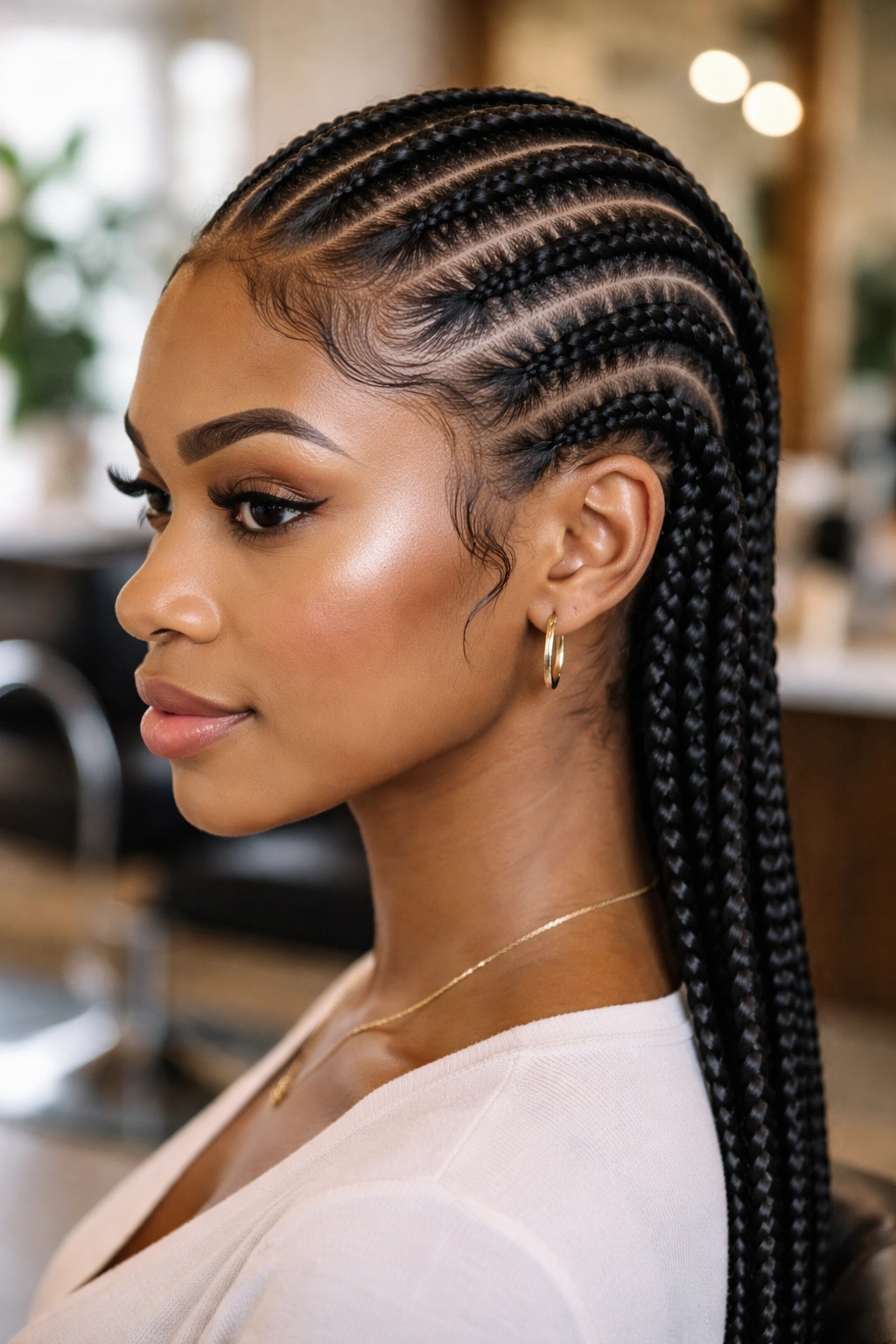
Clean feed-in cornrows running straight back, with meticulously laid baby hairs along the hairline. The edges are the styling detail that pushes this from basic to polished.
Why It Reads Sharp
- The feed-in technique creates a seamless, gradient look from hairline to tip
- Laid edges signal intentional styling rather than rushed braiding
- Works for office, formal events, or everyday wear
Tip: Use a firm-hold edge gel applied with a fine brush. Work the baby hairs in 2-3 deliberate curves rather than trying to lay every single edge hair individually.
2. Jumbo Feed-In Cornrows
Four to six thick cornrows (each about an inch wide) with feed-in technique creating the gradient. Bigger, bolder, more casual than traditional thin cornrows.
A faster install (90 minutes tops) and a bolder finish. Reads effortless in the best way.
Great for everyday wear when you don’t want to fuss over precision.
3. Pop Smoke Braids
Two thick feed-in braids running back, popularized by the late rapper. Casual, quick, and instantly recognizable.
A low-effort, high-impact style. Takes 30-45 minutes.
Works especially well for short to medium natural hair where the extensions add the length.
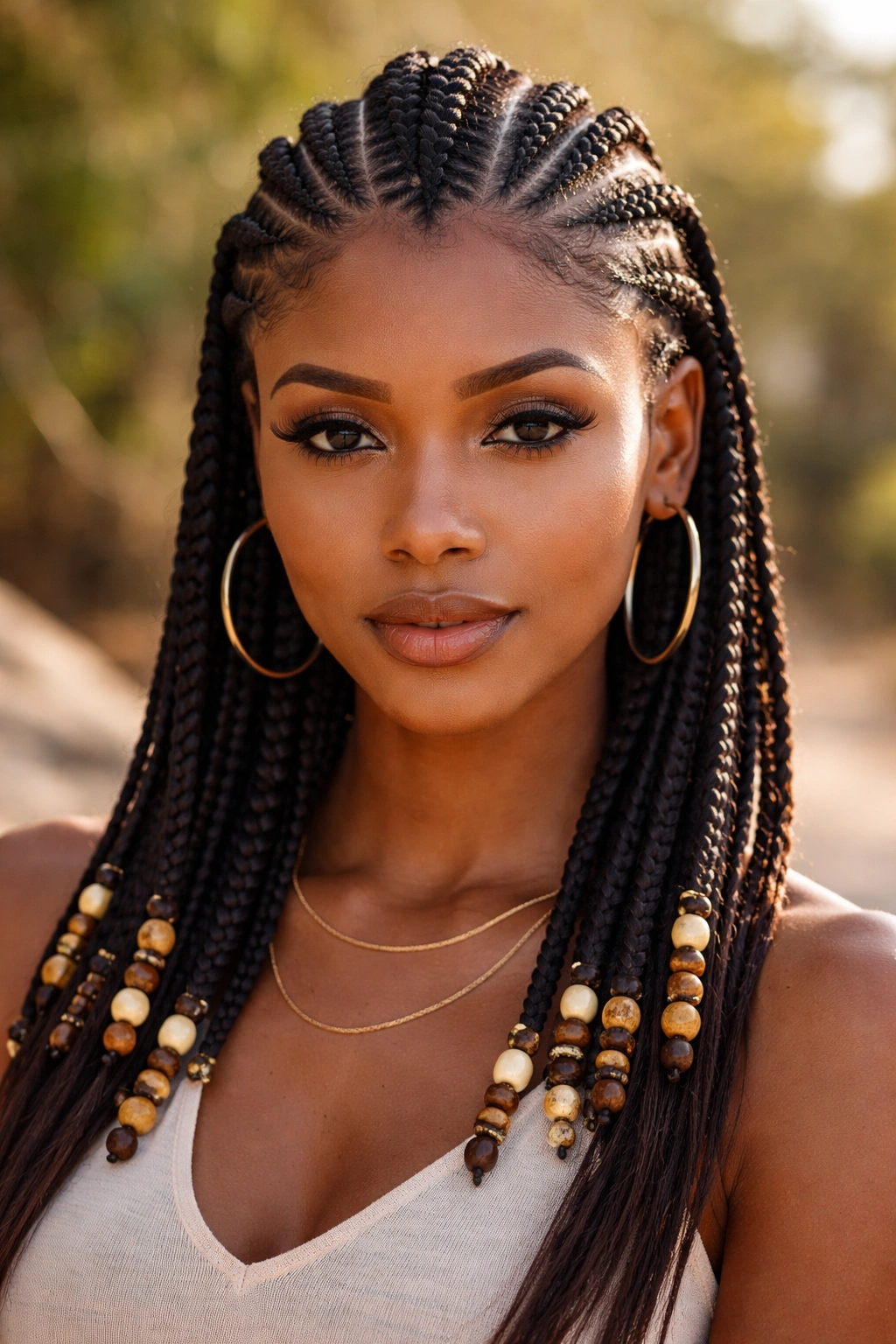
4. Fulani Braids With Accent Beads
The Fulani signature — one thick center braid, smaller side braids angling toward center, beadwork at the tips. Rooted in West African tradition and consistently modern.
Beads should be natural materials: wood, brass, or bone. Plastic beads undermine the cultural weight of the style.
Three to five beads per accent braid is the sweet spot.
5. Knotless Cornrows
Cornrows installed with a knotless technique where no knot forms at the base. Produces a flatter, more natural-looking hairline with less initial tension.
Knotless is easier on edges and more comfortable during the first few days of wear.
Install takes slightly longer than traditional cornrows. The trade-off is worth it for most wearers.
6. Stitch Braids
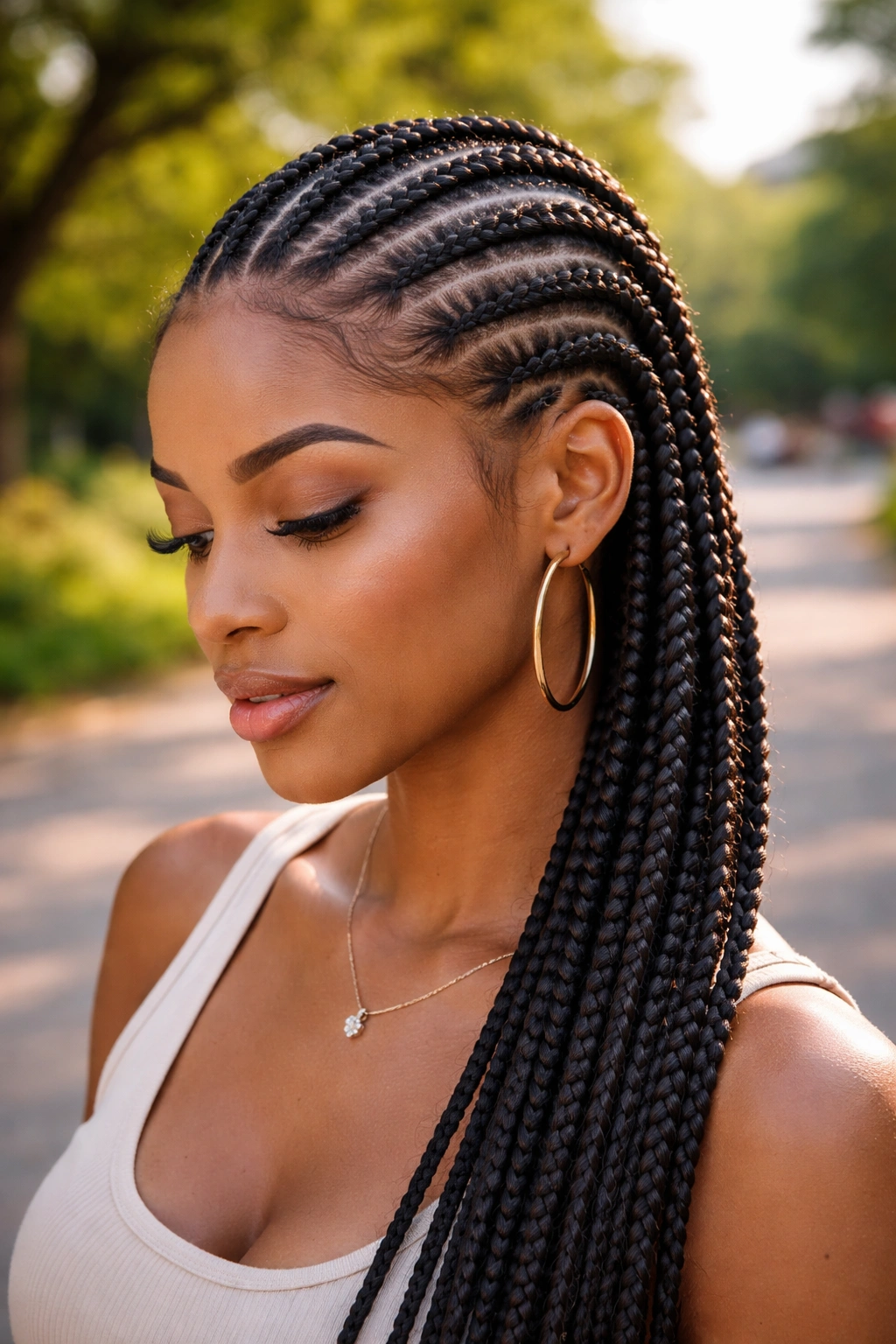
Cornrows with tiny horizontal stitches visible along each braid, created by lifting and parting small sub-sections as the braid progresses. The stitched effect gives each braid a ladder-like texture.
A relatively new style that spread fast for good reason. The stitches add visual interest without requiring elaborate parts.
Requires a skilled braider. Stitch technique isn’t standard yet.
7. Cornrows With Stitched Feed-In Combo
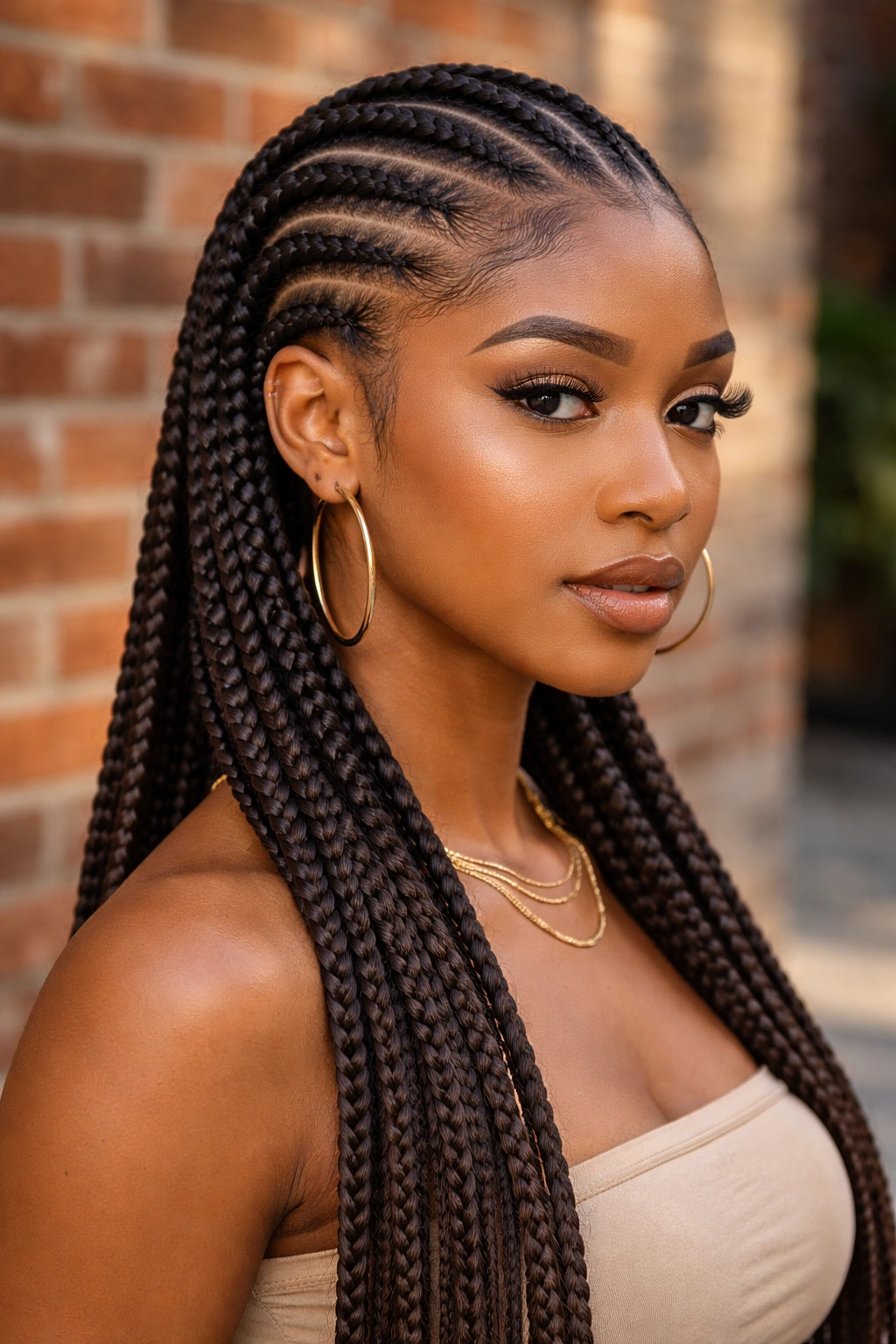
Stitch braids combined with feed-in extensions. The stitches show at the scalp; the feed-in extensions flow down the length.
One of the most photographed styles in cornrow content for a reason. Technical, clean, and striking.
Install time: 3-4 hours. Plan accordingly.
8. Cornrows With a Middle Part and Two Ponies
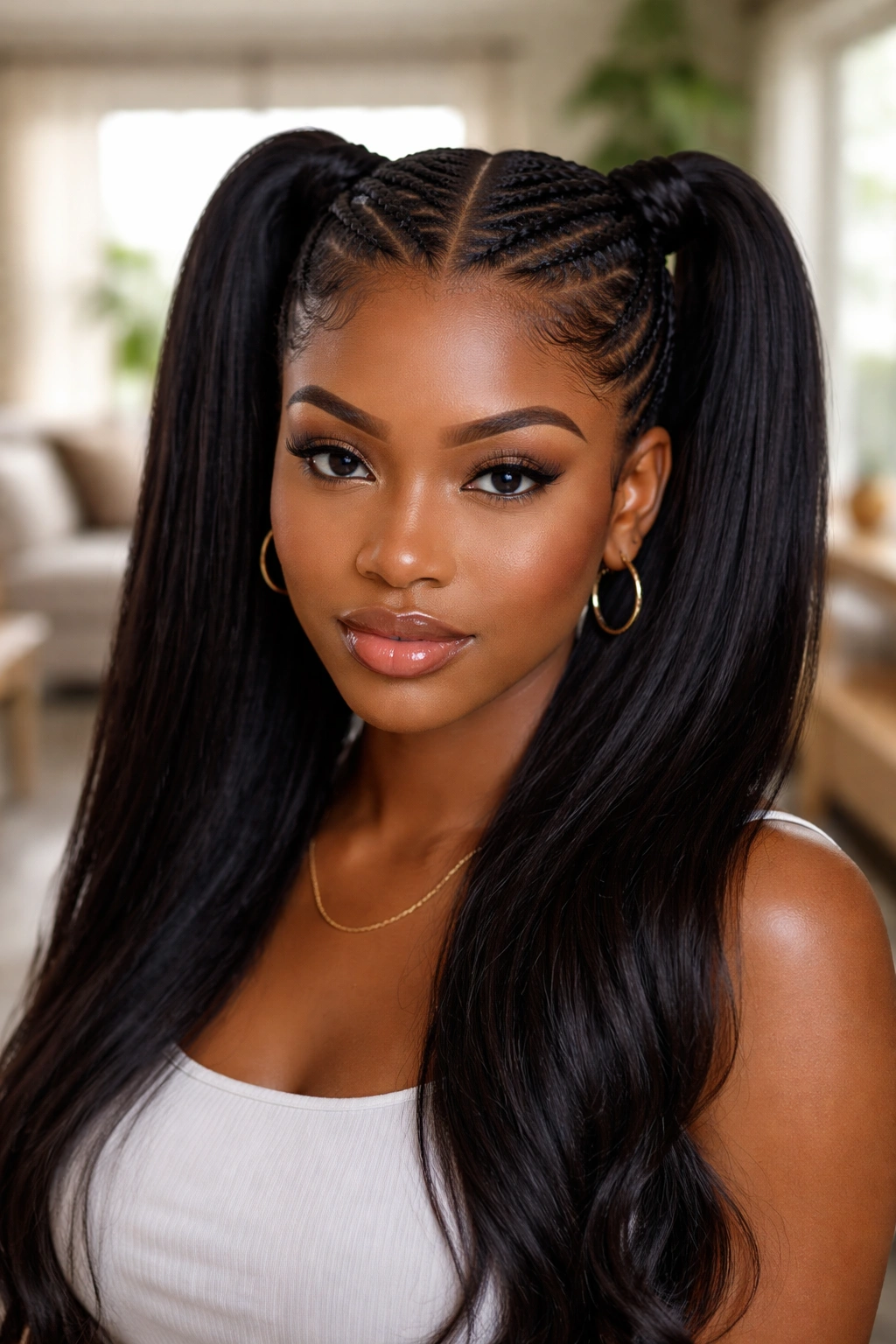
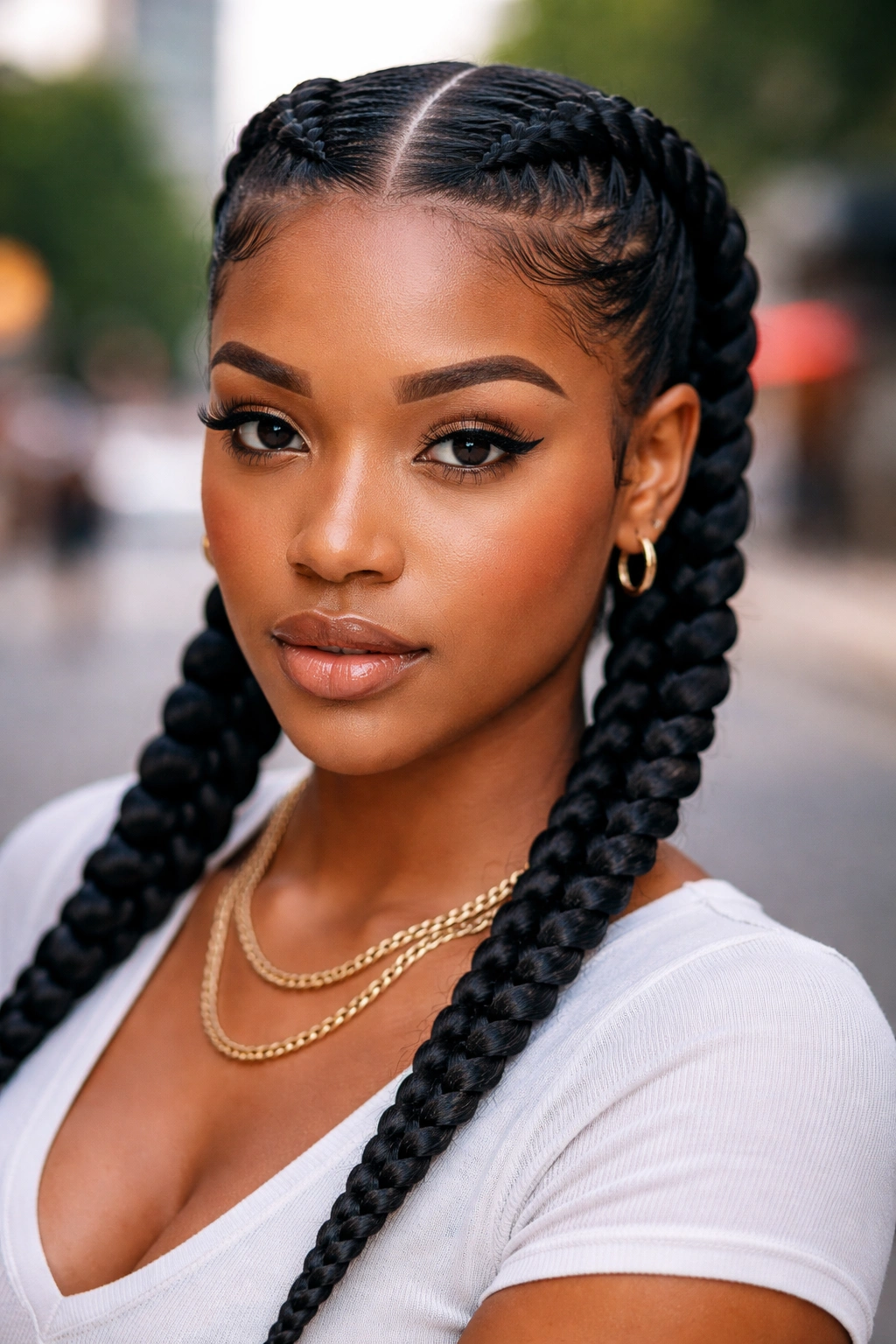
A clean middle part, four cornrows on each side, gathered into two ponytails at the crown or back. The ponies can be natural hair or extended kanekalon.
A casual-meets-polished style. Reads sporty, playful, or professional depending on the pony finish.
Leave the middle part sharp — a crisp part is what separates this style from looking like pigtails.
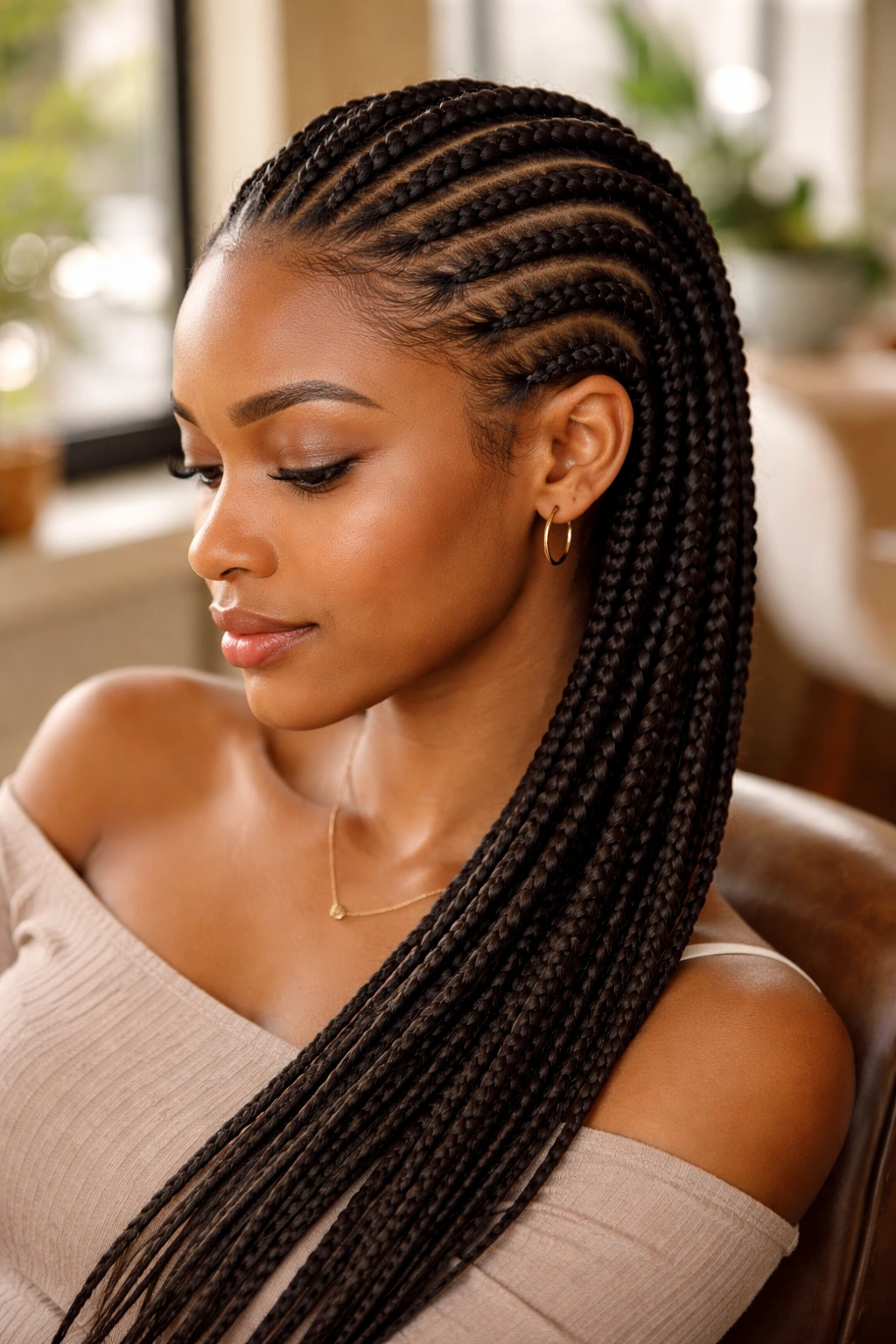
9. Side-Swept Lemonade Braids
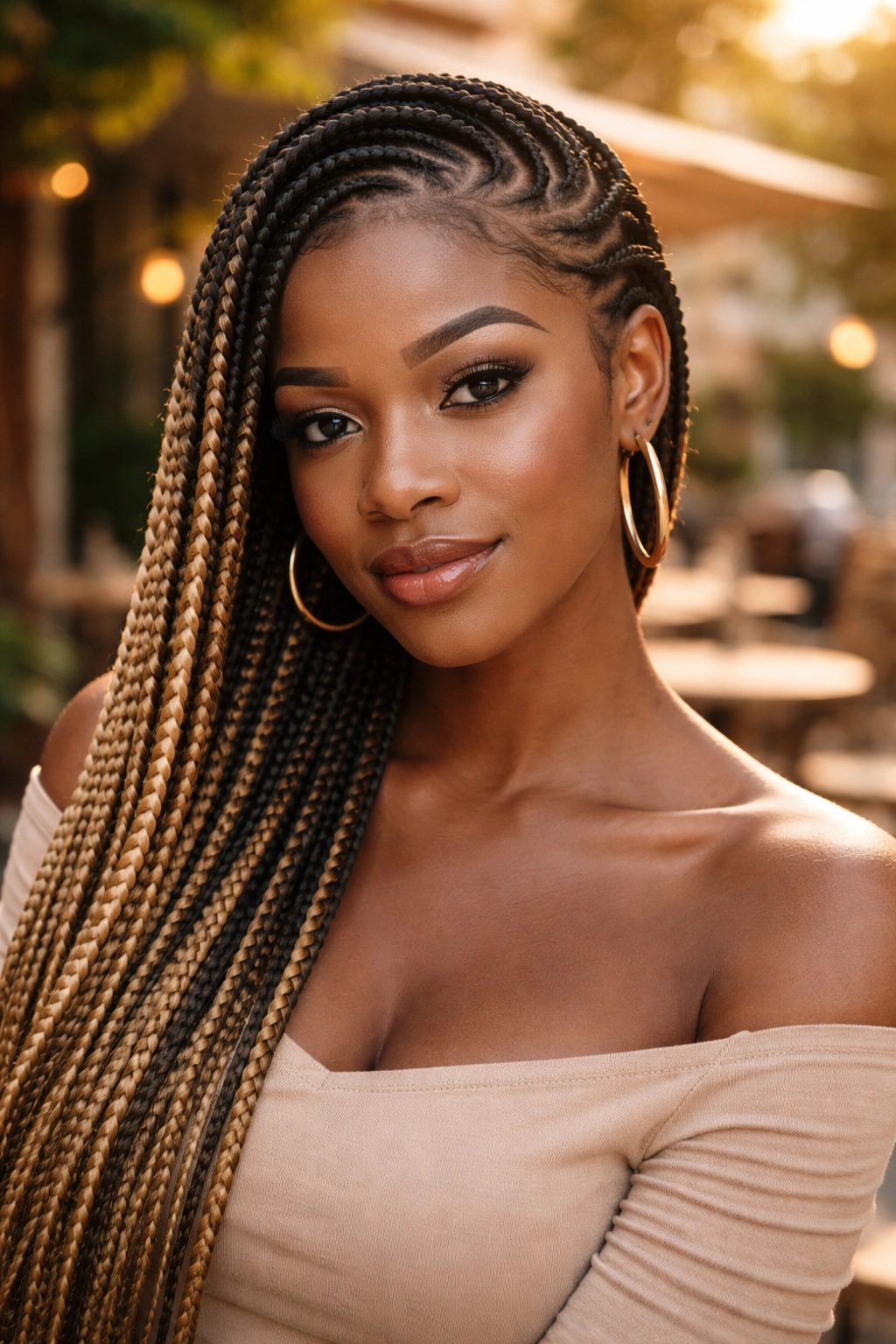
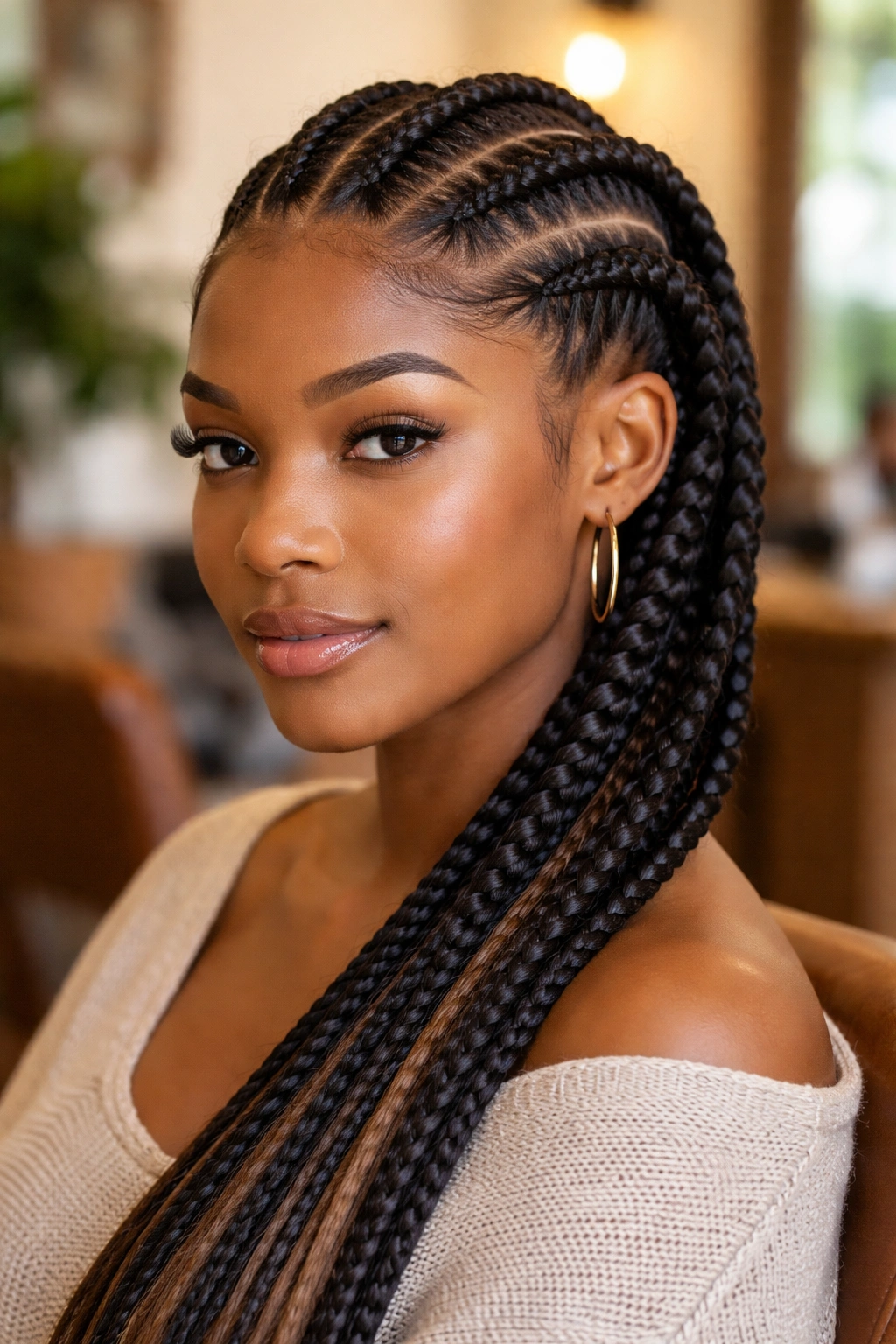
The classic lemonade style — all braids sweeping one direction, draping over a shoulder. Still a favorite because it photographs beautifully and flatters most face shapes.
Use feed-in technique for less tension at the temples. The sweep direction should match your dominant side for natural draping.
10. Cornrows Into a Top Knot
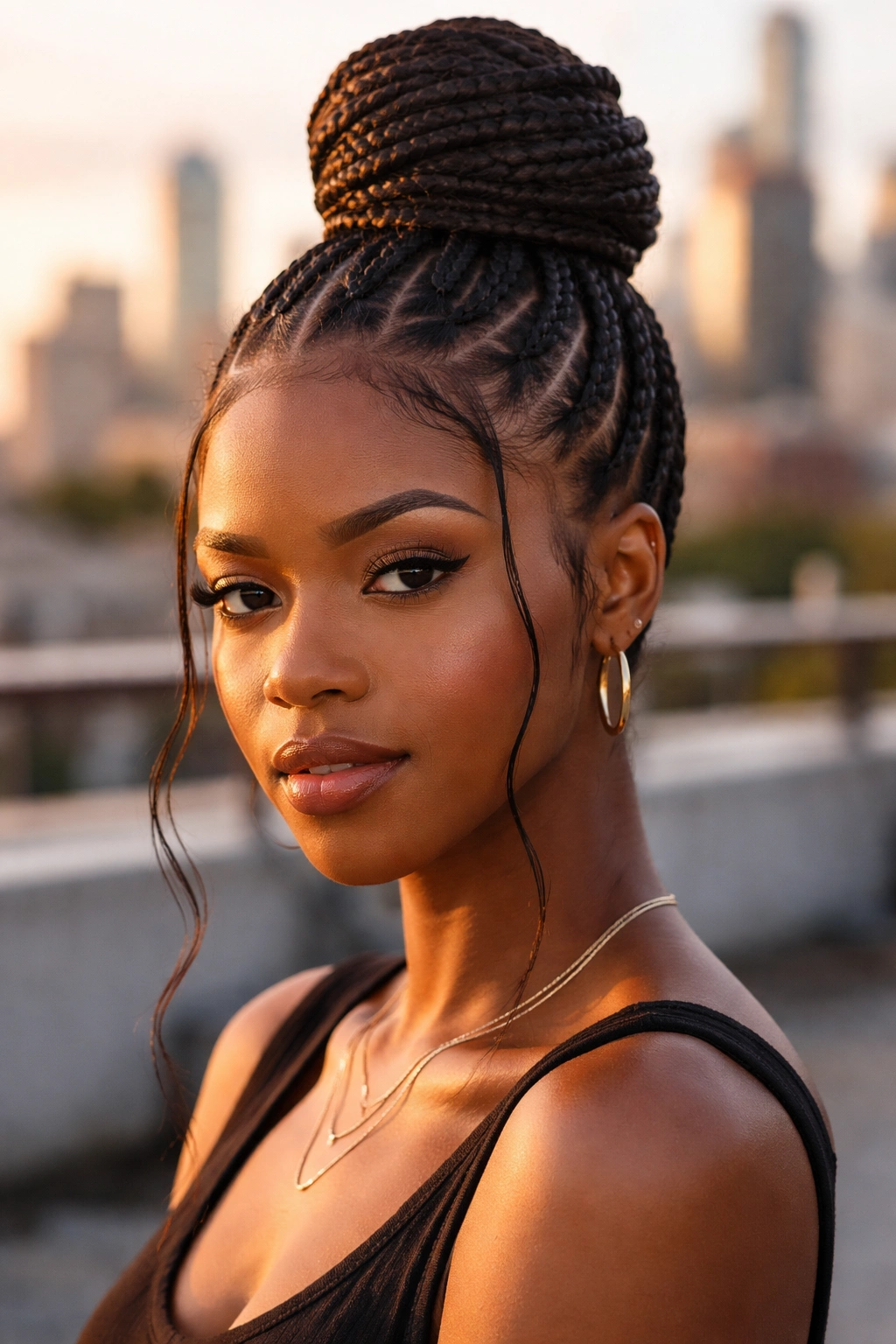
All cornrows gathered into a single high top knot. The top knot can be tight and sculpted for formal wear or loose and messy for casual.
Reads young and trendy when done loose. Reads elegant when done tight.
For loose top knots, pull a few face-framing pieces out at each temple.
11. Cornrows With a Swoopy Front
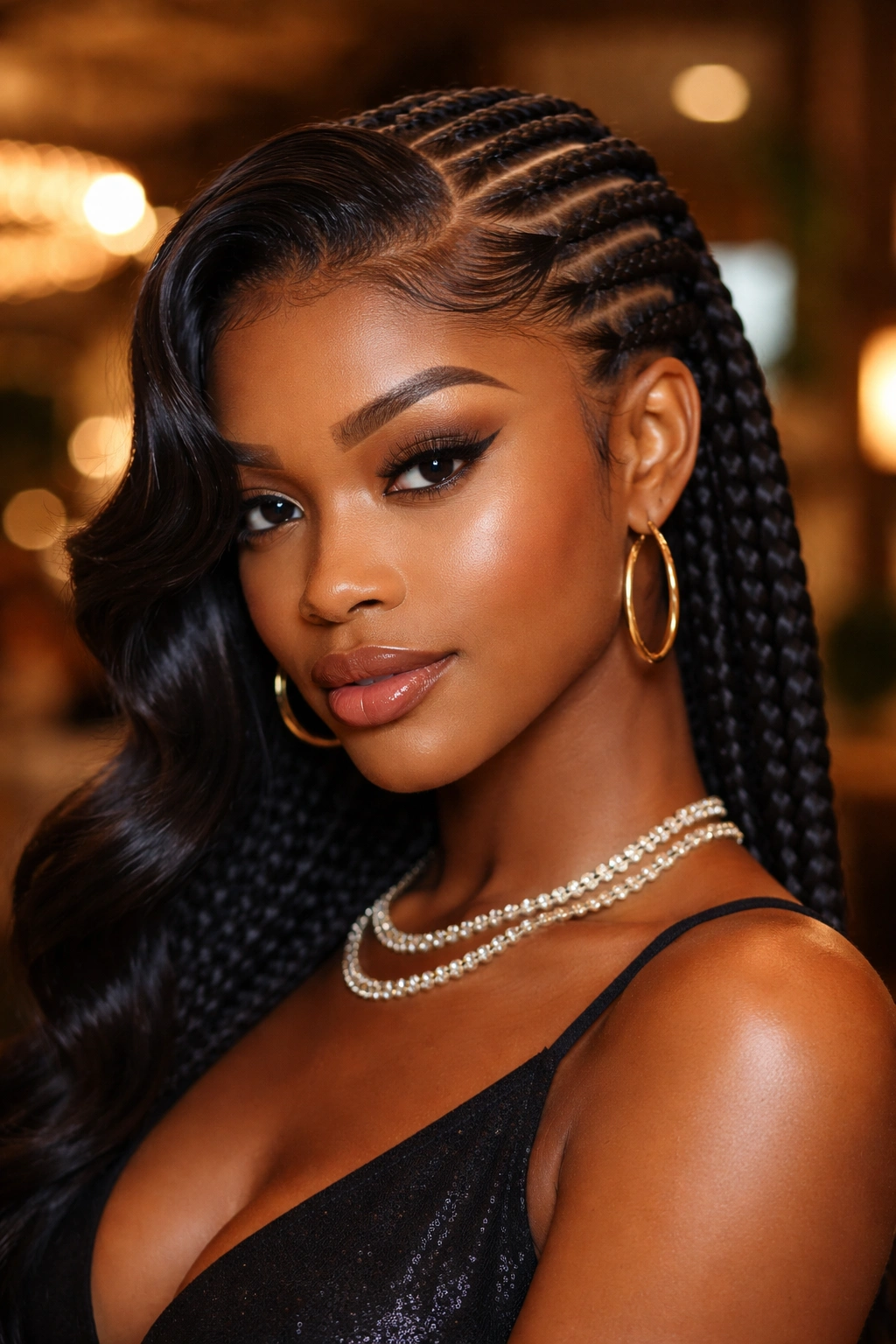
The front section styled into a dramatic swoop — finger-waved or gel-sculpted — that frames the face. Behind the swoop, cornrows run straight back.
Reads vintage-glam meets contemporary. Great for events where you want styled hair that stands out.
The swoop needs re-setting every day or two. Not a wash-and-go style.
12. Cornrows With Heart-Shaped Parts
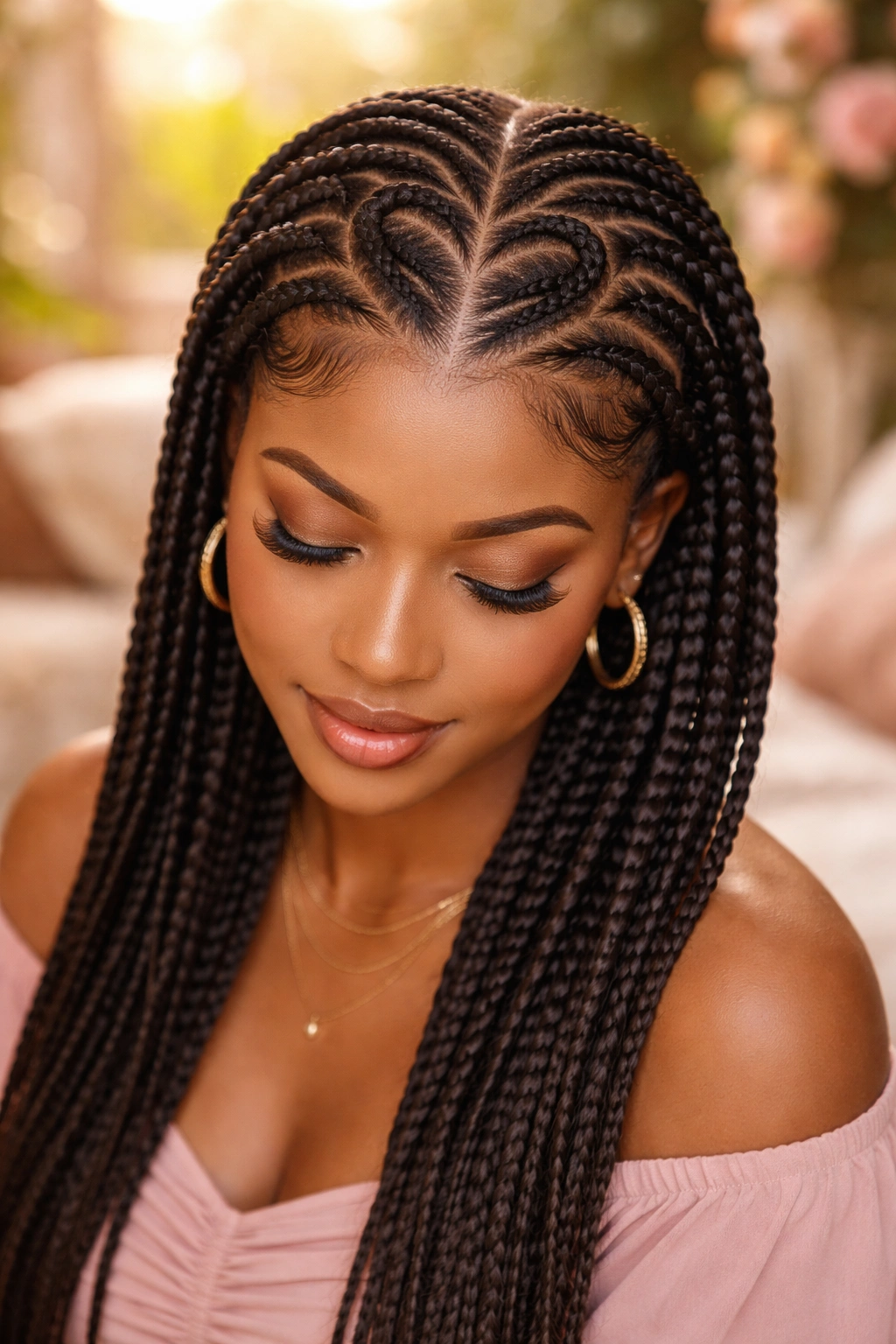
Heart shapes formed in the parting pattern at the crown or hairline. The cornrows flow in and around the heart outline.
Playful and feminine. Works for Valentine’s events, photoshoots, or anyone wanting a romantic touch.
The heart shape needs to be drawn carefully with a pin-tail comb. Lumpy hearts look sloppy.
13. Boho Cornrows With Curly Pieces
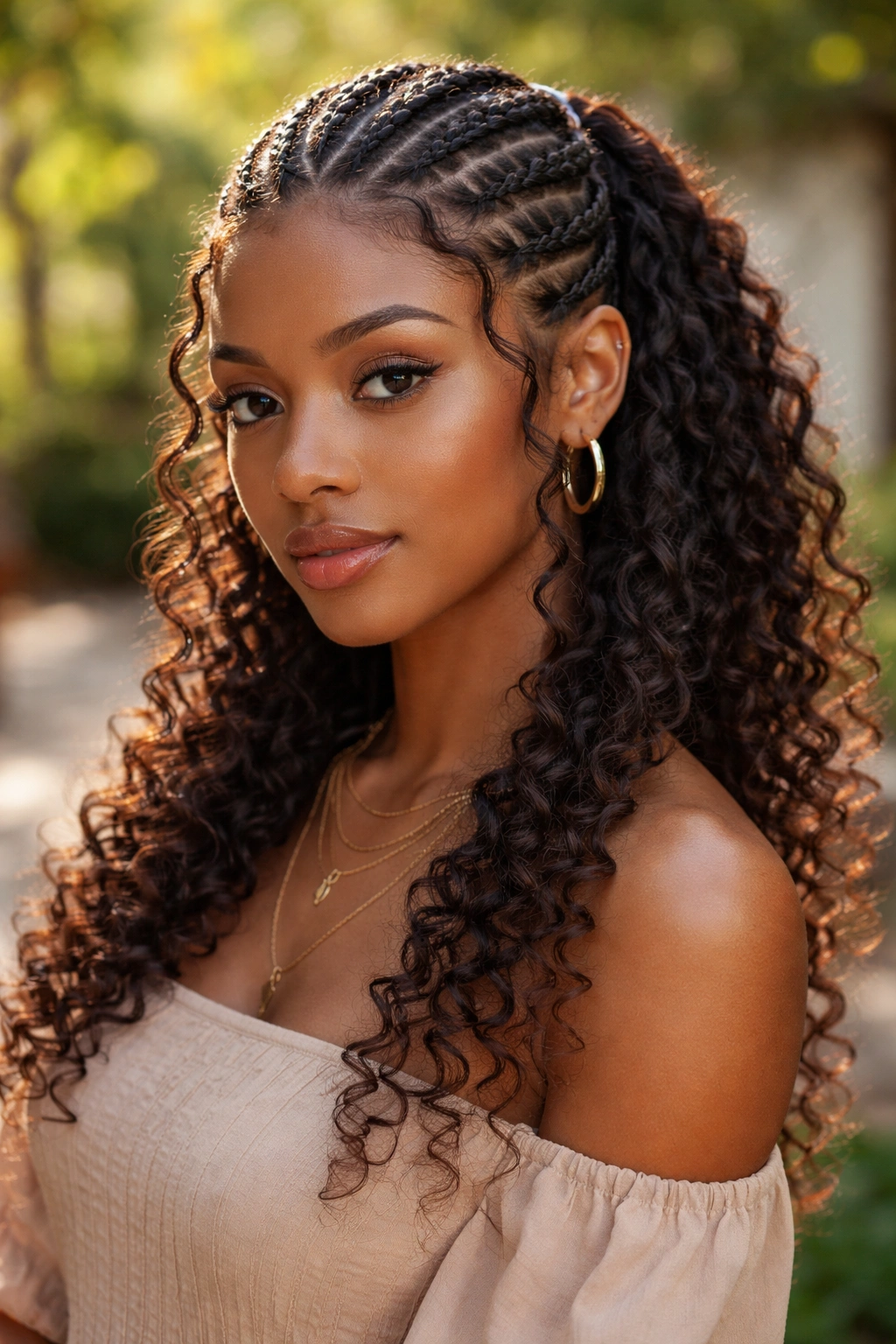
Cornrows with intentional loose curls pulled out at the temples, nape, and throughout the body of the style. The curls add softness and romance.
Sometimes called “boho knotless” when applied to box braids, but the same aesthetic works beautifully on cornrows.
Use pre-curled kanekalon for the pulled-out pieces so they stay curled through wear.
14. Cornrows With Face-Framing Straight Pieces
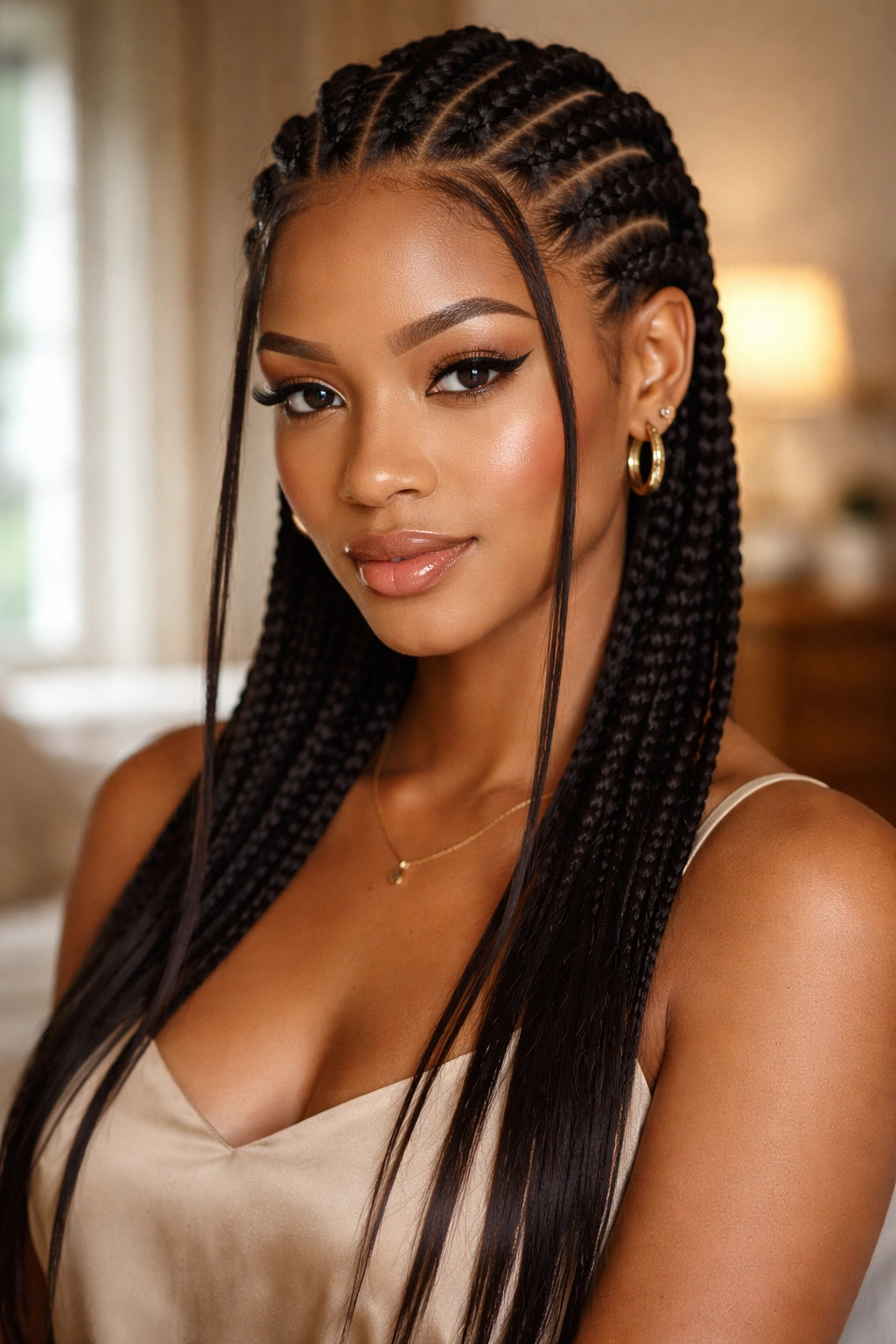
Similar to boho but with straight pieces instead of curled. The straight face-framing hair creates a polished, sleek-but-soft finish.
Pin-straight pieces next to textured cornrows can read stark. Slightly textured or loosely waved straight pieces blend better.
15. Half-Up Cornrow Bun
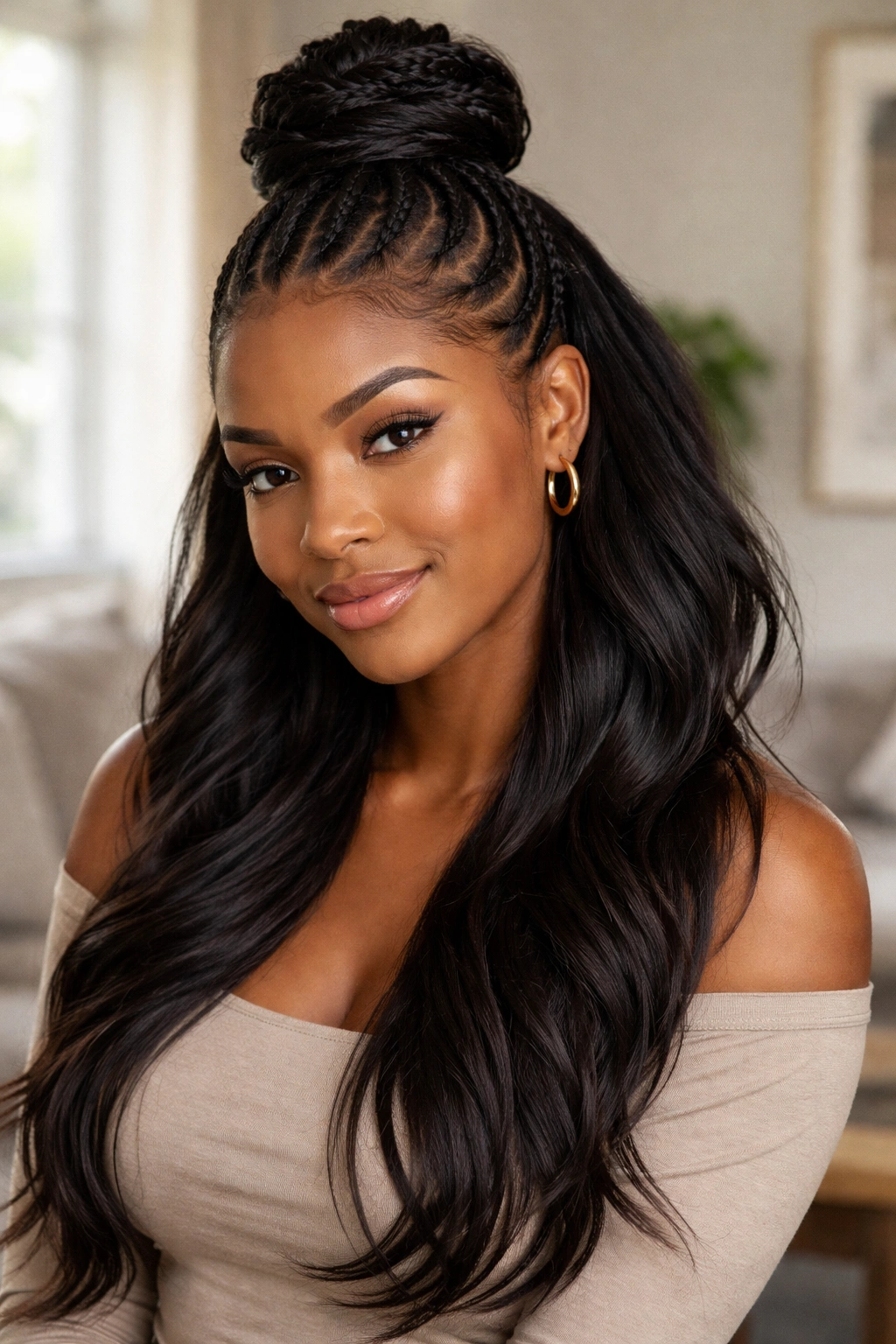
Top half of the cornrows pulled into a high bun, bottom half flowing loose. The half-up element adds shape; the loose bottom keeps it easy.
A go-to casual style. Flatters every face and works for most occasions.
Use a hair-friendly elastic (no metal clasps) at the bun’s base.
16. Crown Braid Halo
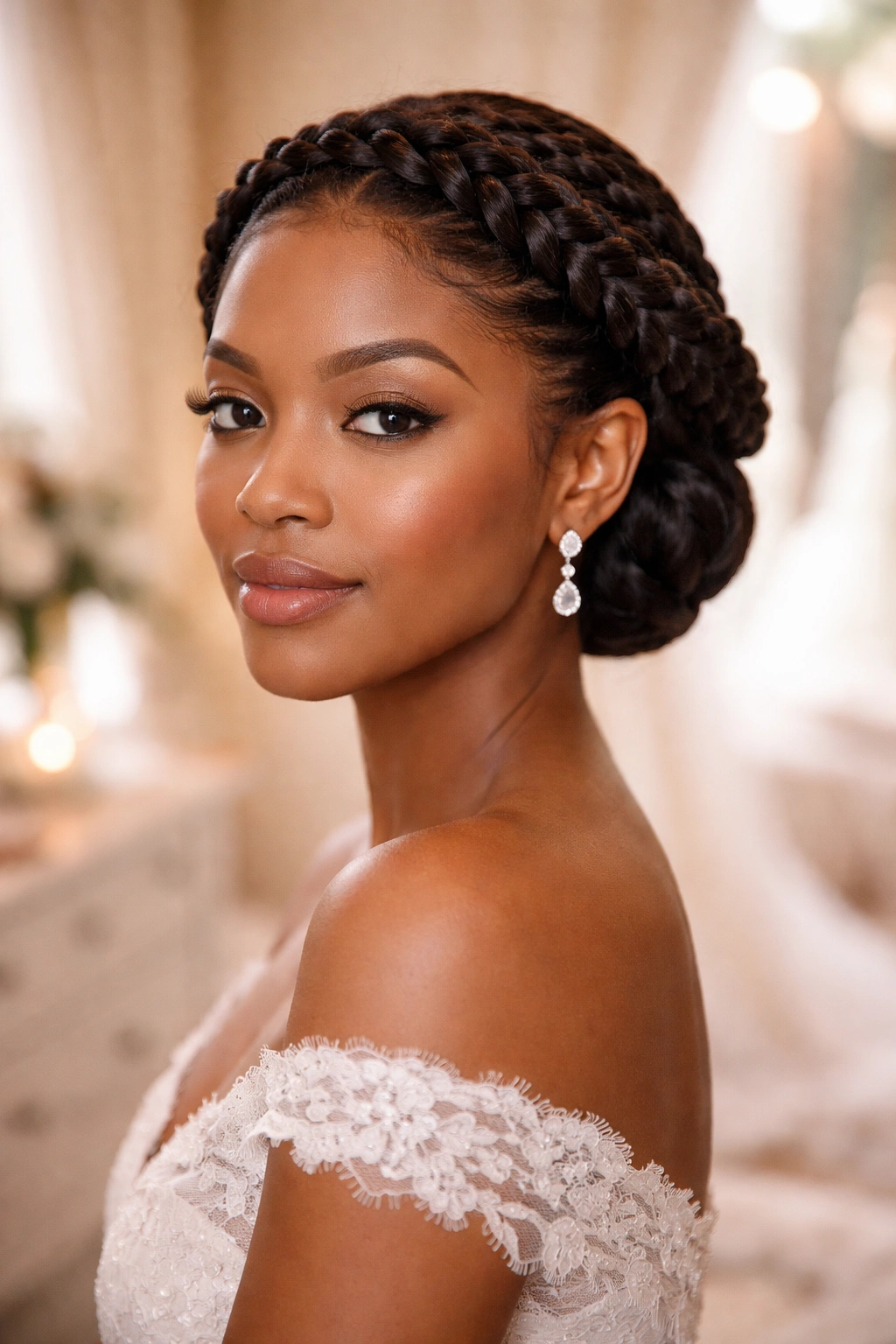
One continuous cornrow wrapping around the entire head at the crown, like a halo. The rest of the hair can be loose, pinned, or styled underneath.
A wedding-ready styling. Reads formal and elegant.
Takes a skilled braider to execute well. The halo has to be even in width all the way around.
17. Cornrows With a Deep V-Part at the Center
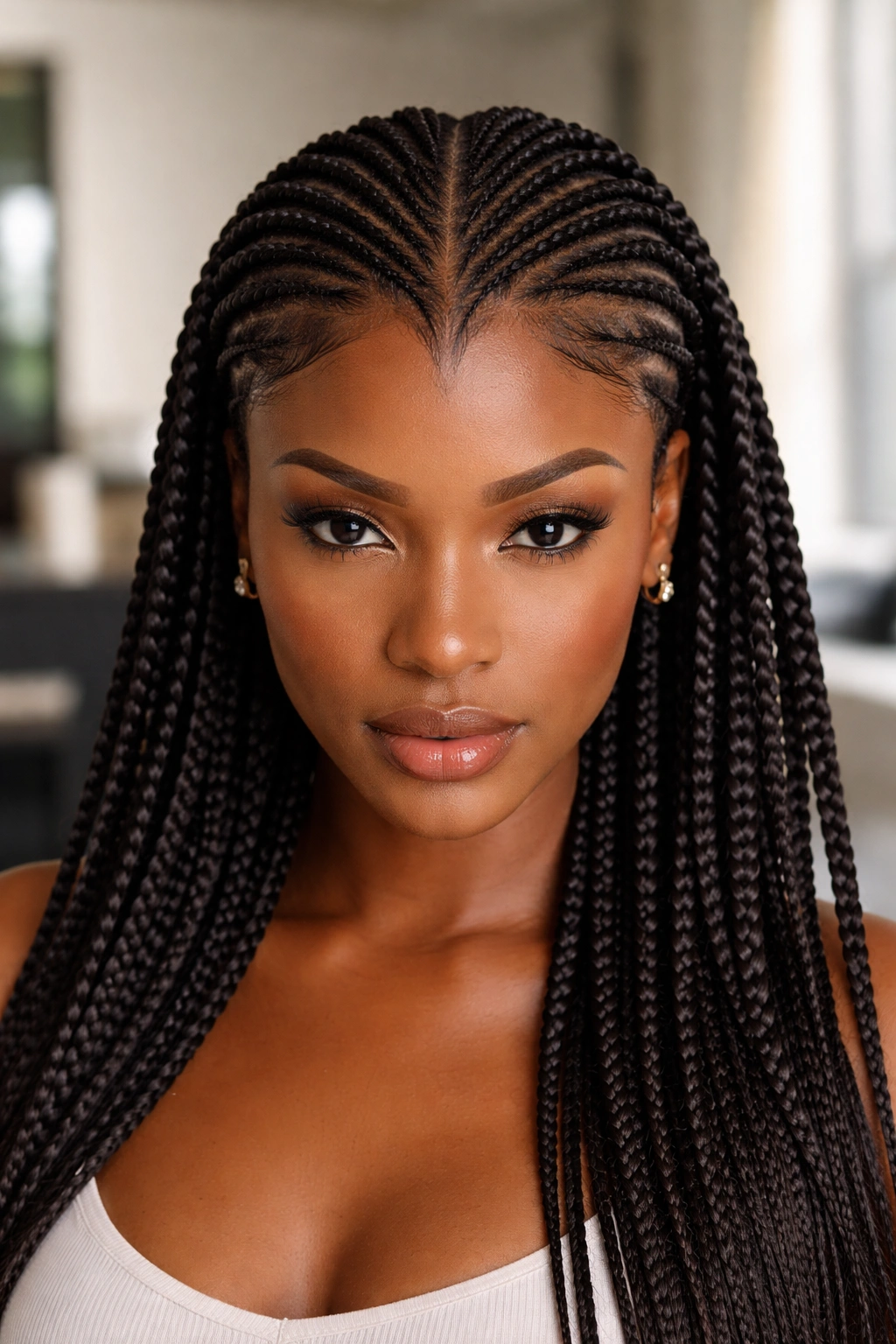
A sharp V-shaped part at the center-top of the head, with cornrows flowing outward from the V. The V’s depth can be subtle (1-2 inches) or dramatic (4+ inches).
The V creates an unexpected focal point. Reads architectural.
Works on most face shapes. Particularly flattering on oval and heart-shaped faces.
18. Cornrows With Burgundy or Wine Tones
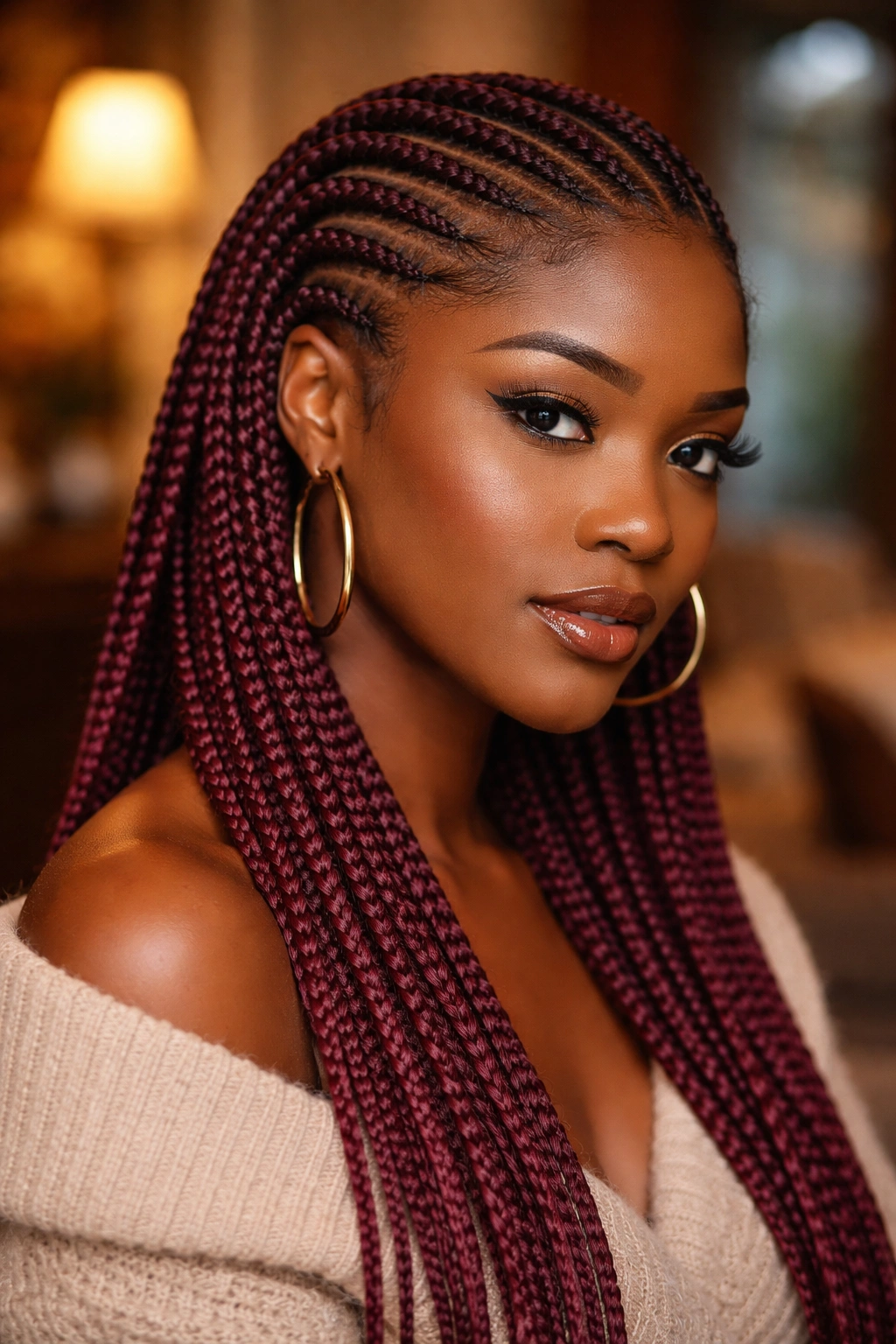
Deep burgundy kanekalon creates a rich, warm color that flatters deep skin tones beautifully. Reads sophisticated and intentional.
Wine tones work year-round but especially shine in autumn and winter styling.
Subtle highlights of burgundy in otherwise-black braids give you the color without full commitment.
19. Mini Cornrows With Long Tips
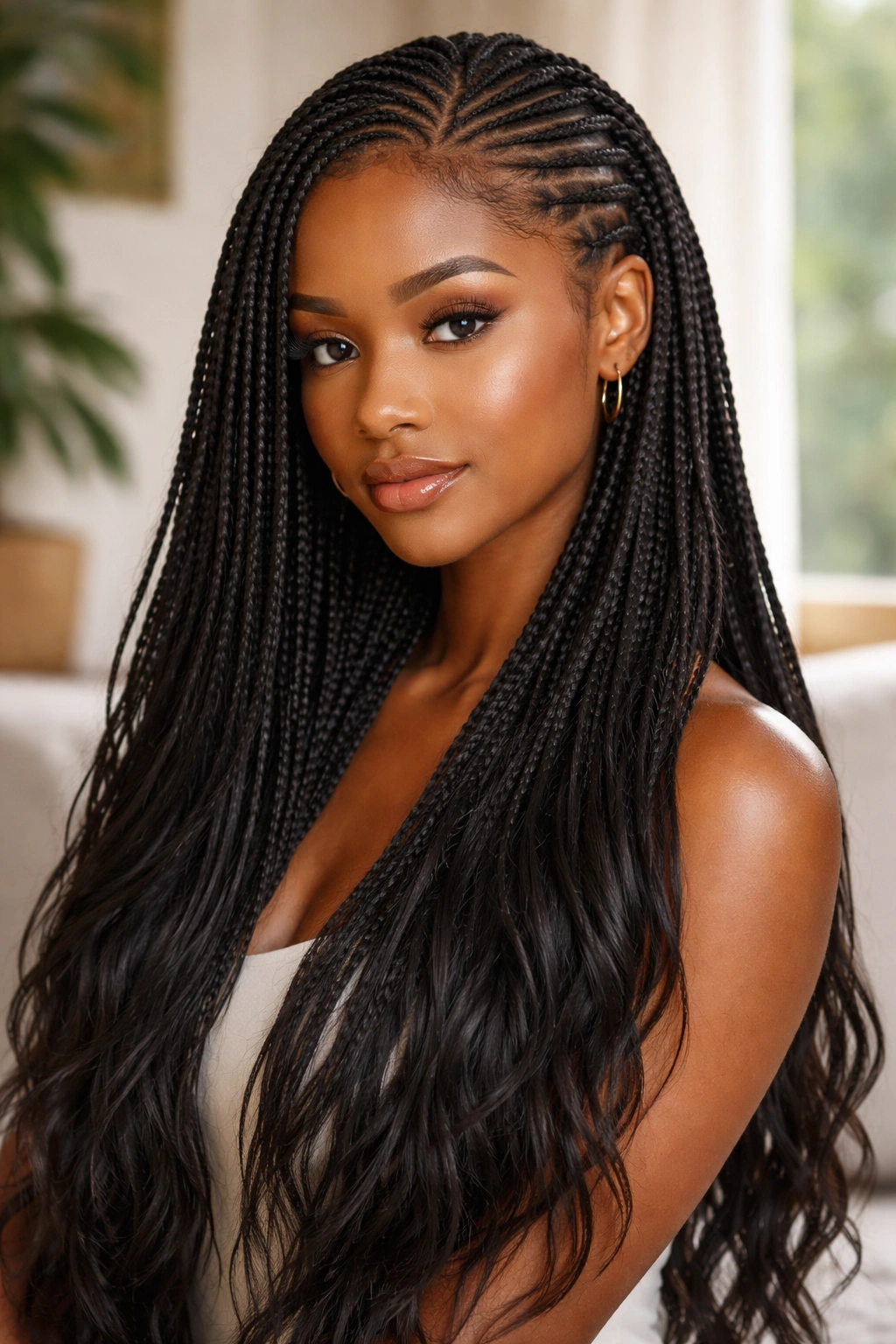
Small cornrows at the scalp transitioning into long flowing tips. The contrast between the fine braids and the substantial length creates visual drama.
Install takes 4-5 hours. The small-cornrow base is what takes the time; the long tips happen fast once the base is set.
20. Cornrows With a Pulled-Out Crown Puff
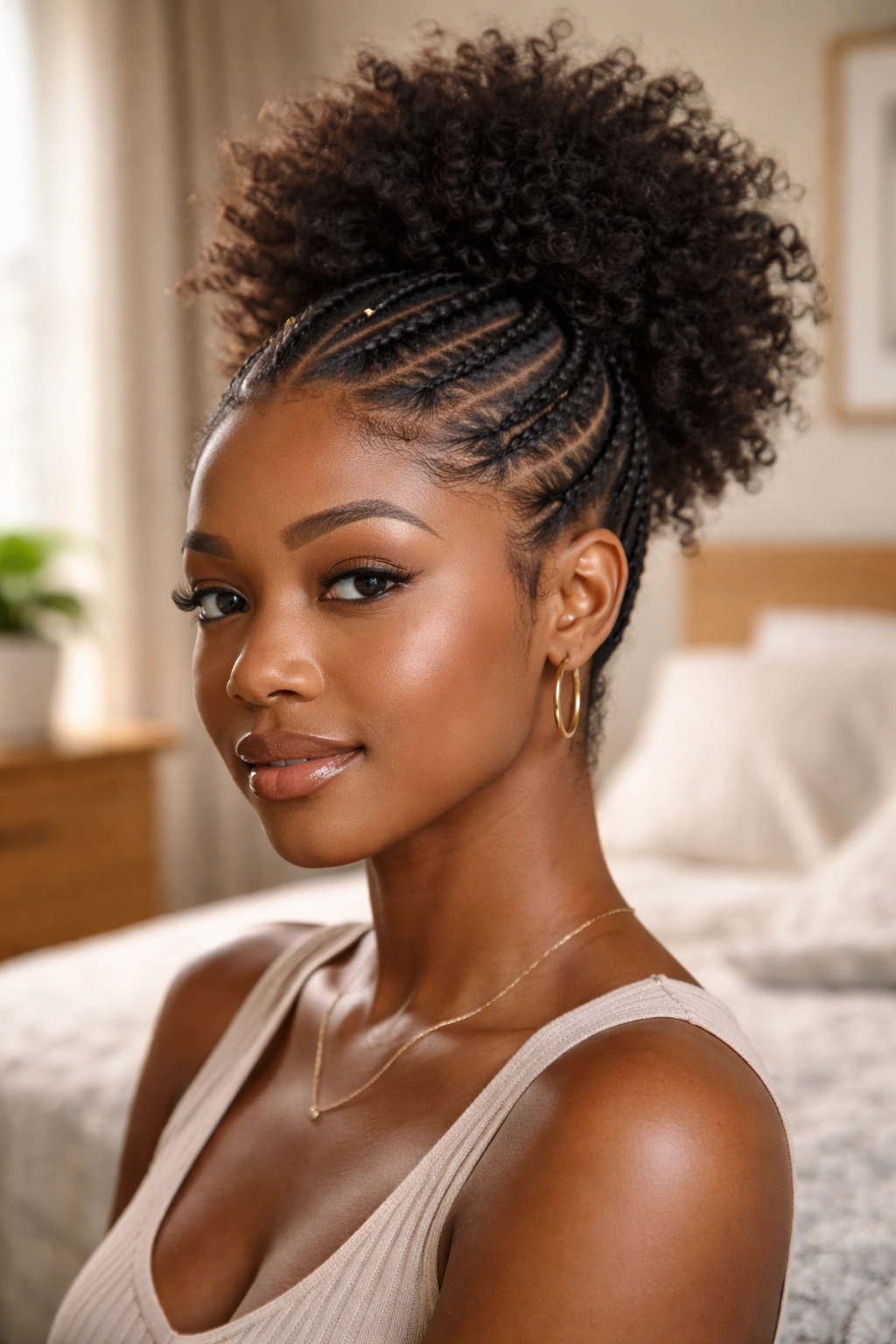
Most of the head is cornrowed, but the crown section is left out and puffed into a natural afro puff. The cornrows frame the puff like a crown.
Celebrates natural hair texture alongside braided structure. Reads unapologetic and self-assured.
Keep the puff well-moisturized so it stays shaped and defined.
21. Cornrows With a Low Side Pony
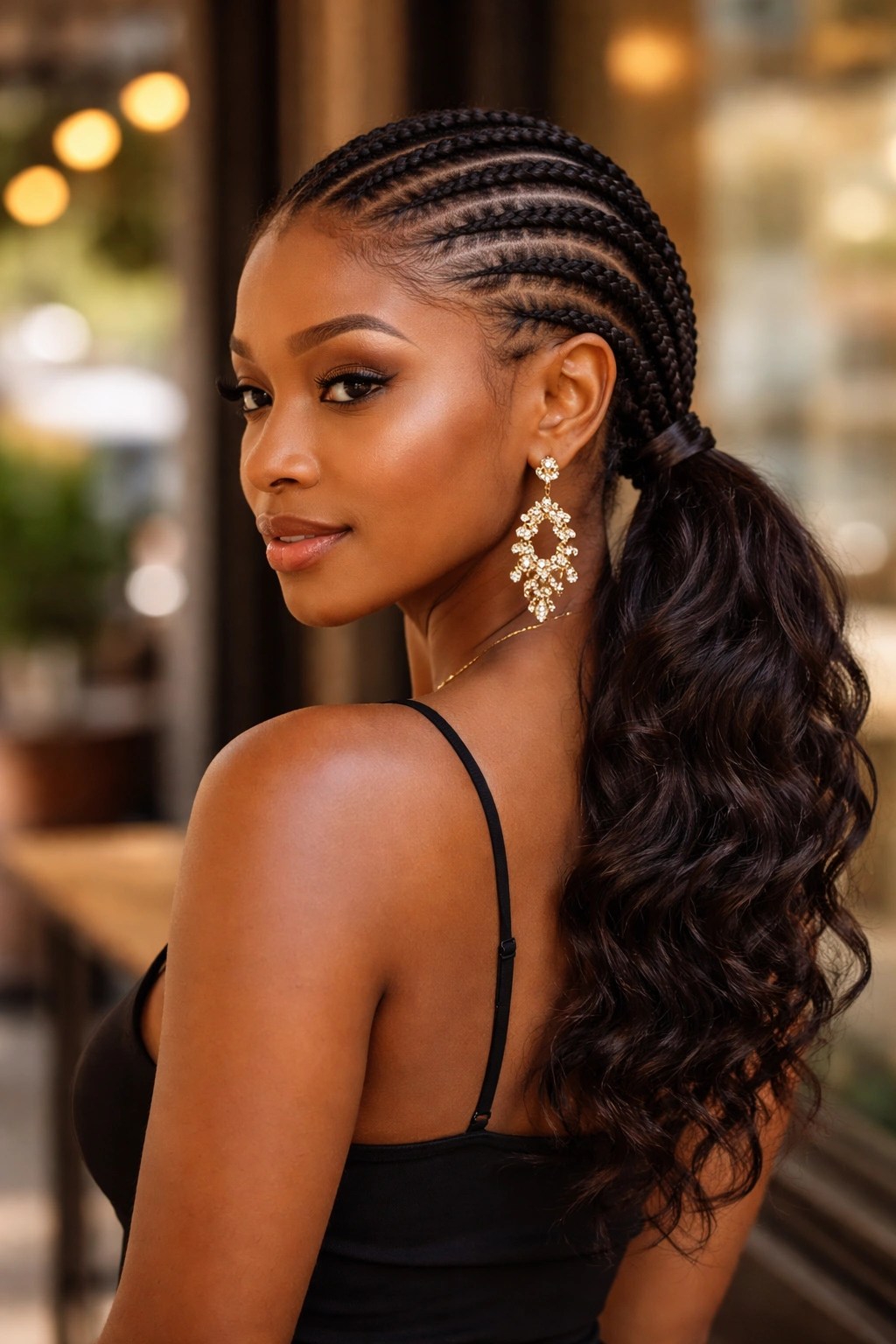
All cornrows lead into a single low ponytail at one side. The asymmetric placement creates visual interest.
Reads feminine and slightly vintage. Pairs well with statement earrings.
22. Cornrows With Bantu Knot Ends
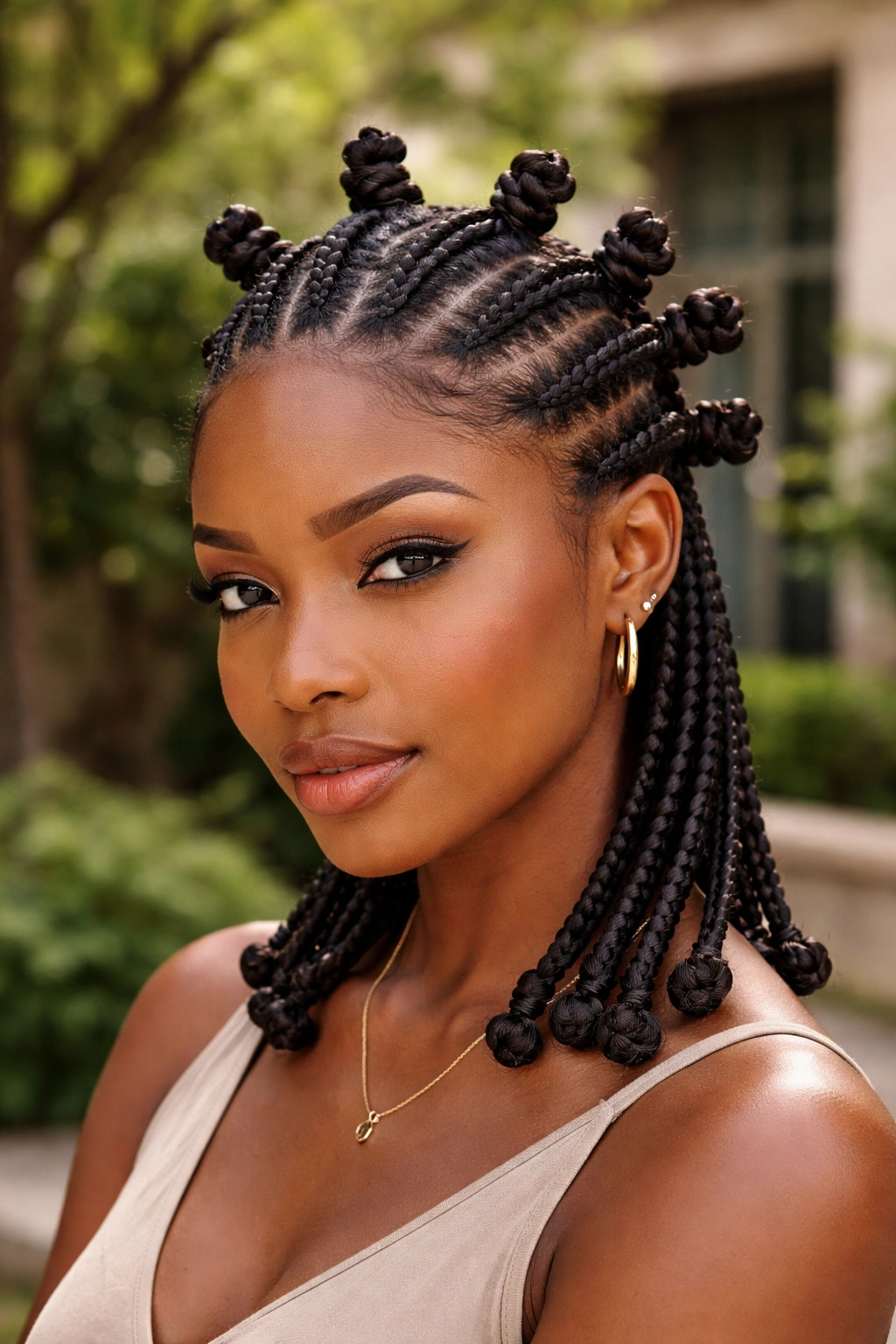
The cornrow holds hair flat at the scalp, then the ends are wrapped into small Bantu knots scattered across the head. The knots add decorative geometric shapes.
A creative hybrid. Reads tribal-modern.
The knots need to be secured with small elastics. Unsecured knots unravel within hours.
23. Ombre Cornrows From Black to Burgundy
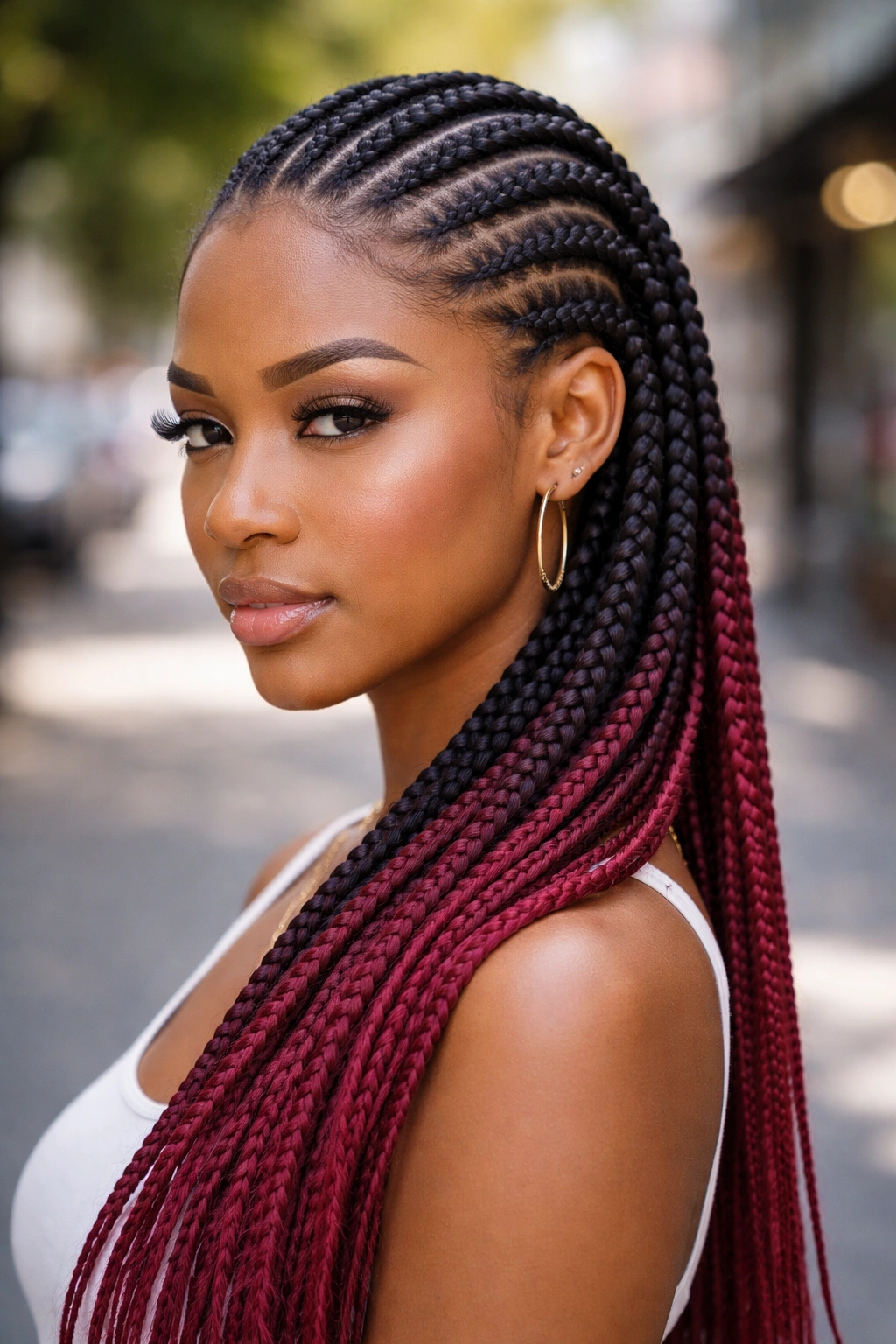
Cornrows that start natural black and transition through to burgundy at the ends. The gradient gives depth without full-color commitment.
Ombre kanekalon comes pre-colored in set blends. Look for 1B/99J or 1B/burgundy color codes.
24. Cornrows With Pearl Accents
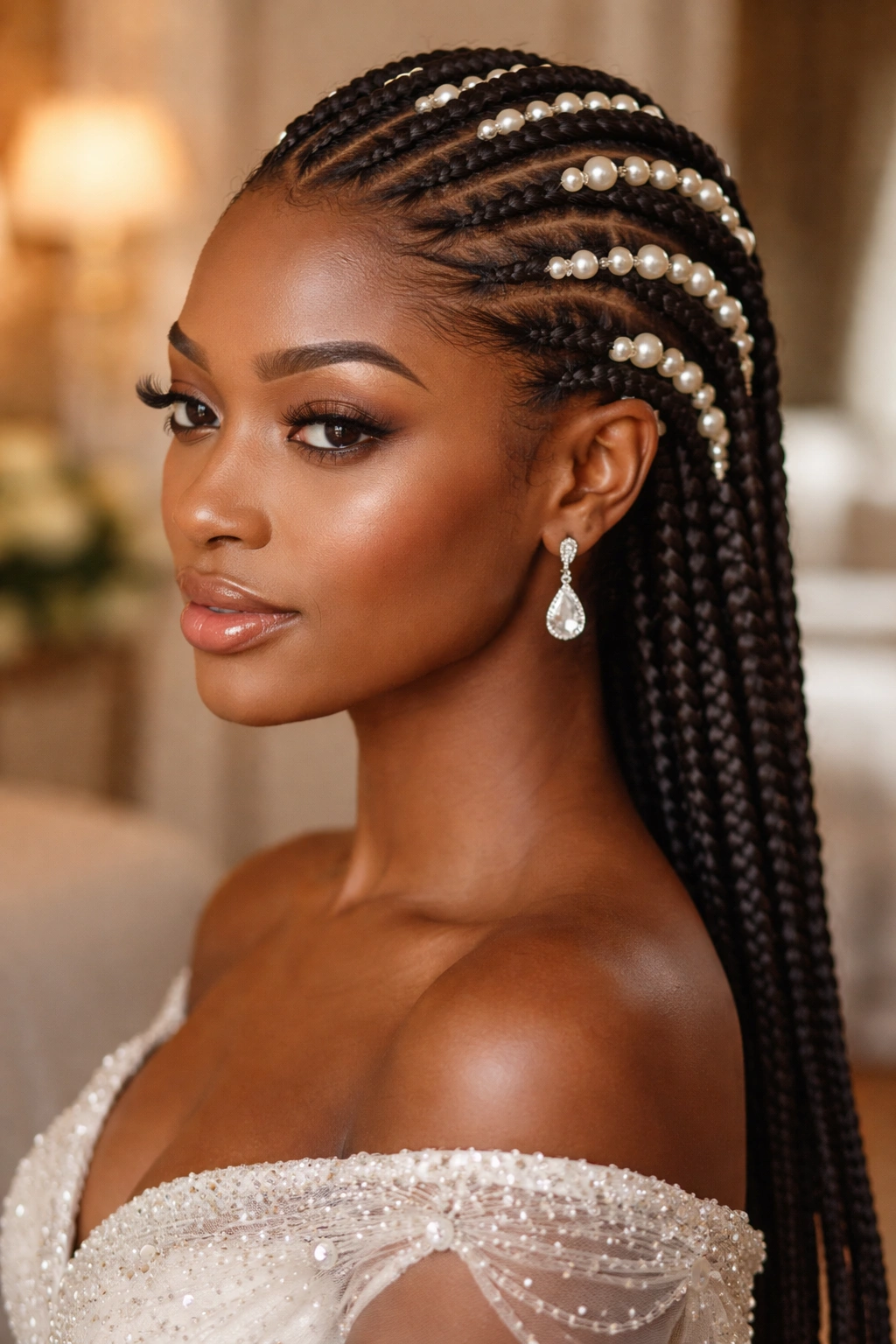
Small pearl beads woven into select cornrows at random points. The pearls catch light and read elegant.
A bridal or formal touch. Reads bespoke.
Use genuine freshwater pearls if budget allows; they look noticeably better than plastic pearl beads.
25. Long Cornrows With Blunt Ends
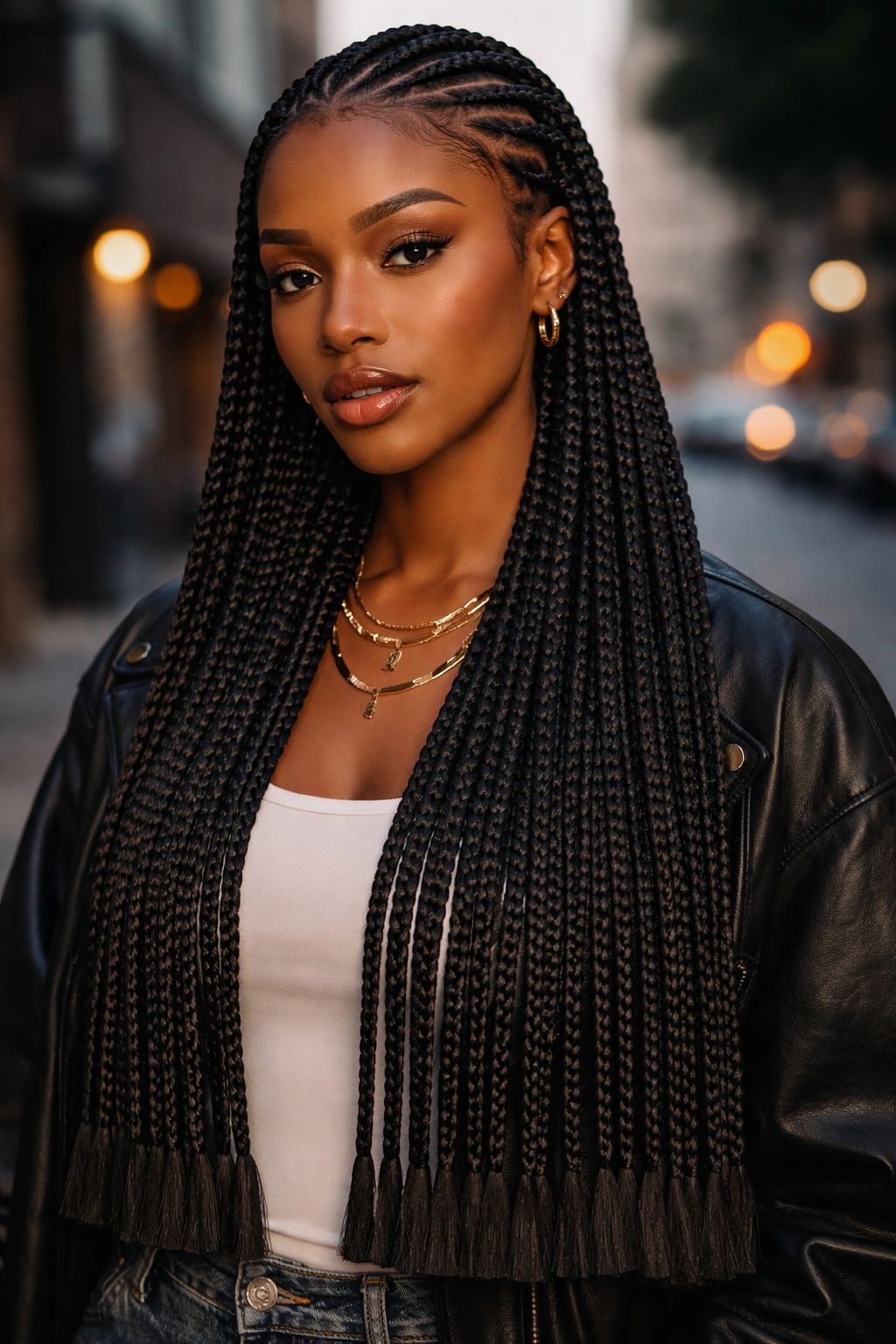
Straight-back cornrows with the extensions cut sharply across at the ends, creating a blunt finish rather than tapered. The clean horizontal line at the ends reads polished and architectural.
A modern finish. Reads editorial.
Use a good pair of hair shears to cut the kanekalon tips cleanly. Dull scissors fray the ends.
26. Cornrows With a Scarf Wrapped Headband
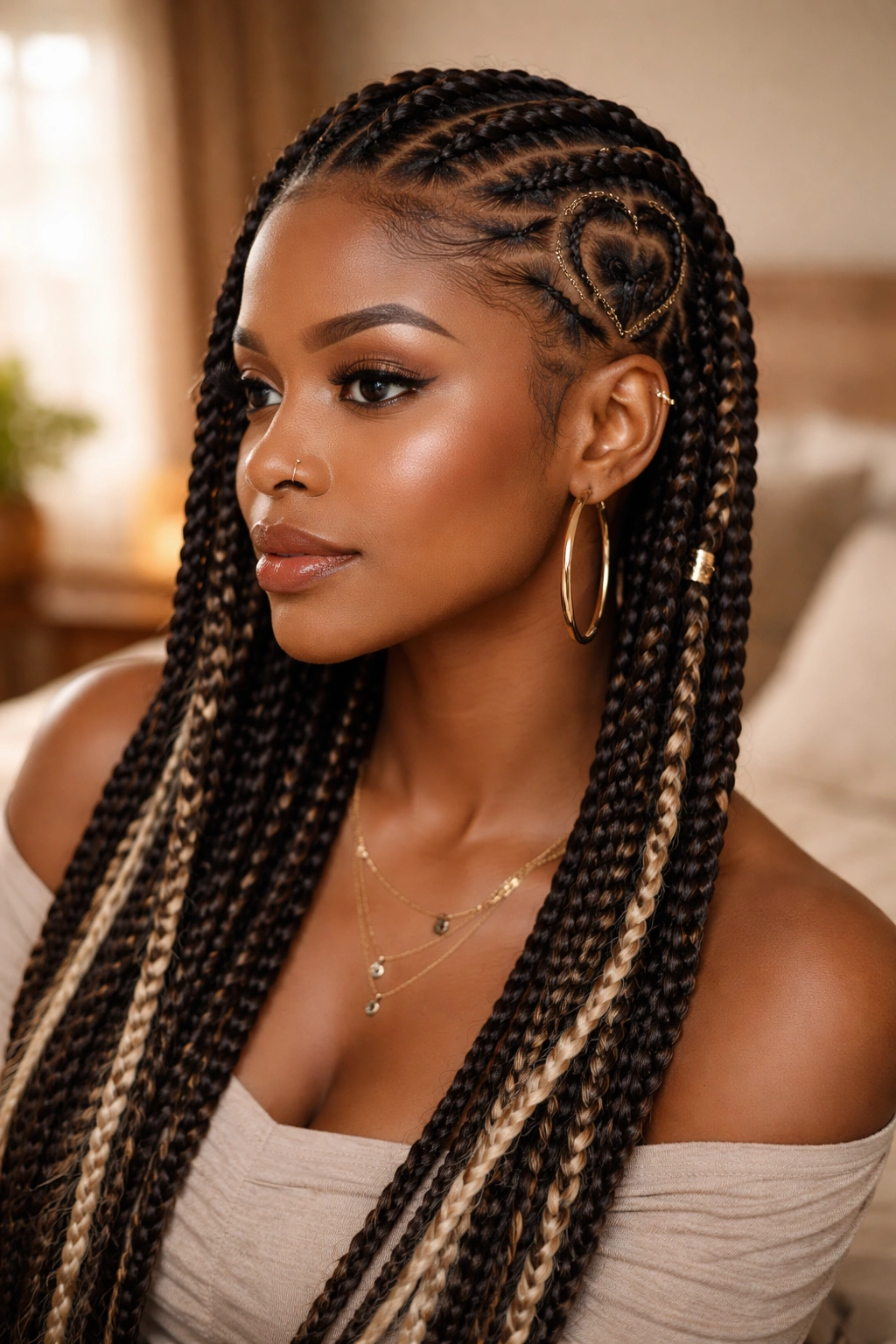
Cornrows styled normally, with a silk or printed scarf tied as a headband across the hairline. The scarf adds color and texture without requiring any styling change to the braids themselves.
A versatile dress-up option. Change the scarf to change the entire vibe.
Silk or satin scarves stay put better than cotton or synthetic fabrics.
27. Cornrows With a Slicked-Back Style
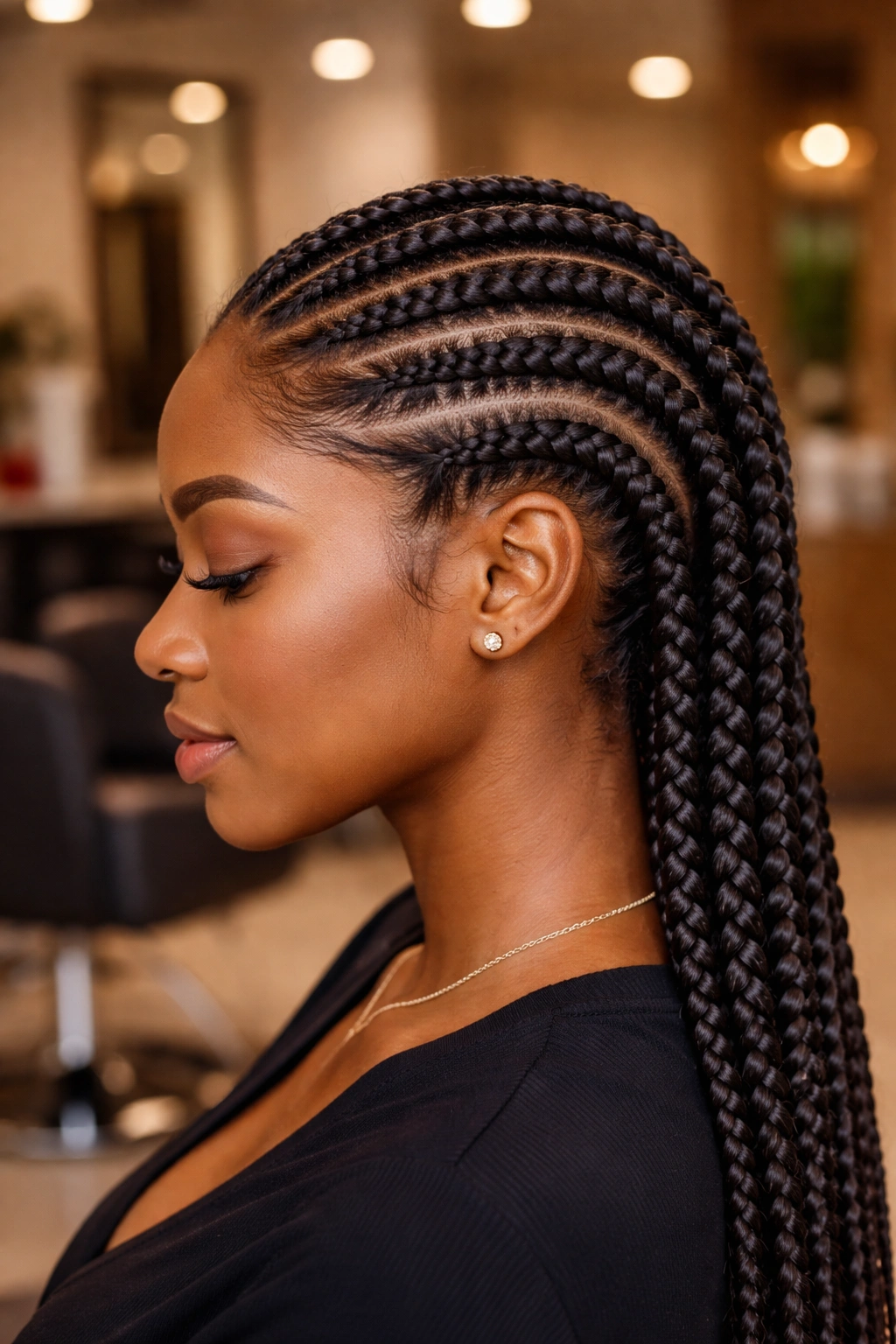
Extremely polished, gel-slicked cornrows that sit completely flat against the scalp with zero flyaways. Reads sharp, minimalist, and expensive.
Requires firm-hold gel and a boar-bristle brush for the slicking process. Every hair has to sit exactly where it’s placed.
Best for events where the hair is meant to look styled but not elaborate.
28. Cornrows With a Twisted Bun on Top
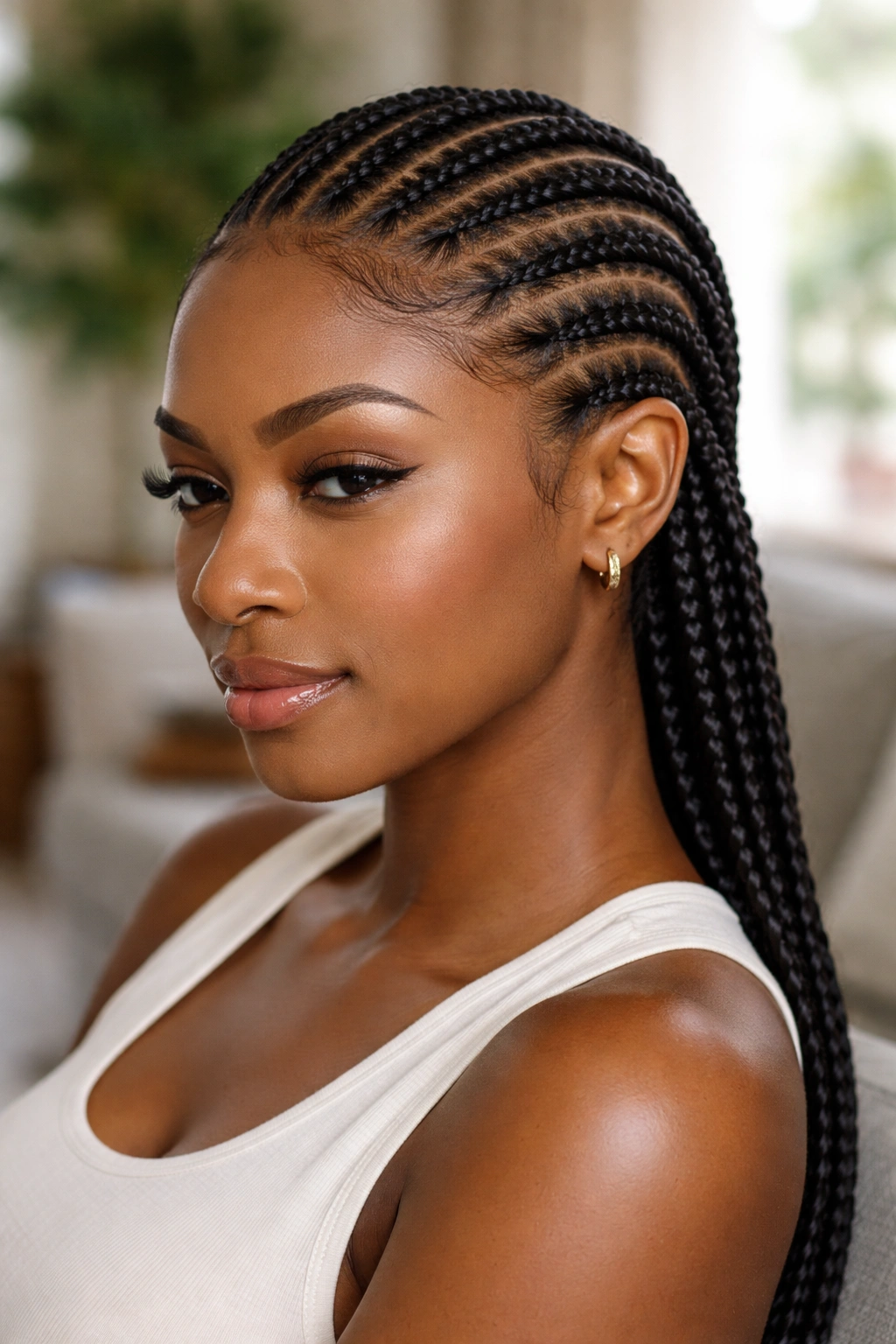
Cornrows cornrowed up to a high twisted bun at the crown. The bun is built from natural hair twisted into a chunky rope knot.
Reads festival-glam or summer-event appropriate. Casual but styled.
The bun should look soft and slightly undone, not tight and polished.
29. Cornrows With a Geometric Crown Pattern
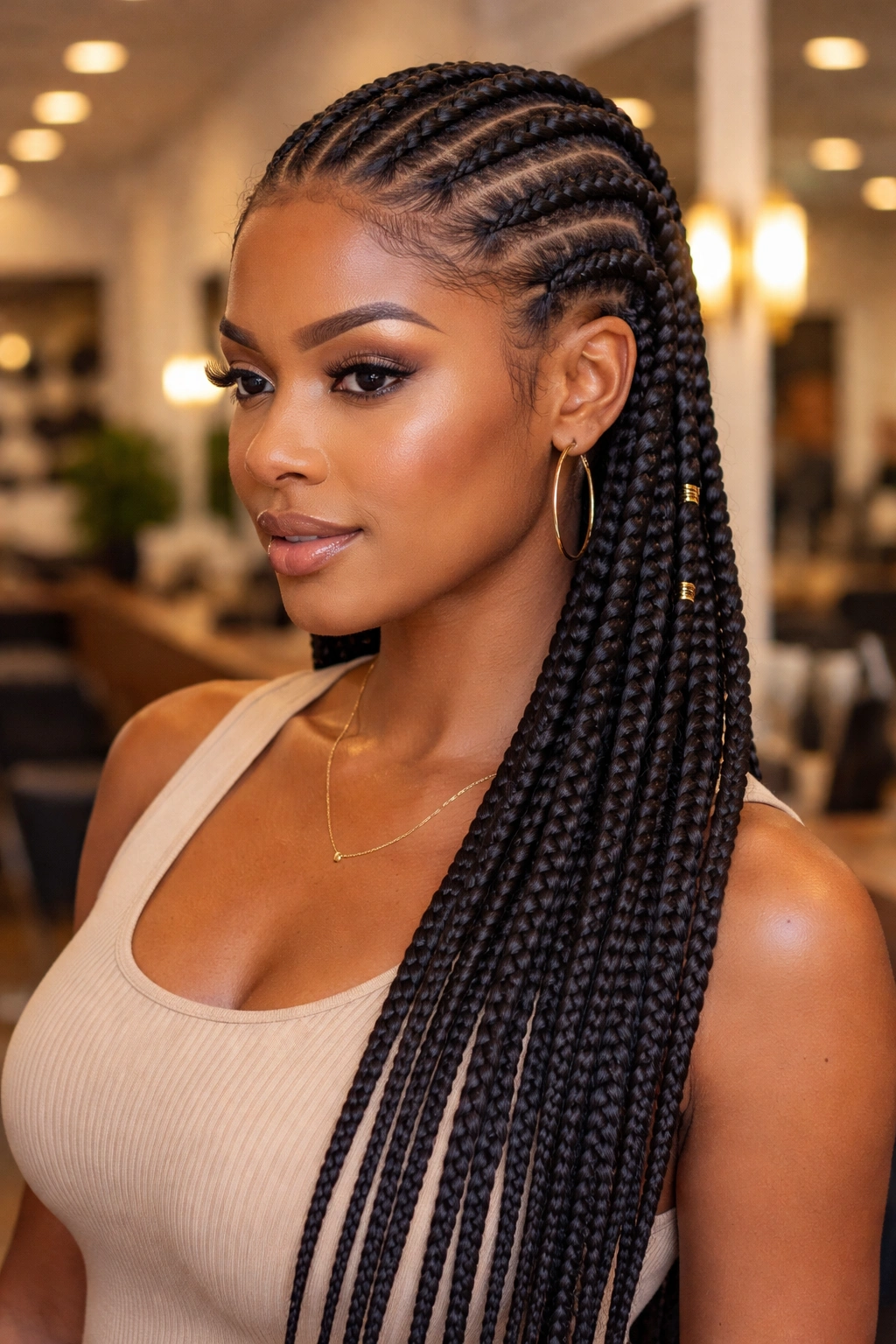
Cornrows with a crown section featuring geometric parts — triangles, diamonds, or stars. The crown design is the focal point; the rest of the head is simpler.
Concentrating the elaborate work at the crown makes the style photograph beautifully from the front while keeping install time manageable.
Takes a skilled braider. Geometric parts have to be sharp to work.
30. Cornrows With Face-Framing Curls and a Low Braided Ponytail
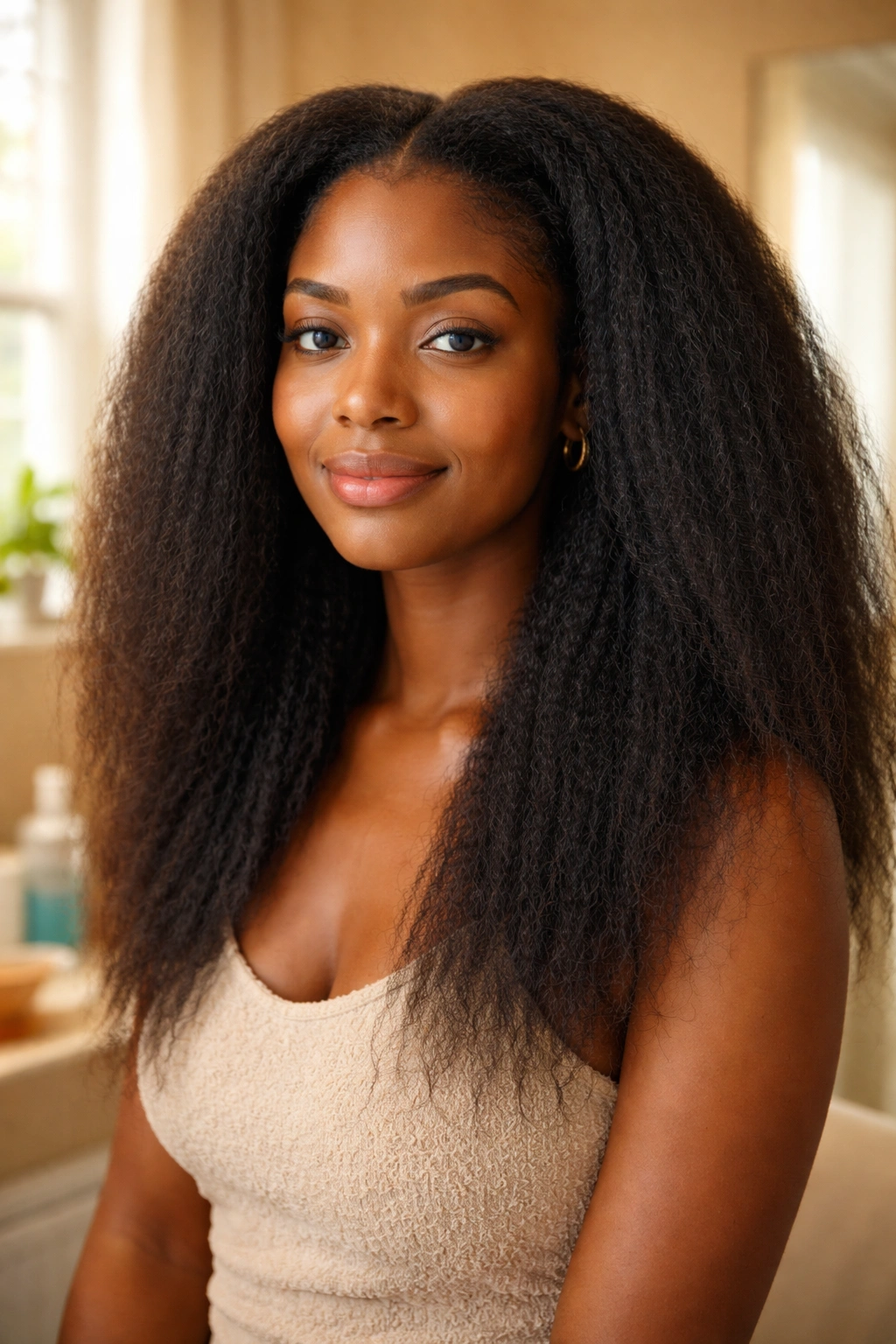
Cornrows leading into a low braided ponytail, with curly face-framing pieces pulled out at the temples. The braided pony plus face curls combo reads both polished and soft.
A formal yet feminine finish. Great for weddings, proms, or any event where you want styled-but-not-stiff hair.
The face-framing curls need pre-curled kanekalon or strategic hot-roller styling.
Daily Maintenance
A satin bonnet every night. Non-negotiable.
Edge gel and a soft brush in the morning — 60 seconds that keep the whole style looking fresh.
A water-and-leave-in spray 2-3 times a week to hydrate the scalp and braids. Don’t drench; a light mist is enough.
Protecting the Hairline
Edges are the most vulnerable part of any cornrow style. Protect them with these habits:
- Never sleep on a cotton pillowcase, even with a bonnet
- Avoid pulling the braids into tight ponytails daily (rotating positions distributes tension)
- Apply edge oil (castor oil or a specialized edge serum) to the hairline 2-3 times a week
- Stop the style if you notice thinning or visible damage at the temples
Edges that are neglected don’t come back easily. A few weeks of prevention beats months of trying to regrow.
Scalp Care Under Cornrows
Apply a lightweight scalp oil 2 times a week. Jojoba or sweet almond oil work well. Use a nozzle-tip bottle to direct oil to the scalp without coating the braids.
Wash the scalp every 10-14 days with diluted sulfate-free shampoo. Massage gently, rinse thoroughly with cool water.
Avoid heavy butters (shea, coconut) that build up and cause flaking. Stick to light oils only.
When to Take Them Down
Most trendy cornrow styles last 4-6 weeks with excellent care. Longer styles with extensions can go 8 weeks.
Take down signals: persistent scalp itching, visible lifting at the roots, front edges looking fluffy beyond what edge gel can fix, or simply feeling ready for a new look.
Don’t push past week 6-8. The new growth tangles with the established braids, and takedown becomes a breakage risk.
Choosing the Right Style for Your Life
Corporate professionals: stick to sleek feed-ins, knotless cornrows, crown braids, or classic straight-backs. These read polished and minimize distraction.
Creative industries: play with stitch braids, geometric parts, colored highlights, or elaborate tribal-inspired designs. Your industry rewards self-expression.
Students and casual wearers: anything goes. The cornrow world is yours — try lemonade braids, Fulani styles, bohemian hybrids, or ombre color.
Event-specific: crown braids and pearl-accented styles for weddings; top knots and swept-backs for nights out; braided updos for formal events.
The right cornrow style reflects who you are, where you’re going, and what you want your hair to say while you’re there. Pick the ones that match your actual life — not the ones that look good on someone else’s life.
Cornrows have been a styling tradition for thousands of years precisely because they adapt. The techniques evolve, the aesthetics shift, but the fundamental value stays the same — protective, elegant, and distinctly Black styling that carries forward what came before while still feeling like now.
