


Stitch cornrows in red are not a quiet style. They announce themselves from across a room, frame the face like a deliberate frame around a portrait, and turn the rhythmic horizontal “rungs” of stitch braiding into a graphic, almost architectural feature. Done in red — whether deep burgundy, fire-engine crimson, or a copper-leaning auburn — the style amplifies every visual element of the stitch technique while adding a layer of color drama few other braid styles can match.
Color-treating cornrows isn’t a casual decision. Red kanekalon comes in a range of tones, each flattering different skin undertones. The stitch technique itself adds visual complexity that interacts with color in unexpected ways. And the maintenance for red braids differs subtly from natural-tone braids — the dye can transfer onto pillowcases, scarves, and (occasionally) light-colored shirts. Worth knowing before the install.
Why Red Reads So Differently Than Other Colors
Red is the highest-energy color the eye registers. Studies of attention show red draws focus faster than any other hue, and that effect is magnified when the red contrasts against skin. Wearing red braids isn’t subtle even at the most muted shade.
Different reds carry different emotional weights. Deep burgundy reads as sophisticated, expensive, autumnal. Bright cherry reads as playful, energetic, attention-seeking. Copper-influenced reds read as warm, natural, earthy. Wine-influenced reds read as moody and dramatic.
Match the red to the situation. Burgundy for work environments where bold color is acceptable but not over-the-top. Cherry for events, parties, and confident daily wear. Copper for natural-leaning aesthetics. Wine for evening looks and creative settings.
How Stitch Technique Shows Color Differently
Stitch cornrows have those distinctive horizontal rungs running perpendicular to the braid, and those rungs catch light differently than the smooth braid surface around them. In red, this creates a subtle textural shimmer where each stitch bump shows a slightly different angle of the same color.
The rung-and-smooth-strand contrast also creates a sense of depth that solid-color braids don’t have. The stitches read as raised; the braid sections between read as recessed. In red kanekalon, this depth becomes especially visible because the color reflects light variably across the contoured surface.
Solid red cornrows look striking. Stitched red cornrows look almost three-dimensional. The technique is worth the extra installation time for anyone choosing a red color treatment.
Picking the Right Red Kanekalon
Red kanekalon varies dramatically in quality and color accuracy. Cheap red packs often have a strong orange undertone that wasn’t visible in the package photo and shows up clearly under natural light. Mid-grade and premium packs hold color more accurately.
When buying red kanekalon, check the color in natural daylight before committing to install. Open the pack, lay a strand against your forearm, and step into actual sunlight. If the color matches what you wanted in the photos, proceed. If it skews too orange or too brown, return it.
Premium red shades to look for: burgundy 99J, copper 350, fire 130, wine 39J, deep red 33. These are industry-standard color codes that produce reliable results across multiple kanekalon brands. Generic “red” without a code number is a gamble.
Will the Red Color Stain Your Skin or Clothes?
Yes, sometimes. New red kanekalon can transfer dye, especially when wet or sweaty. Most premium brands are pre-rinsed at the factory to minimize bleeding, but cheaper packs often need a home rinse before installation.
To pre-rinse: soak the kanekalon in cool water with a tablespoon of white vinegar for 15 minutes, then rinse until the water runs clear. This sets the color and prevents most transfer issues during wear.
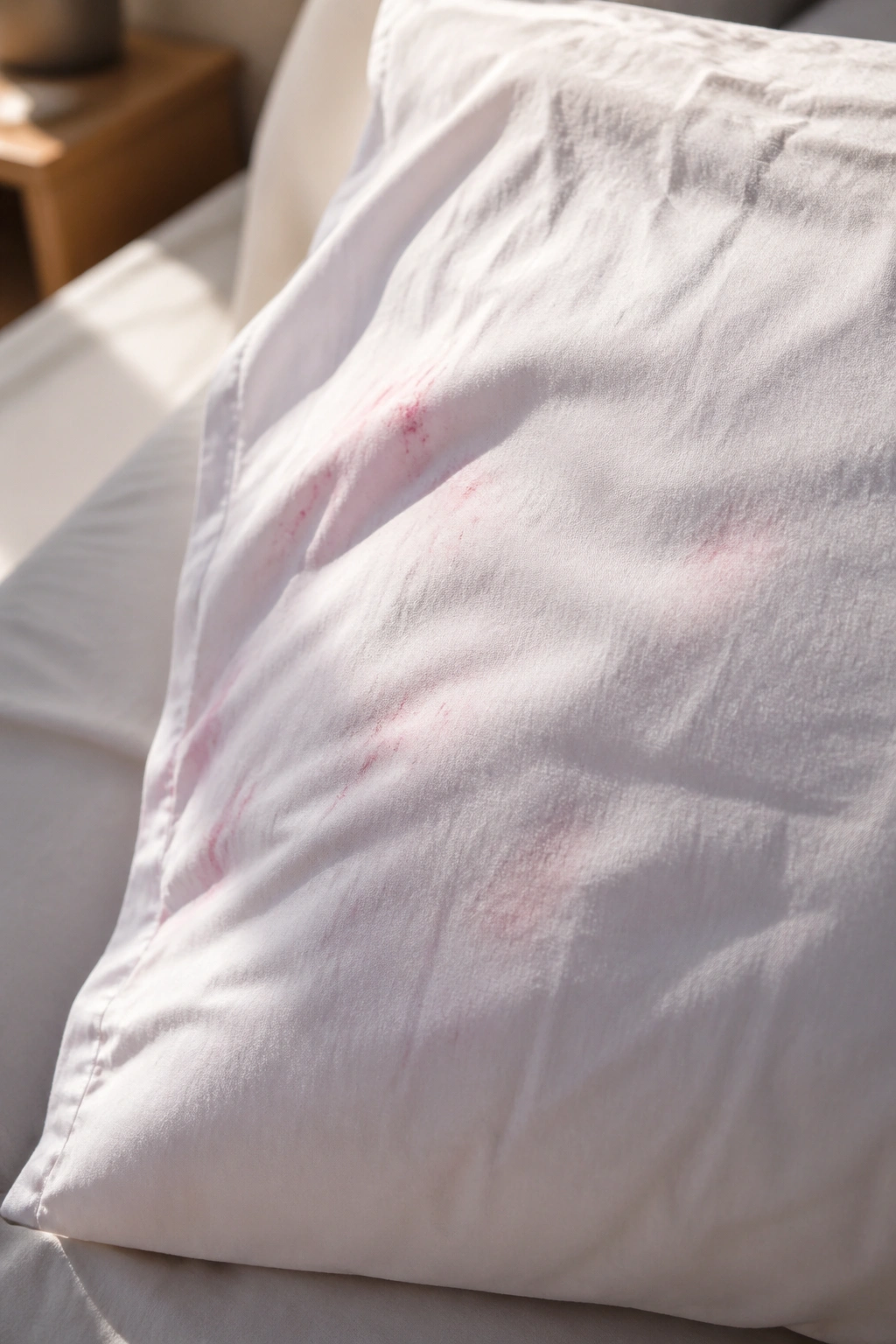
Even with pre-rinsed kanekalon, expect minor staining on light-colored pillowcases for the first few days. Use a dark-colored silk pillowcase to avoid the issue entirely. Sweat from intense workouts can also cause minor color transfer onto white workout clothes — wear darker tops at the gym for the first week.
Tools and Prep Specific to Red Stitch Cornrows
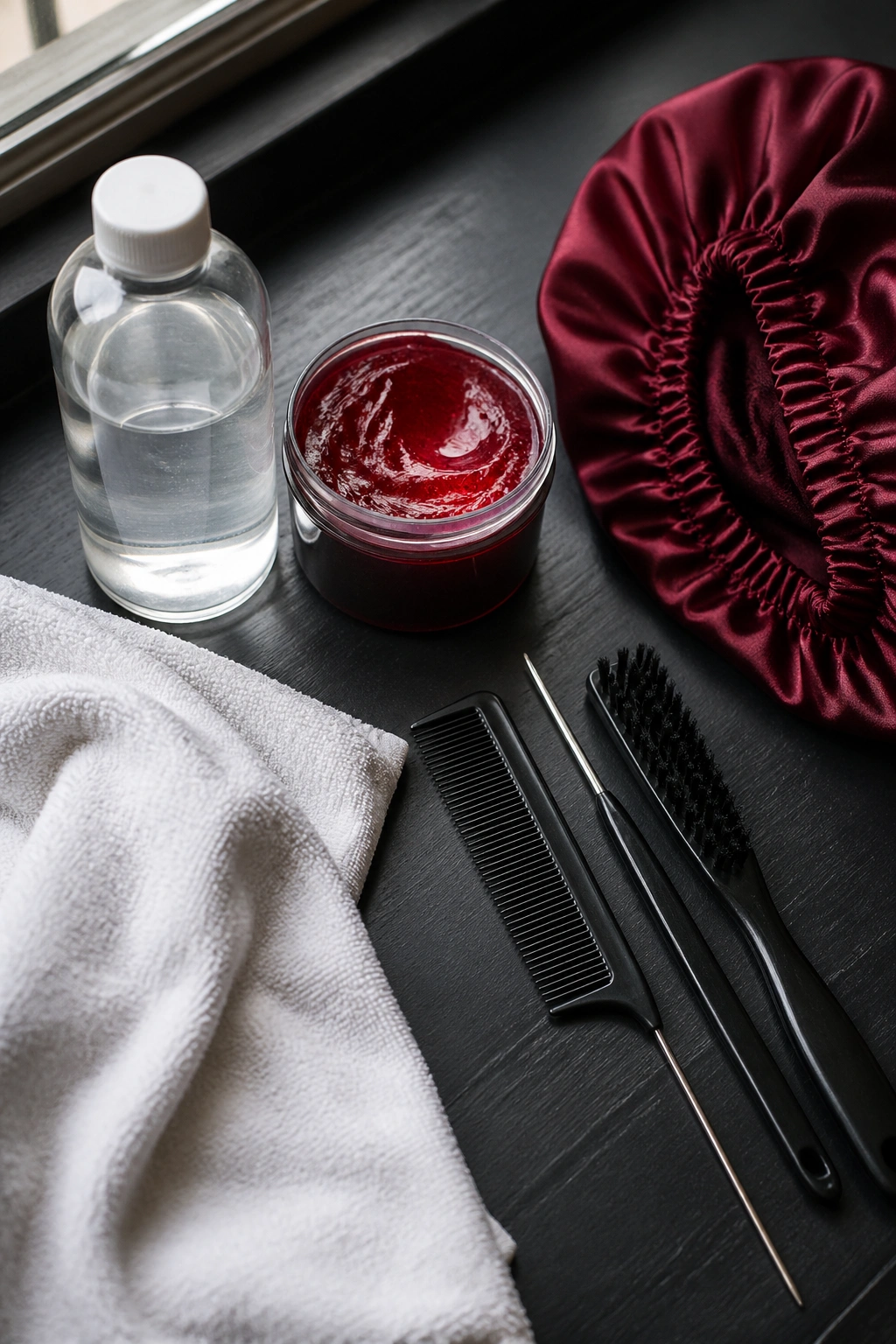
The standard cornrow toolkit applies, with a few additions for red color work:
- White vinegar — for pre-rinsing kanekalon
- Color-protecting hair oil — keeps the red vibrant longer than standard oils
- Dark silk pillowcase or bonnet — prevents color transfer to bedding
- Red-tinted edge gel (if you can find it) — keeps edges color-coordinated
- Color-safe shampoo — for the in-wear washes
- A clean white towel — for testing color transfer before going out in light clothes
Some braiders prefer to install red braids on slightly drier hair than usual. The kanekalon grips better against less-slippery natural hair, and the stitch definition holds tighter when the install starts dry.
A Note on the Cultural Weight of Red Braids
Red has carried significance in many African braiding traditions. Himba women in Namibia coat their braids with red ochre clay, creating distinctive copper-red braids that signal cultural identity and beauty traditions specific to their community. Maasai warriors used red ochre in their hair as a visual marker of social status and ceremony.
In contemporary Black hair culture, red braids carry an additional layer of meaning — the choice to wear unmistakable, attention-drawing color is itself a statement of confidence and visibility. There’s a reason red braids photograph so well: the color refuses to be ignored, and that refusal mirrors something about the cultural moment of choosing to wear them.
1. Deep Burgundy Stitch With Sharp Definition
Six to eight stitch cornrows in deep burgundy 99J kanekalon, with extra-defined horizontal rungs that catch light along every braid.
Why It Works
Burgundy is rich enough to read as deliberate without screaming for attention the way bright red does. Sharp stitch definition in this color creates a textural sophistication that works in nearly any setting from work to evening events.
- Best skin tones: All; particularly flattering on warm to neutral undertones
- Install time: 3.5-4 hours
- Wear length: 2.5 weeks with proper maintenance
Pro tip: Burgundy looks dramatically different in different lighting. Check yourself in natural daylight, fluorescent office light, and warm restaurant light before committing. Some burgundies skew toward purple in cool light.
2. Bright Cherry Red Stitch With Center Part
Twelve straight-back stitch cornrows down a sharp center part, all in vibrant cherry red 130 kanekalon.
The center part with cherry red is unapologetic styling. There’s no ambiguity about the color choice — it commits fully and demands the same commitment from the wearer. The result is high-energy, photogenic, and impossible to forget.
Sharp center parts work because they introduce visual symmetry that anchors the bold color. Without the center part, all-over cherry red can feel chaotic; with it, the color becomes part of an organized aesthetic.
3. Copper-Red Stitch With Feed-In Length
Mid-back length feed-in stitch cornrows in copper-red 350 kanekalon. The feed-in technique blends the color smoothly from the natural roots into the full red extension.
Copper red is the most “natural” of the red shades. It mimics the kind of red seen in actual hair (in people of various heritages), which means it reads as a vibrant hair color choice rather than a costume color. Particularly striking on darker skin tones where the warm copper creates a complementary glow.
Feed-in installation matters more for red than for natural-tone braids. The transition from natural hair to colored kanekalon shows clearly if not blended properly. A clean feed-in makes the whole install look professional and intentional.
4. Wine-Red Stitch With Beaded Tips
Eight stitch cornrows in wine-red kanekalon (39J or similar deep red-purple shade), finished with simple wooden beads at the tips.
Wine red is moodier and more sophisticated than bright cherry. It works particularly well for evening events, fall and winter wardrobes, and anyone who wants color drama without the extroverted energy of brighter reds.
Wooden beads in matched dark tones complement the wine red without competing. Avoid metallic beads with this color choice — they fight the moody undertone. Stick to wood, ceramic, or matte finishes.
5. Fire Red Stitch in Jumbo Width
Six jumbo-width stitch cornrows in fire red 130 — wider than typical stitch braids, with bigger, bolder rungs to match the scale.
Jumbo stitch in fire red is a statement at every dimension. The wider braids make the stitch rungs more visible from a distance. The intense red color carries the visual weight of the larger braid scale. The combination works only if the wearer leans into the boldness.
Pair with simple, structured clothing. Busy patterns or competing accessories overwhelm the look. Solid black, white, or denim lets the braids be the focal point without visual competition.
6. Two-Tone Red Stitch (Burgundy and Copper)
Half the braids in burgundy, half in copper, alternating across the head in a stitch pattern.
Two-tone reds within the same color family work because the variation is subtle enough to read as dimensional rather than confused. A burgundy-and-copper combination looks like deliberately layered color, similar to how natural hair can have multiple red tones from sun and growth patterns.
Pick reds that share warmth or coolness. A warm burgundy with a warm copper reads cohesive. A cool burgundy with a warm copper reads accidental. Bring kanekalon packs together to compare in natural light before installation.
7. Red Stitch With Ombre Tips
Stitch cornrows that start in deep burgundy at the roots and gradually transition to a brighter cherry or fire red at the tips.
The ombre effect adds even more dimension to an already textured color choice. The transition from dark to bright red follows the length of each braid, creating a sense of depth and movement that solid colors can’t achieve.
Ombre kanekalon is sold pre-blended in some shops, or you can layer two colors during feed-in to create the gradient manually. Pre-blended packs are easier; manual layering gives more control over where the transition happens.
8. Pure Red Mini Stitch Style
Twenty thin stitch cornrows in pure mid-tone red, all the same color, finished with no beads or accessories.
Sometimes the styling choice is restraint. A full head of identical red stitch cornrows with no embellishments lets the color and the technique do all the talking. The repetition of identical braids creates visual rhythm without distraction.
Mini stitch in red works as a neutral version of bold color — the color is unapologetic but the styling is clean. Good choice for anyone who wants the impact of red braids without the additional complexity of patterns, beads, or two-tone effects.
9. Dark Cherry Stitch With Edge Drama
Mid-tone cherry stitch cornrows paired with elaborately styled edges in matching color (using a tinted edge gel to coordinate the baby hairs).
Tinted edge gel is harder to find but exists in some specialty hair supply shops. A red-tinted edge gel matched to your braid color creates a fully integrated look from hairline to braid tip.
If you can’t find tinted edge gel, use clear gel with great precision. Strong, well-defined edges in any color work because the contrast against dark hairline skin creates intentional structure that reads as professional styling rather than casual wear.
How to Style It
- Use a small angled brush for edge work
- Set edges with a silk wrap for at least 30 minutes after styling
- Touch up edges every 2-3 days to maintain definition
- Avoid heavy edge product that flakes or pills
10. Berry Red Stitch With Side Sweep
A small section of stitch braids at the front swept dramatically to one side, with the rest of the braids in standard straight-back stitch, all in berry red.
The side sweep softens the severity of straight-back stitch braiding. It introduces movement at the front of the head while keeping the body of the style structured. The berry color (a slightly purple-leaning red) photographs beautifully and flatters most skin tones.
The swept section needs to be planned during installation, not added later. Communicate the side sweep desire before the first braid goes in.
11. Tomato Red Stitch With Diagonal Parting
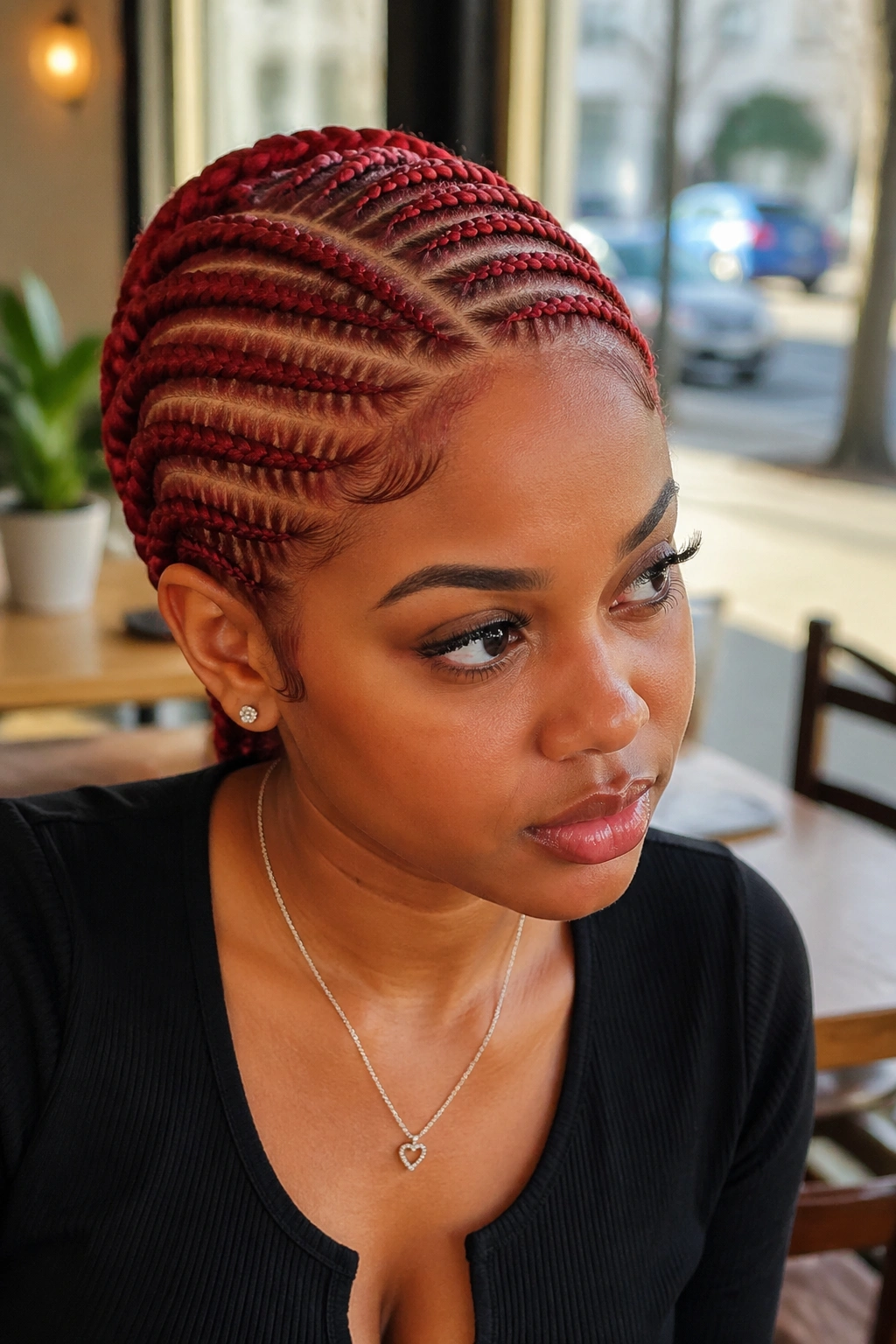
Stitch cornrows in tomato red running on a diagonal parting from upper left to lower right of the nape.
Tomato red is on the warmer, more orange end of the red spectrum. It pairs beautifully with cool-toned skin and offers a slightly retro, almost vintage look that feels fresh against modern parting techniques.
Diagonal partings flatter most face shapes by elongating the visual line of the head. In tomato red, the diagonal becomes especially noticeable — the eye follows the angled lines naturally because the color demands attention along its path.
12. Crimson Stitch With Halo Bun
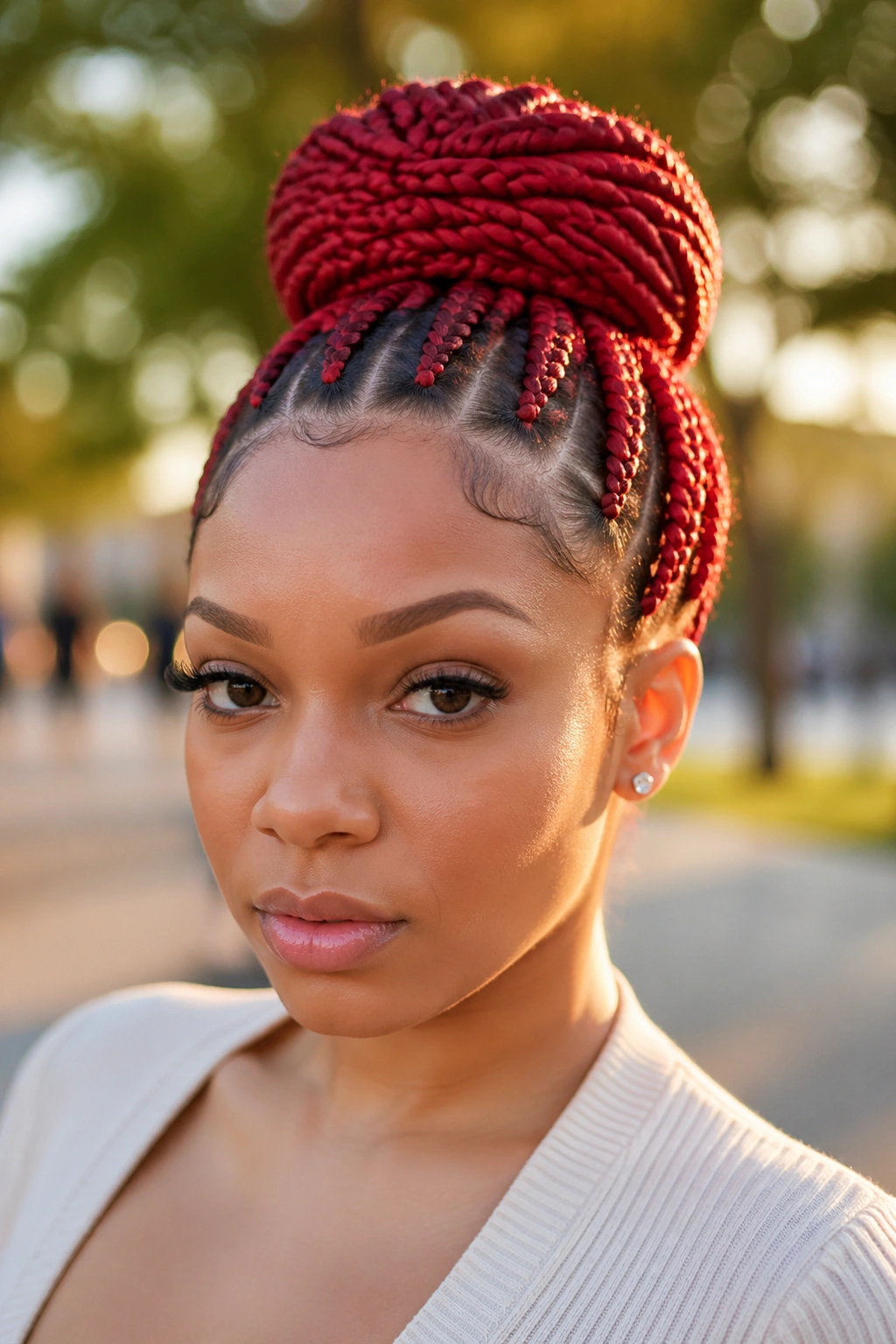
Stitch cornrows in crimson red wrapping the perimeter of the head, with the crown gathered into a top bun.
The halo-bun structure works for thicker hair that doesn’t all flatten into a standard cornrow install. Braiding only what fits flat against the perimeter and gathering the crown into a bun gives both protective styling and a natural-hair element.
Crimson is a clear, true red without blue or orange undertones. It’s the most “primary” of the red shades and reads as confident, classic, and timeless.
13. Dark Auburn Stitch With Layered Length
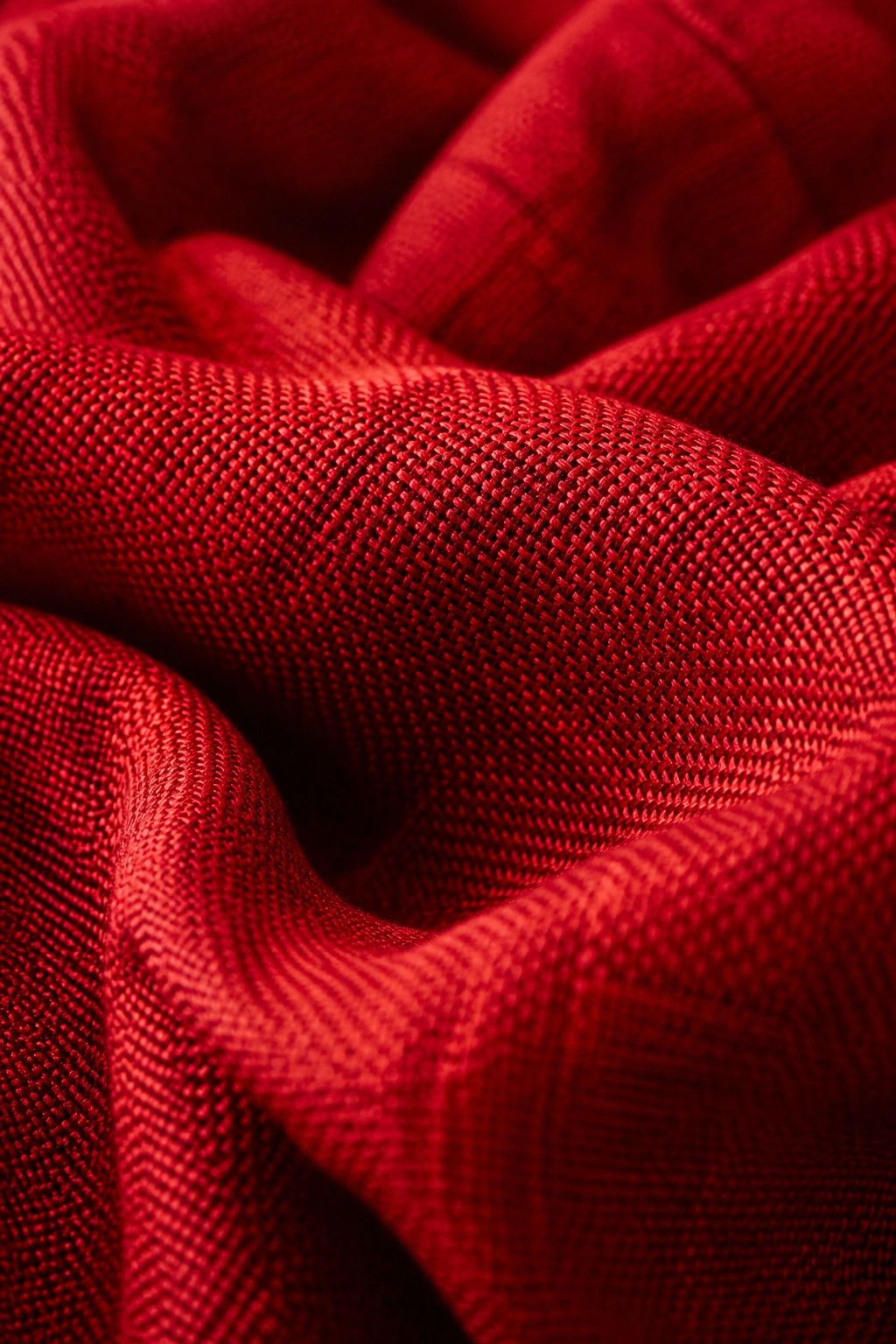
Mid-back length stitch cornrows in dark auburn (a brown-leaning red), with the lengths layered so the braids fall at slightly different positions.
Dark auburn is the most subtle red option. It reads almost as a brown with red undertones, making it a good choice for environments where bright red would feel out of place but a hint of color drama is welcome.
Layered braid lengths create movement at the back of the head that matched-length braids don’t. Cut the lengths after installation, working with sharp scissors to taper the bottoms cleanly.
14. Ruby Red Stitch With Gold Bead Accents
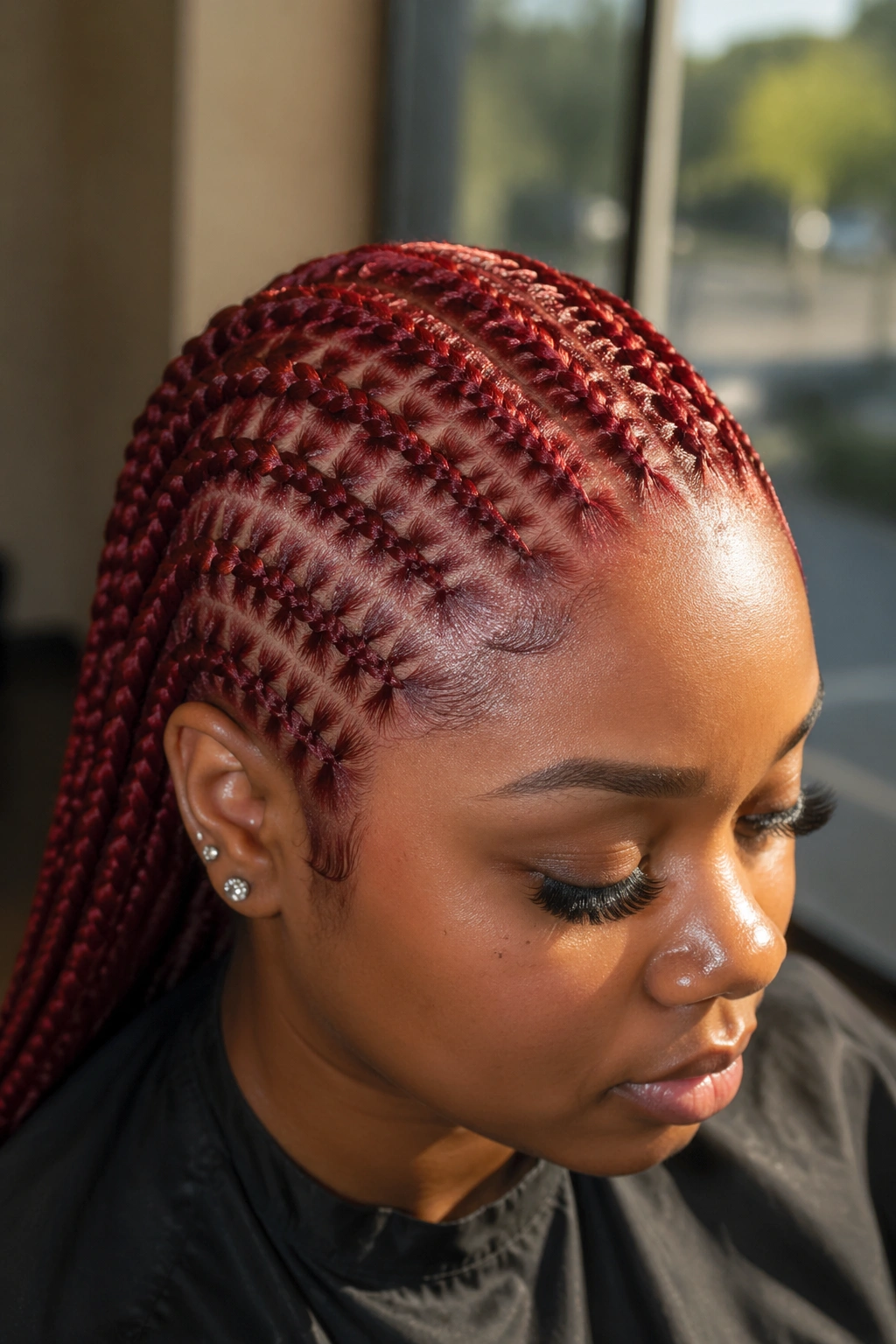
Bright ruby red stitch cornrows finished with small gold metallic beads at the tips.
Ruby red and gold create a color combination that reads as luxurious — almost regal. The combination has been used in royal ceremonial dress across many cultures for centuries because the contrast is naturally striking.
Use real gold-toned beads, not yellow plastic. The difference shows in person and in photographs. Brushed gold beads look more sophisticated than shiny gold; matte gold reads as understated luxury.
15. Strawberry Red Stitch for Lighter Drama
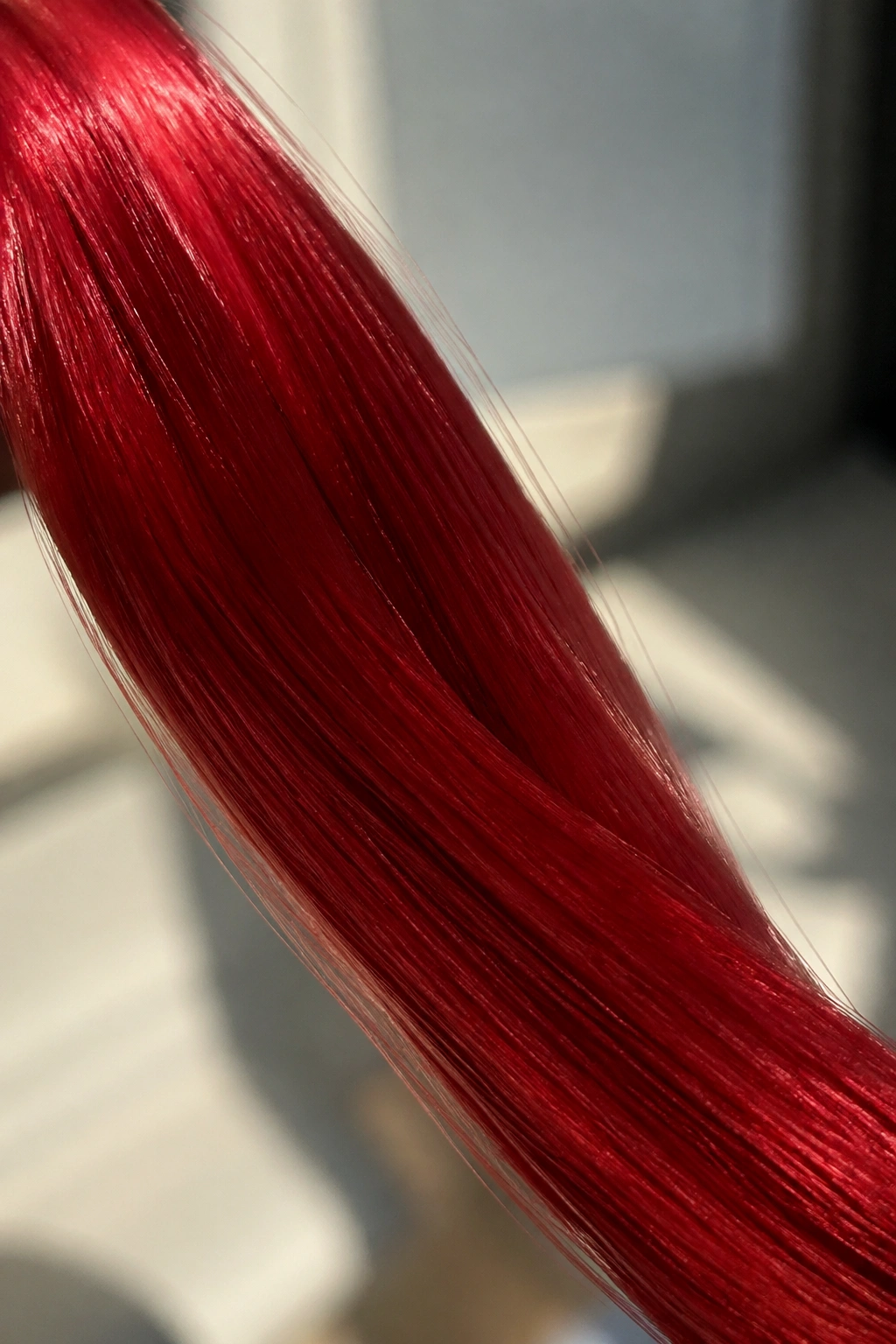
A lighter, more pinkish red — closer to strawberry blonde than fire engine red — in stitch cornrows with subtle styling.
Strawberry red is an unexpected color choice for stitch braids and reads as fresh, modern, and slightly playful. The lighter tone shows the stitch definition more clearly because there’s less color absorption — light bounces off the kanekalon strands more cleanly.
Particularly flattering on warm, peach-toned skin and anyone with warm undertones in their natural coloring. Cool-toned wearers can wear strawberry but should choose a slightly cooler shade within the strawberry family to avoid clashing.
16. Magenta-Red Stitch With Bold Beads
Stitch cornrows in a magenta-influenced red (vivid pink-red) finished with bold ceramic beads in coordinating tones.
Magenta-red sits between traditional red and pink, occupying a vibrant middle ground that reads as bold without committing to either color fully. The hue photographs intensely and works well for events, photoshoots, and confident daily wear.
Ceramic beads in coordinating colors — blush pink, deep rose, even white — complement the magenta without competing. Avoid contrasting colors with this hue; the red is dominant enough on its own.
17. Mahogany Stitch With Smooth Sleek Finish
Mahogany red (a warm, brownish red) in stitch cornrows with edges slicked smooth and finished with a clear gloss spray over the entire braid surface.
Mahogany is sophisticated and versatile. The brown undertones make it appropriate for professional environments while the red dimension adds visual interest. The added gloss spray creates a polished, almost lacquered finish that elevates the overall look.
Use a clear, alcohol-free hair gloss or shine spray. Heavy waxes or oily sprays can dull the color over time and attract dust. A light mist every 2-3 days maintains the polished finish.
18. Scarlet Stitch With Geometric Parts
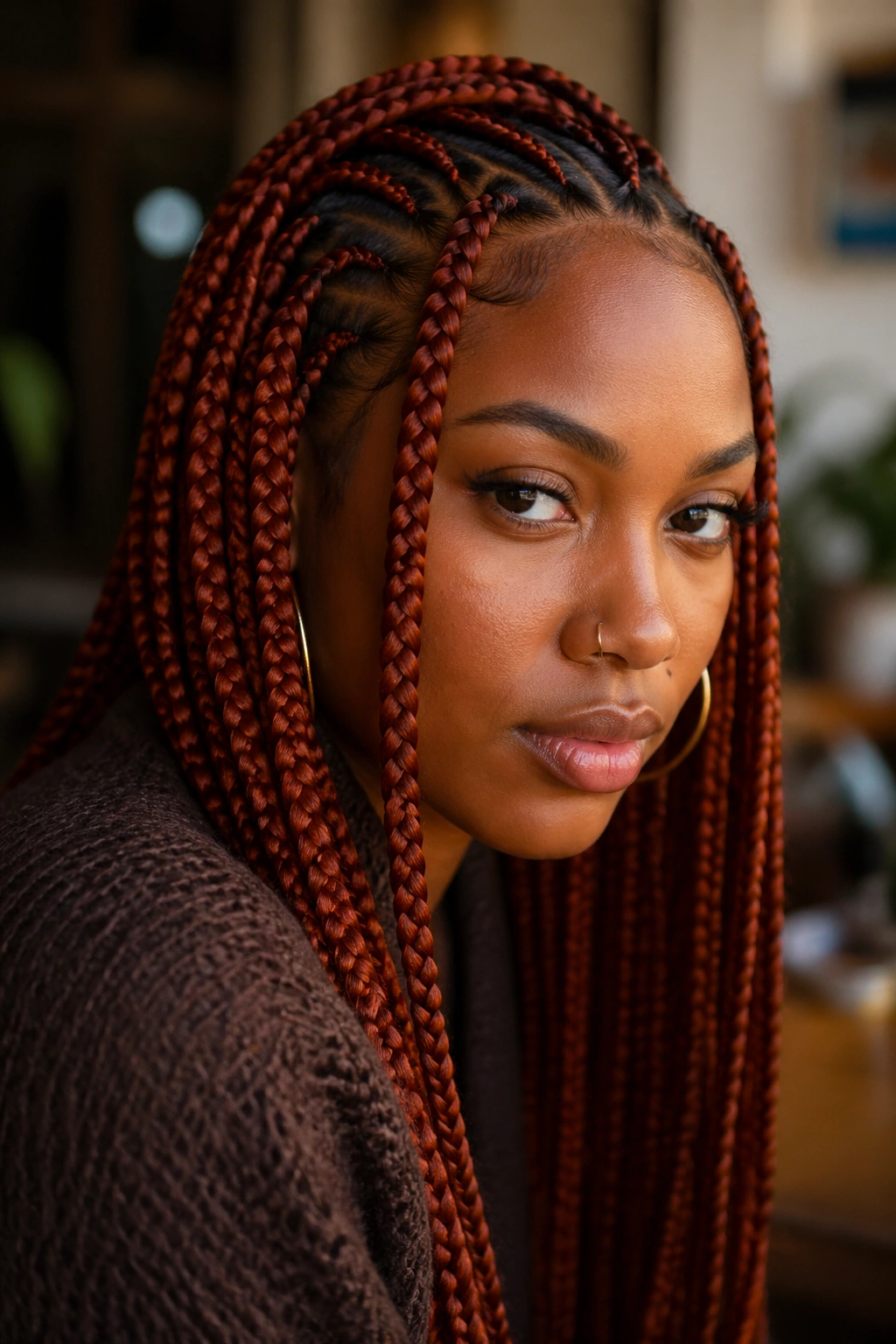
Bright scarlet red stitch cornrows installed along precise geometric parting patterns — diamonds, triangles, or hexagonal sections.
Geometric parts in bold red create graphic, almost architectural styling. The angular sections show clearly against the contrasting scarlet kanekalon, and the overall effect reads as deliberate design rather than casual styling.
This requires a braider experienced with both stitch technique and geometric parting. The combination is uncommon, so finding the right person may take research. Look at portfolios specifically for geometric work, not just standard stitch braids.
What to Watch For
- Geometric parts hold less well than straight parts — expect more touch-up needed
- Sleep arrangements matter more for geometric styles
- The pattern should be visible from above; ask for overhead photos during install
19. Vintage Red Stitch With Flapper-Style Bob
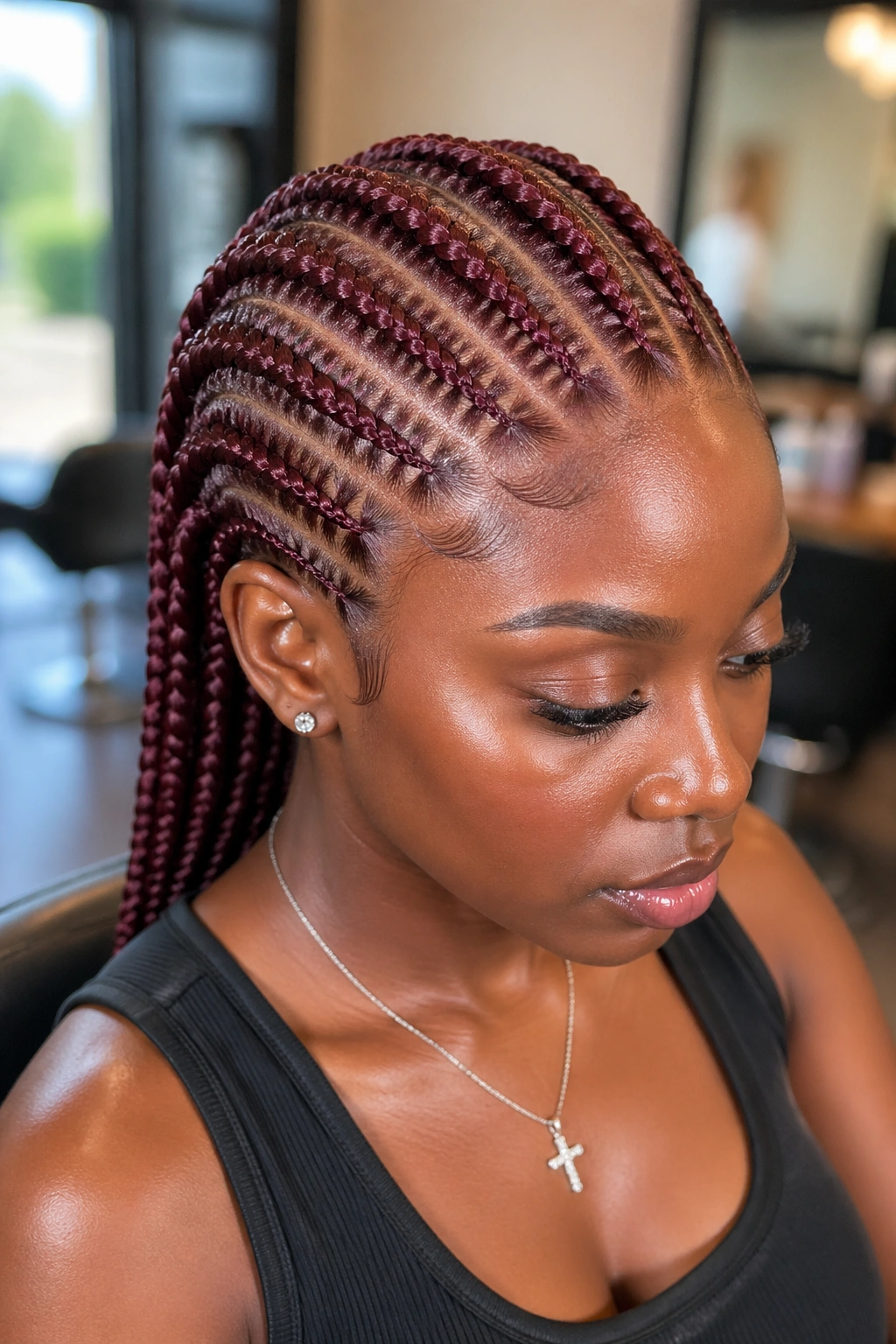
Stitch cornrows in a vintage-leaning red (slightly muted, almost rust-colored) cut to chin or jawline length to mimic a flapper-era bob silhouette.
The bob length is unusual for cornrows but works well with stitch technique because the horizontal rungs add visual interest along the shorter braid length. The vintage red color choice pairs naturally with the retro silhouette.
Cutting cornrows requires a steady hand. Have your braider trim the lengths after installation rather than cutting the kanekalon before braiding — the post-install cut creates a cleaner, more uniform line.
20. Hot Red Stitch With Minimalist Styling
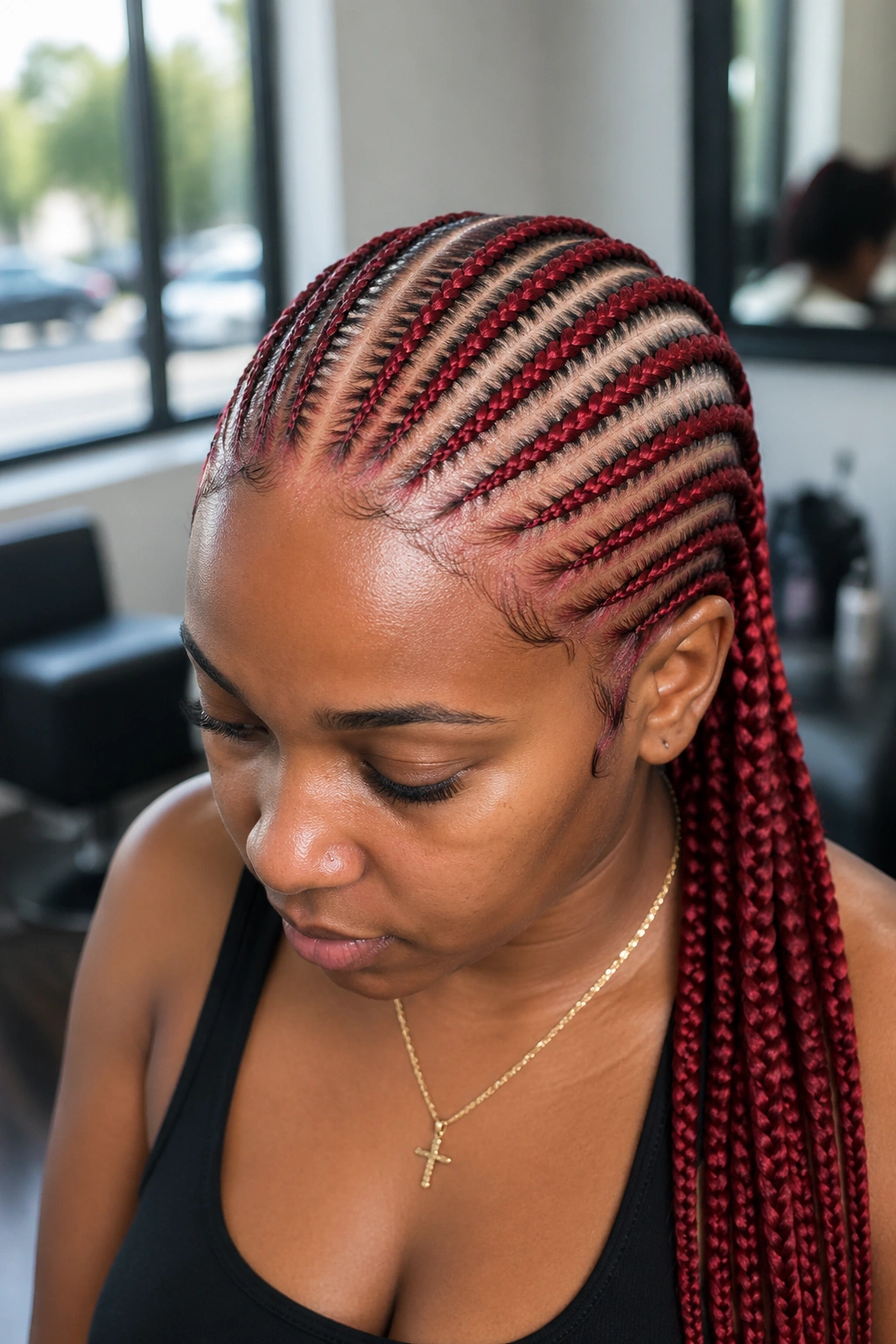
Hot red (the brightest, most saturated red available) in stitch cornrows with absolutely no embellishment — no beads, no accessories, no edge dramatics.
When the color is this bold, less is more. Minimalist styling lets the hot red carry the entire visual statement. Anything added competes with the color and dilutes the impact.
Wear hot red braids with minimalist clothing and minimal jewelry. The hair is the statement; everything else is supporting cast. This approach works for confident wearers who want maximum color impact with minimum styling effort.
21. Dark Berry Stitch With Asymmetrical Cut
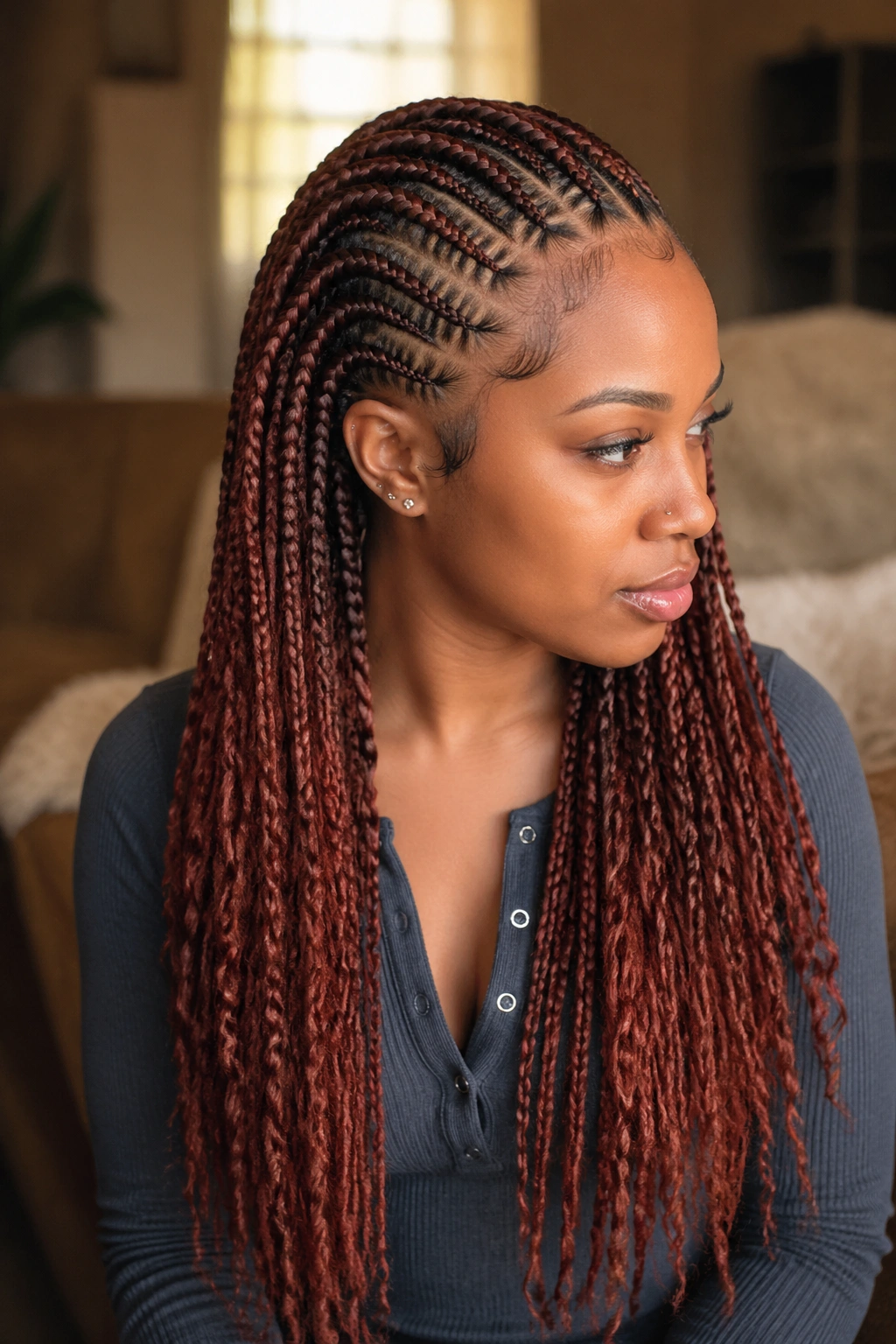
Dark berry stitch cornrows cut at deliberately asymmetrical lengths — longer on one side, shorter on the other.
Asymmetrical cuts add intentional imbalance that reads as edgy and modern. The dark berry color (deeper than wine, more purple than burgundy) supports the avant-garde aesthetic without being too soft.
The asymmetry should be obvious — at least 3-4 inches difference between the two sides. Subtle asymmetry looks accidental; bold asymmetry looks designed.
22. Crimson Stitch With Wrapped Bottom Sections
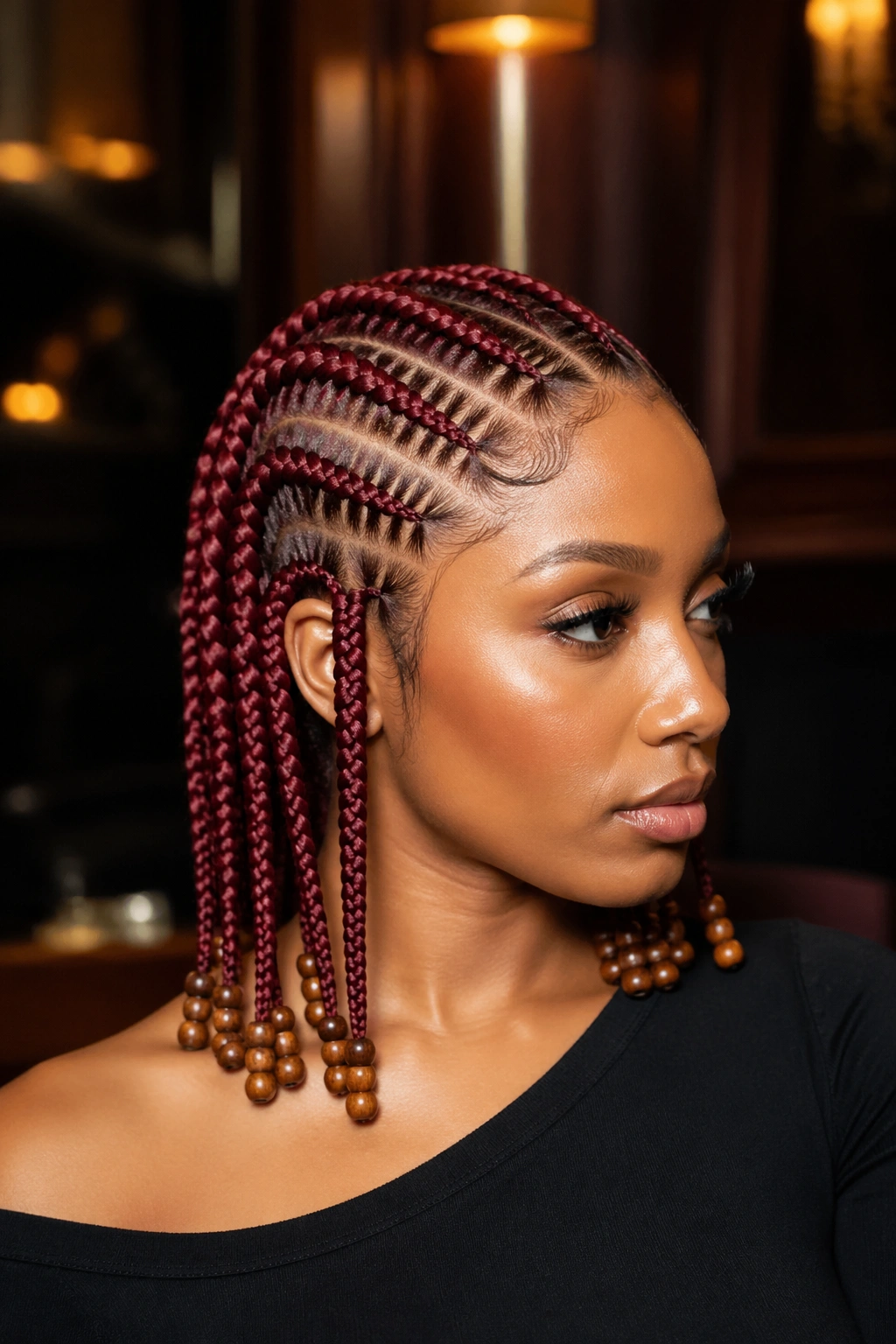
Crimson red stitch cornrows with the bottom 3-4 inches of each braid wrapped in matching red embroidery thread.
The thread wrapping at the bottom adds texture and dimension to the braid tips. In matching crimson, the wraps blend seamlessly with the braid color while adding a subtle textural shift that catches light differently than the smooth braid surface.
Embroidery thread in matching red is sold at craft stores. Use cotton or silk thread, not synthetic — natural fibers grip the braid better and don’t slip out of the wrap. Secure each wrap with a tight knot and trim cleanly.
Maintaining Red Color Vibrancy Through the Wear
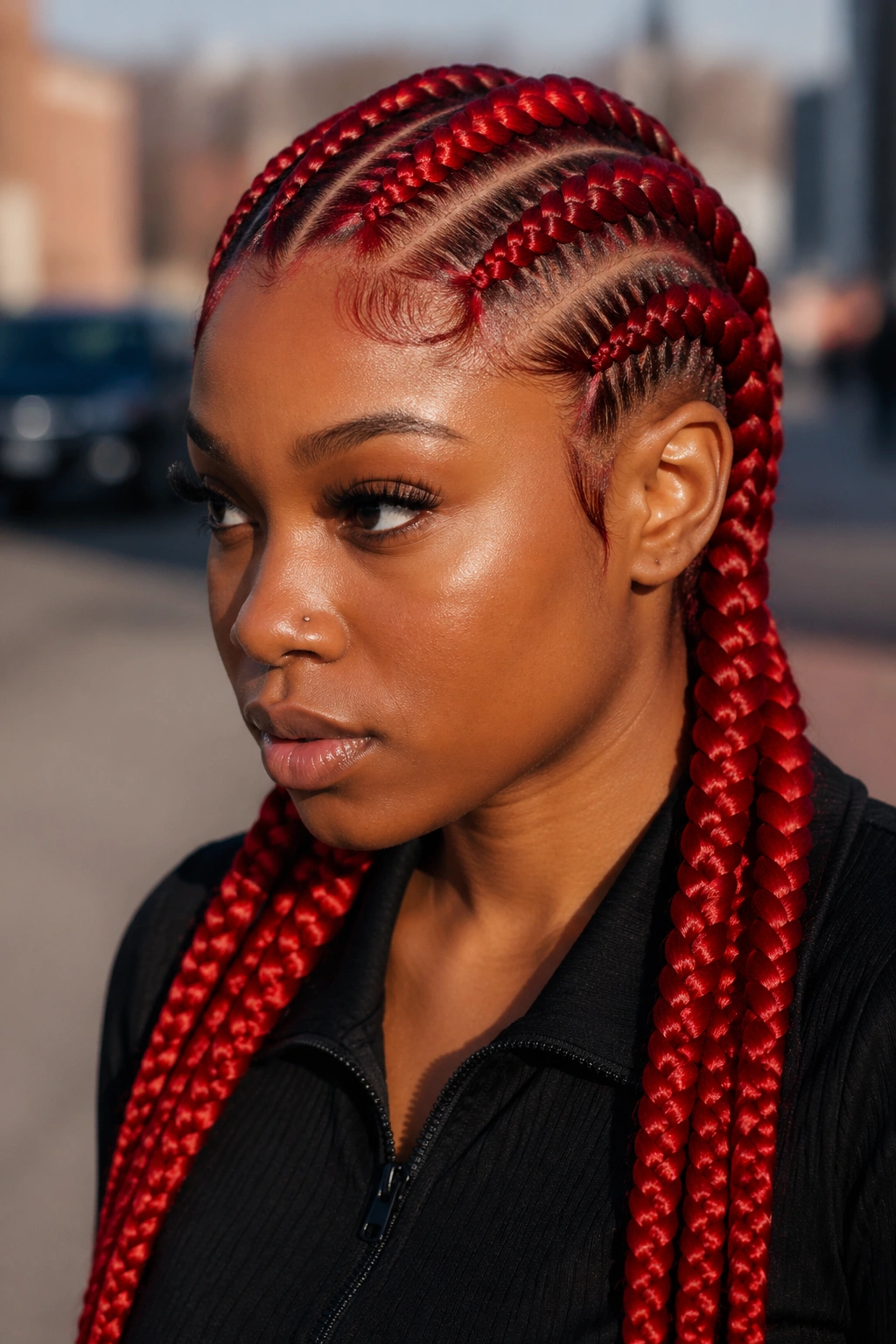
Red is the most fade-prone color in kanekalon. Sun exposure, washing, and even friction from clothing can fade red braids faster than natural-tone styles.
To maximize color vibrancy:
- Wear a hat or scarf during long sun exposure (beach days, outdoor events)
- Use color-safe shampoo when washing
- Avoid hot water — it accelerates color fade
- Apply UV-protectant hair sprays for extended outdoor wear
- Sleep with hair covered to prevent friction fade against pillowcases
The first week is when fade is most aggressive. After the initial color settling, the kanekalon stabilizes and fade slows. Plan major sun exposure for week two or later if possible.
Washing Red Cornrows Without Color Disaster
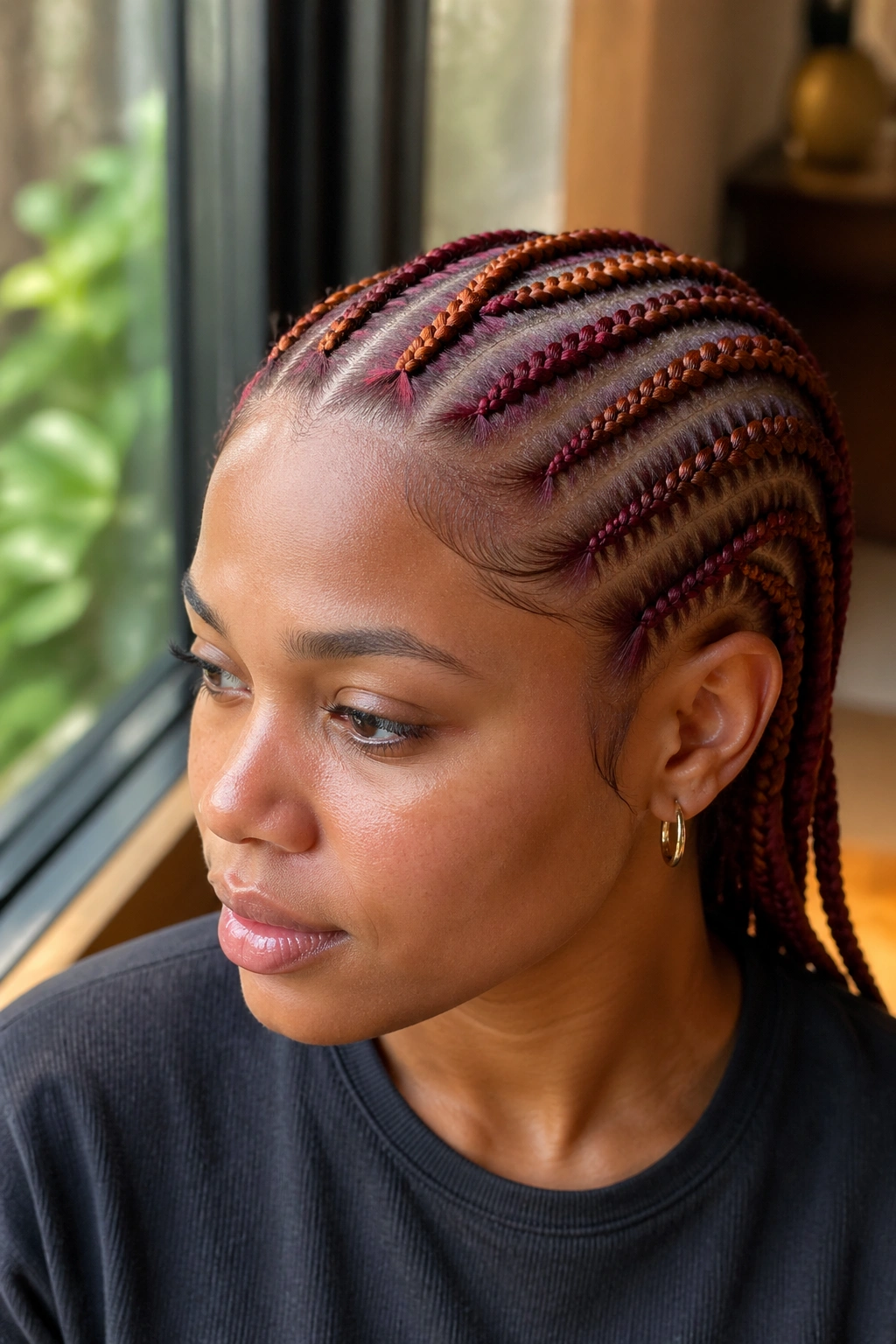
Wash red braids less often than you’d wash natural-tone braids — every 7-10 days at most. Each wash strips a small amount of color, and overwashing leads to faded, dull braids by week two.
When you do wash, use the dilute-shampoo-spray method described for any cornrow style, but with color-safe shampoo. Cool water only — never warm or hot. Pat dry gently with a microfiber towel.
After washing, apply a small amount of color-protecting hair oil to the braid lengths (not the scalp). This seals the kanekalon cuticle and helps lock in remaining color.
Color Transfer Concerns and Solutions
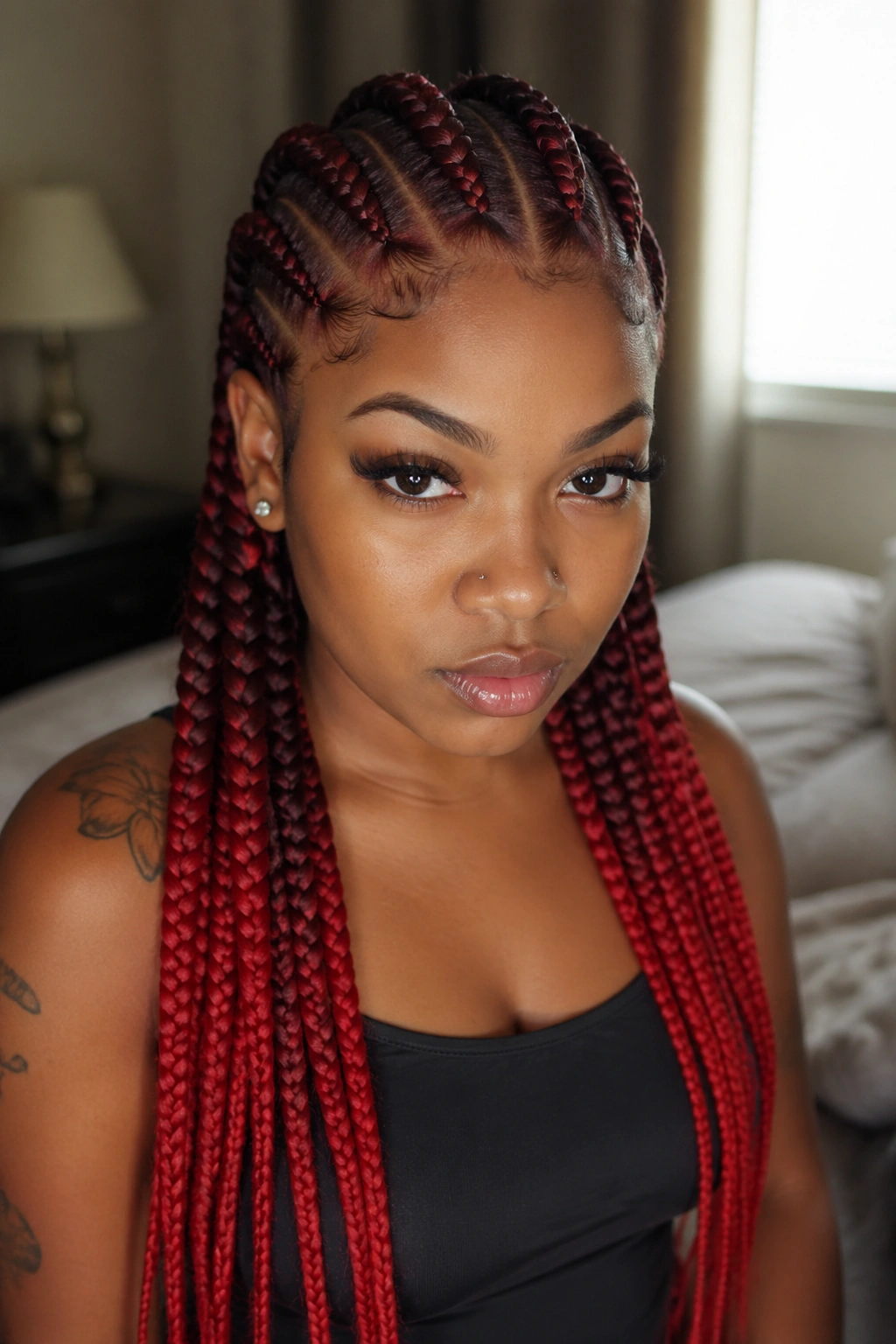
Even pre-rinsed red kanekalon can transfer dye in certain situations. Sweat, water, and friction are the main culprits.
Practical precautions:
- Use a dark-colored silk pillowcase
- Wear darker tops for the first week
- Cover hair during heavy workouts
- Avoid pressing braids against light-colored upholstery
- Test color transfer with a damp white cloth before wearing white clothing
If transfer happens, most fresh stains come out with cold water and a stain remover. Set stains (heat-dried) are harder to remove. Treat any transfer as quickly as possible.
Removing Red Braids and Aftercare
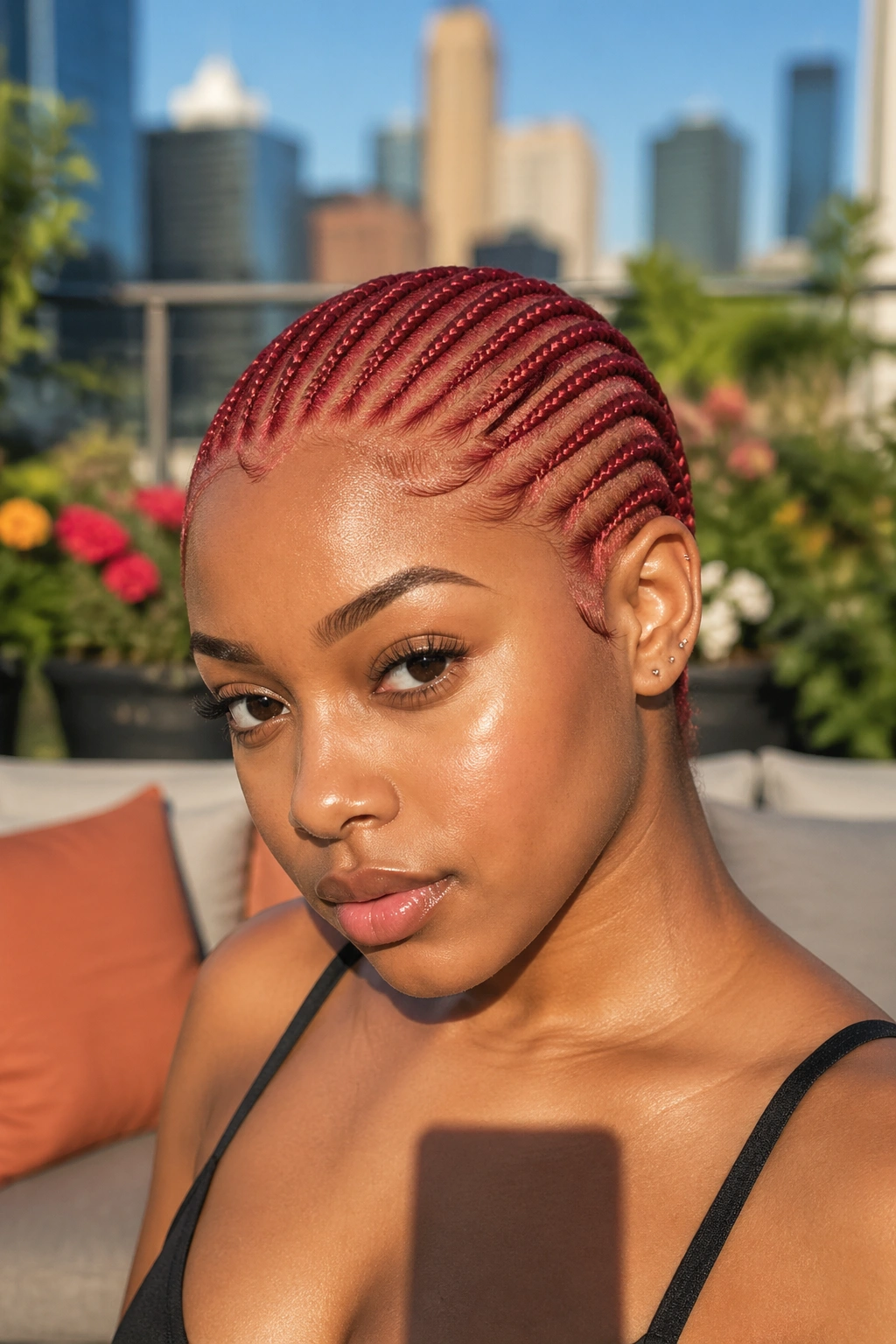
Takedown of red stitch cornrows is similar to takedown of any cornrow style, with one extra step: rinse the natural hair thoroughly after removing the braids. Color residue can transfer from the kanekalon to your natural hair during the long install, and a cool-water rinse after takedown removes any lingering tint.
After takedown, do a deep conditioning treatment. The combination of long install and color exposure can dry out natural hair, and a protein-and-moisture mask restores hydration before your next style.
Wait at least three days before installing another colored style. Your natural hair benefits from a brief break, and your scalp needs time to recover from the previous install’s tension.
Picking Red Stitch Cornrows for Your Coloring
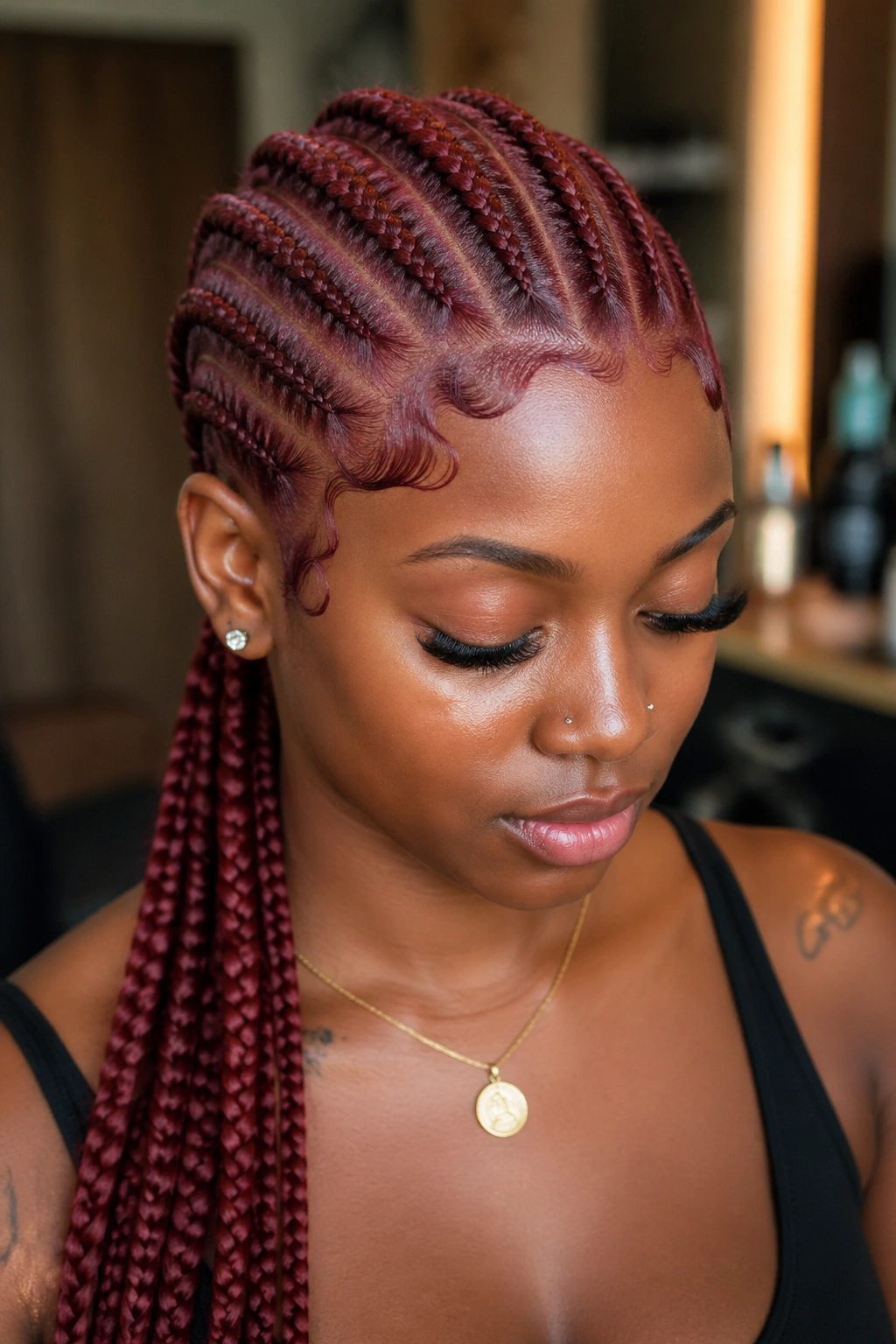
Red works on all skin tones, but different reds flatter different undertones:
- Warm undertones (yellow, peach, gold): copper, fire, tomato, strawberry, mahogany
- Cool undertones (pink, blue, red): burgundy, wine, cherry, magenta, dark berry
- Neutral undertones: ruby, scarlet, crimson, vintage red
If unsure about your undertone, hold a piece of gold jewelry and a piece of silver jewelry against your wrist in natural light. Whichever looks more flattering indicates your undertone (gold = warm, silver = cool, both flattering = neutral).
Common Red Cornrow Mistakes to Avoid
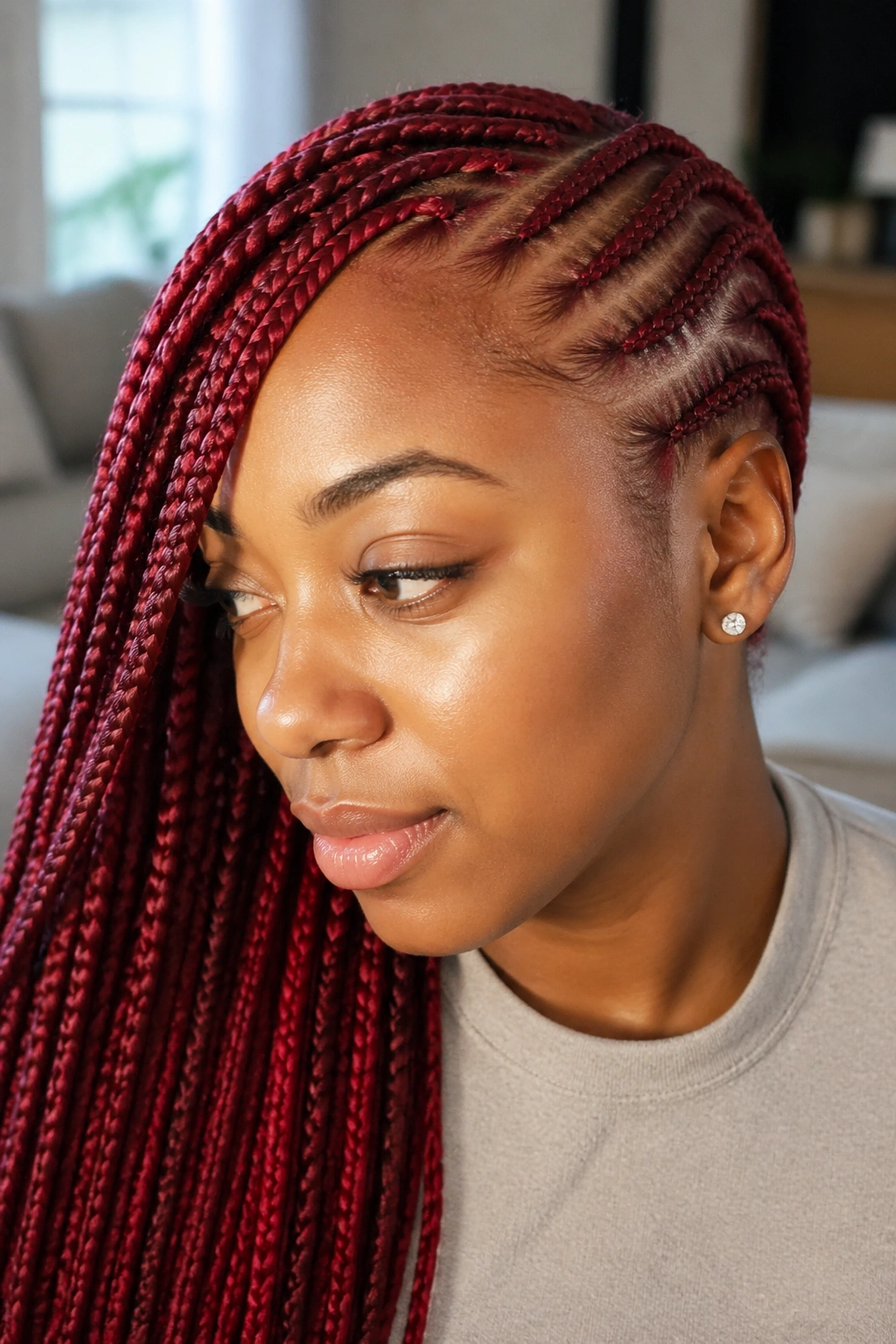
The biggest mistakes with red stitch cornrows are: choosing the wrong red for your undertone, washing too frequently, and skipping the pre-rinse step.
Wrong-undertone reds clash with skin and create an unflattering overall effect. The braid quality can be perfect, but if the color fights your natural coloring, the look fails.
Frequent washing fades color rapidly. Resist the urge to wash often — most cornrow installs only need washing every 1-2 weeks, and red specifically benefits from less frequent washing.
Skipping pre-rinse leads to color transfer disasters in the first week. Take the 15 minutes to pre-rinse the kanekalon. The wear-life pays off many times over.
One more thing. Red braids invite reactions — comments, compliments, double-takes. If you’re not in a frame of mind to handle attention, consider a more subtle style. The color demands engagement, and that’s worth knowing before the install rather than after.