



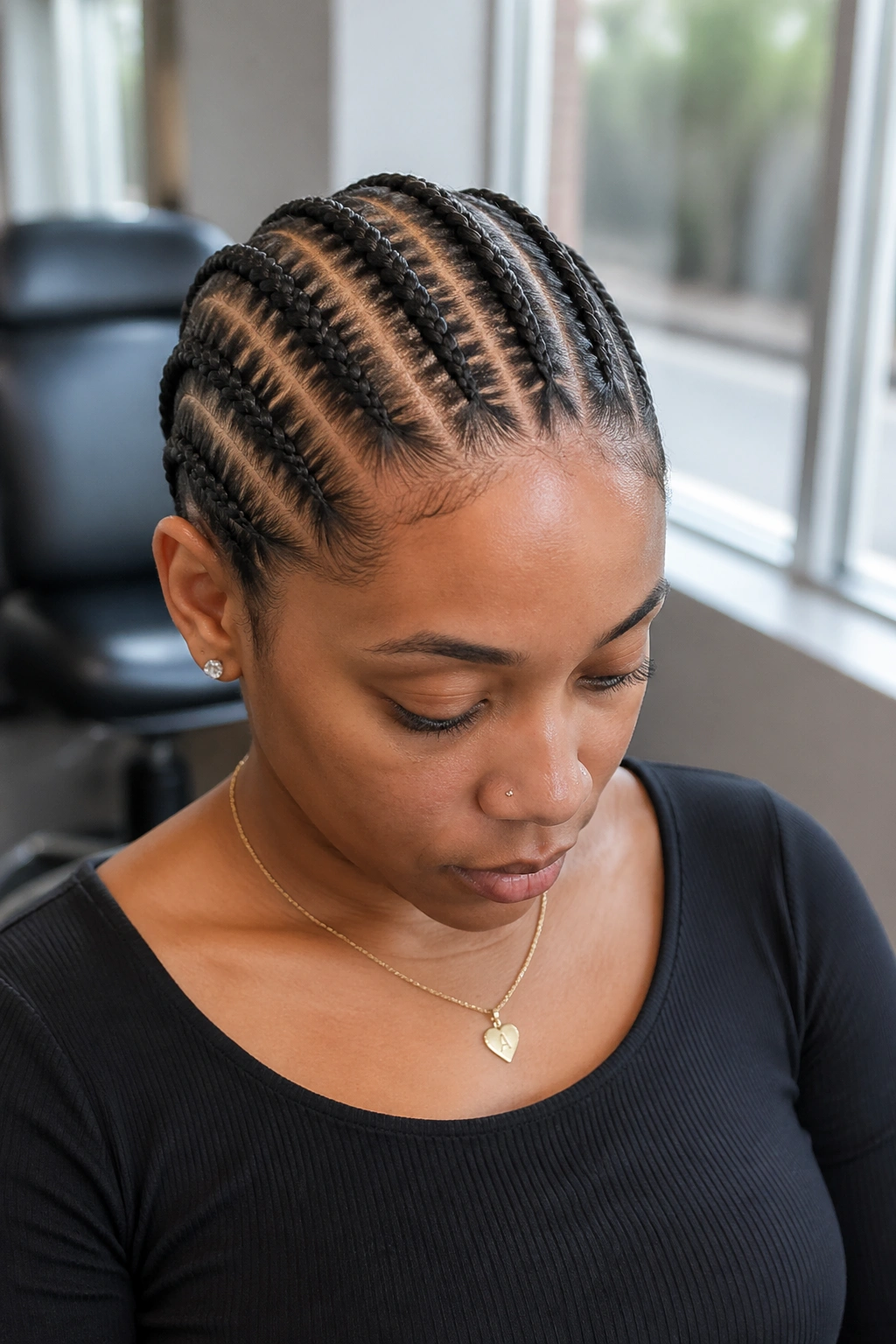
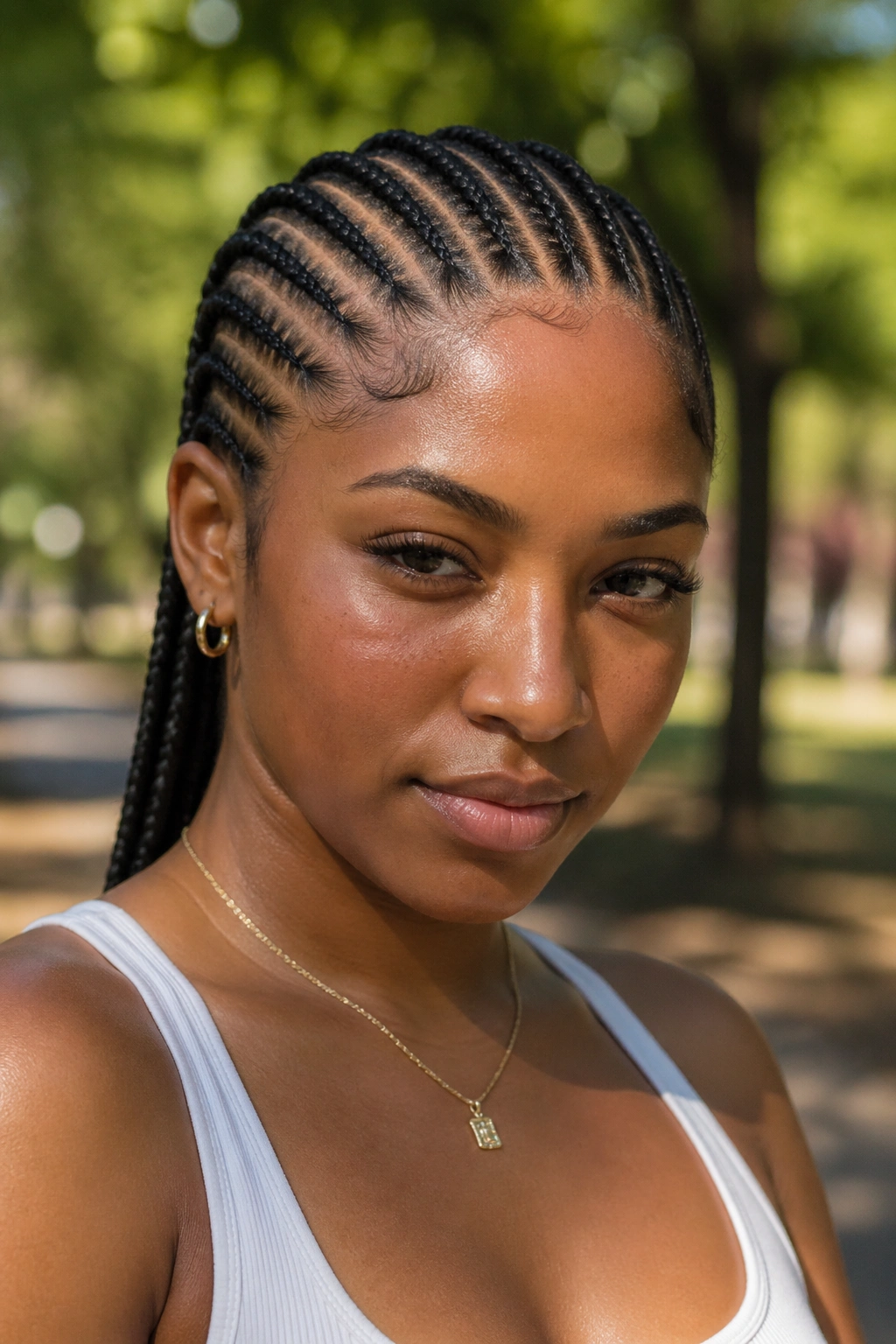
Simple cornrow styles are the workhorses of protective hair. No elaborate freehand designs. No dozens of beads. No hours in the chair for intricate pattern work. Just clean braids, done well, that look good and wear well.
The appeal is real. A simple style installs fast, lasts long, and fits almost any setting — from Monday mornings at work to Saturday nights out. There’s less to go wrong. Less to maintain. And often, a simple cornrow set looks more sophisticated than an overdone one.
These 25 simple cornrow styles prove that restraint has range. Each one does something specific without reaching for ornament. Pick the one that matches the week you’re having — busy, relaxed, formal, active, or something in between.
What Simple Actually Means
Simple cornrows aren’t plain. They’re edited. A skilled simple style has:
- Clean parts with defined lines
- Even tension throughout the braid
- Consistent braid size
- Thoughtful start and end points
- Clean edges without fuss
What simple styles don’t have: freehand design work, extensive beading, color blocking, intricate patterns, or multi-texture combinations.
The difference between simple and boring is execution. A simple style executed sloppily is boring. A simple style executed carefully is quietly striking.
Why Simple Often Wins
Simple cornrow styles outlast complex ones. Fewer design elements means fewer points of failure. A straight-back cornrow set holds its shape for 5 weeks; a freehand swirl design starts showing wear at 3 weeks.
Simple styles also fit more situations. A cornrow bun works at the office, at a wedding, at the gym, and at brunch. A dramatic mohawk works in maybe two of those.
And simple styles photograph well from every angle. Complex designs often have a “best angle” — usually the angle shown in the reference photo. Simple styles don’t.
Prep That Makes Simple Styles Sing
The fewer design elements in a style, the more every detail matters. A simple style with crooked parts looks worse than a complex style with crooked parts because there’s nowhere to hide.
Prep is non-negotiable:
- Wash and clarify to remove product buildup
- Deep condition for 30-45 minutes
- Stretch the hair so parts read clean
- Moisturize the scalp the night before
- Skip heavy products the day of install
Tools You Need
Standard cornrow tools apply:
- Rat-tail comb with metal tip for clean parts
- Duckbill clips to manage sections
- Edge control gel (light to medium hold)
- Spray bottle with water
- Satin scarf for protection after install
Simple styles don’t need specialized tools. That’s part of their appeal.
How Long Simple Styles Last
Simple cornrow styles can last 4-6 weeks with basic care. The longevity comes from:
- Low design complexity (nothing to blur)
- Even tension at install
- Gentle daily maintenance
- Satin sleep care
Pushing past 6 weeks stresses the new growth at the parts.
1. Five Straight Back Cornrows
Five cornrows running from the hairline straight back to the nape. The most basic cornrow configuration — and a reason for its popularity.
Why It Works
- Installs in about 60-90 minutes
- Works on every hair length
- Lasts a full 5 weeks comfortably
- Adapts to any occasion
Tip: Ask for parts that are slightly thinner at the sides than in the middle for a subtle flattering shape.
2. Seven Straight Back Cornrows
Seven cornrows with clean parts. Slightly more density than five — which creates a bit more visual interest without adding complexity.
Install runs about 2 hours. The look lasts 4-5 weeks.
Seven is a lucky number in many traditions, which might explain why it feels “just right” for cornrow counts.
3. Ten Straight Back Cornrows
Ten cornrows evenly spaced. More refined than five or seven — the braids read as detailed without reaching for complexity.
This is the most popular cornrow count for women who want something more than basic without committing to micro styles.
4. Simple Side Part Cornrows
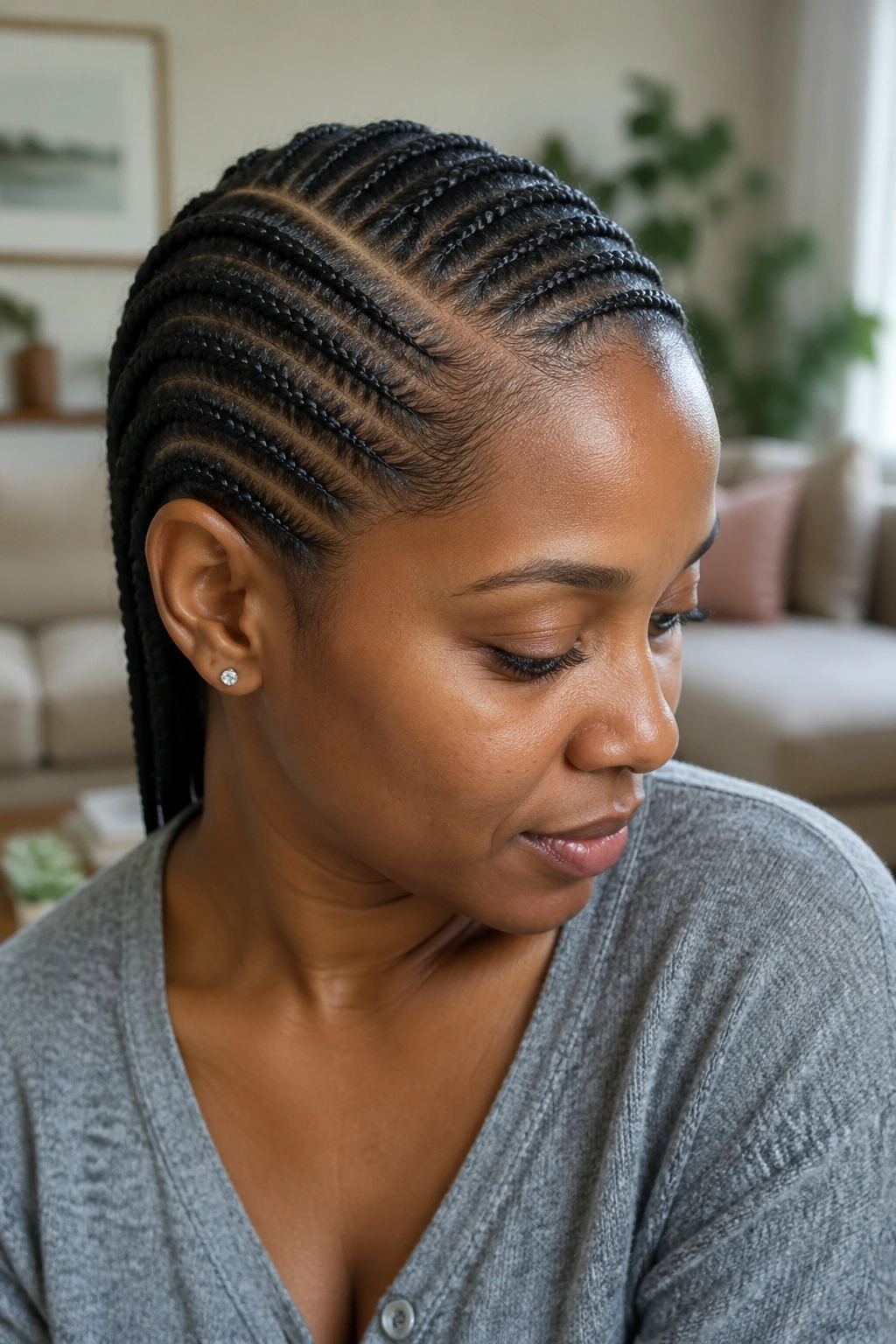
Cornrows running straight back, but the whole set is parted on one side rather than center. The side part shifts the visual weight and adds asymmetric interest without any additional design work.
Side parts flatter most face shapes, especially round and oval.
Choose the side based on your natural part direction. Most people part more cleanly on one side.
5. Simple Middle Part Cornrows
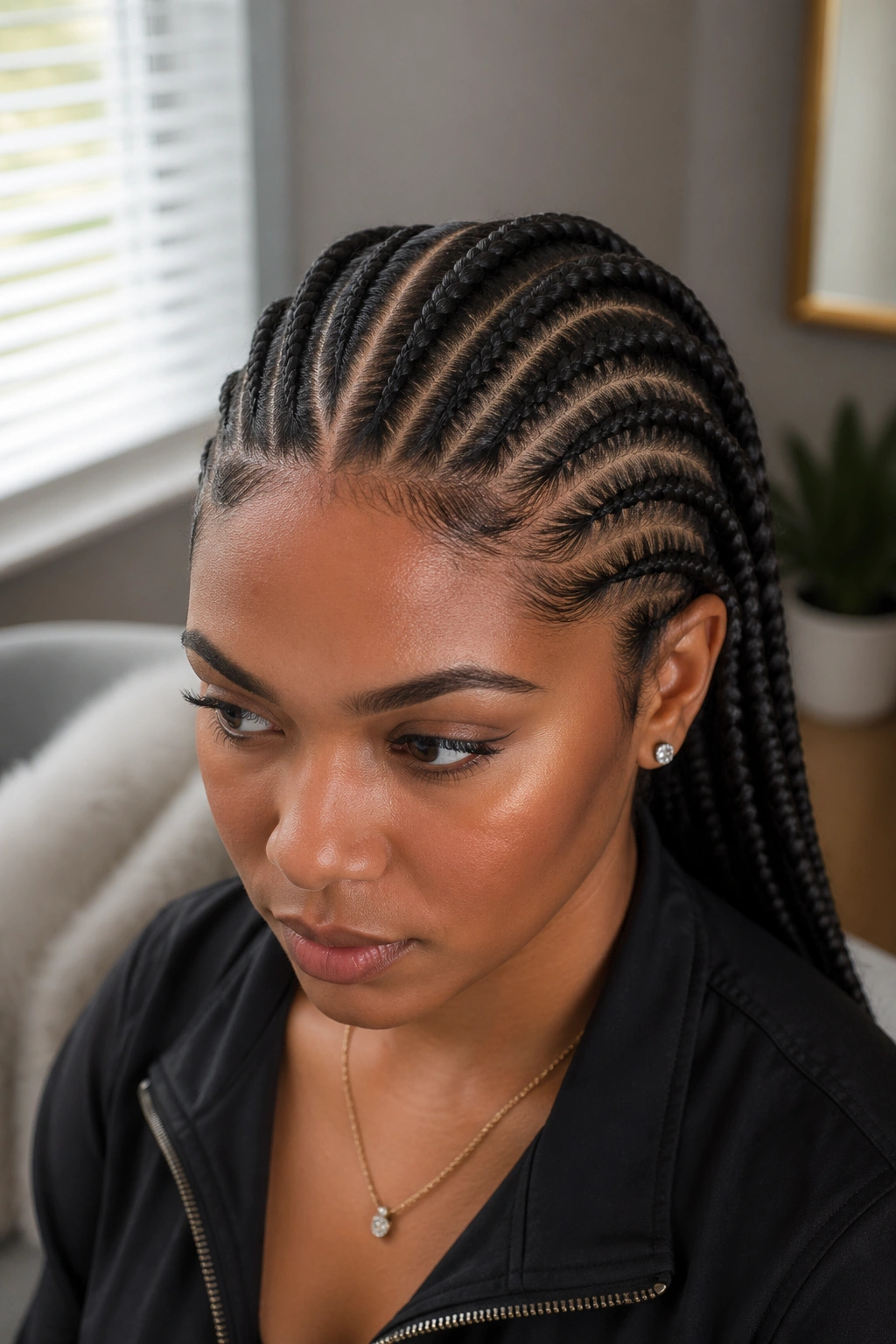
Cornrows on both sides of a dead-center middle part. Four to five braids on each side, running straight back.
Middle parts work best on symmetrical faces and hair with no cowlicks at the forehead. If you have a strong cowlick, the middle part will fight it.
Tip: Apply edge gel along the center part to keep it crisp throughout the style’s life.
6. Cornrow Bun (Low)
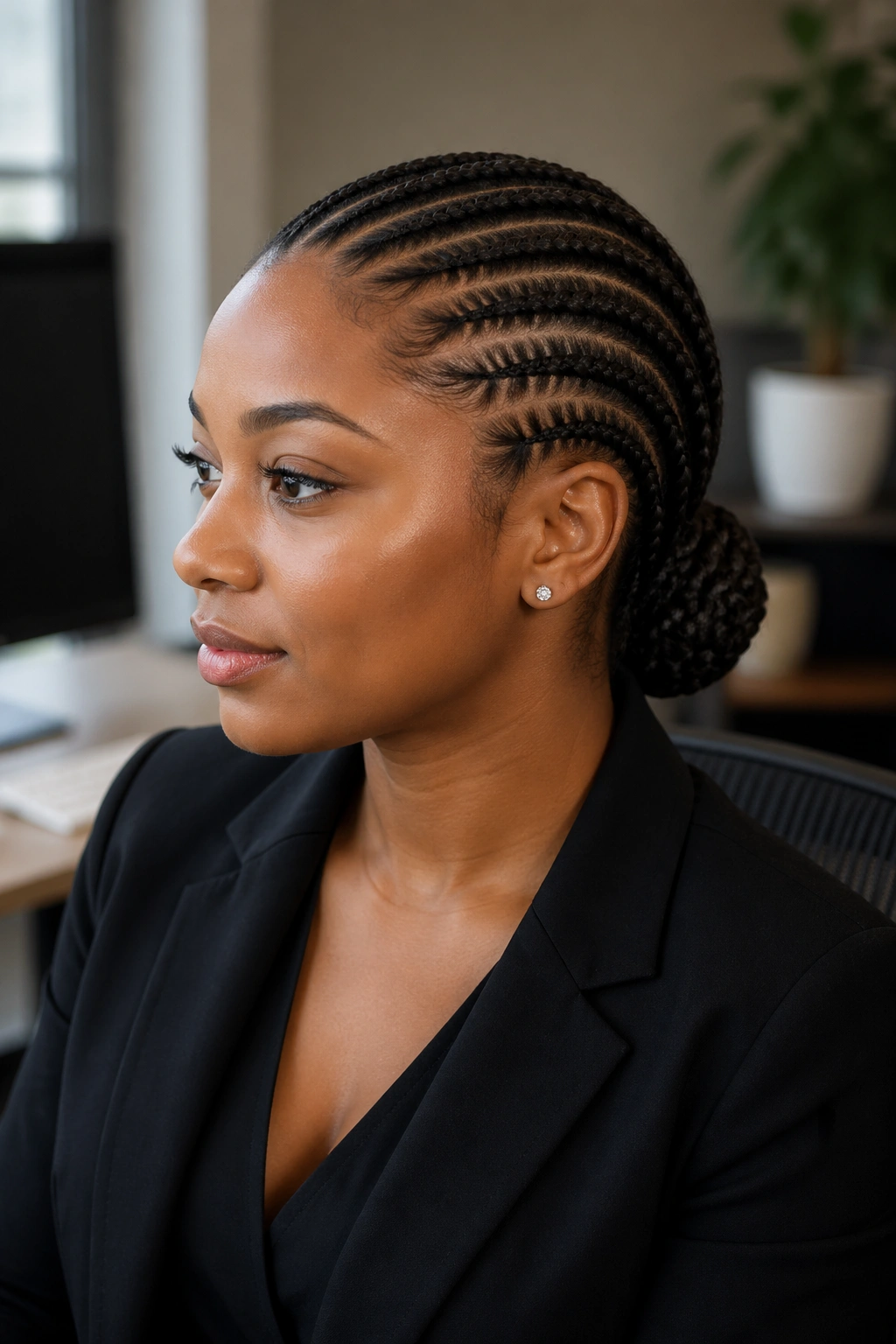
All cornrows feed into a low bun at the nape. The cornrows are clean straight-backs; the bun is sleek and rounded.
Low buns are office-appropriate, formal-event-appropriate, and just generally polished.
Install runs about 2-3 hours including the bun styling. The bun protects the ends and keeps the whole style tidy.
7. Cornrow Bun (High)
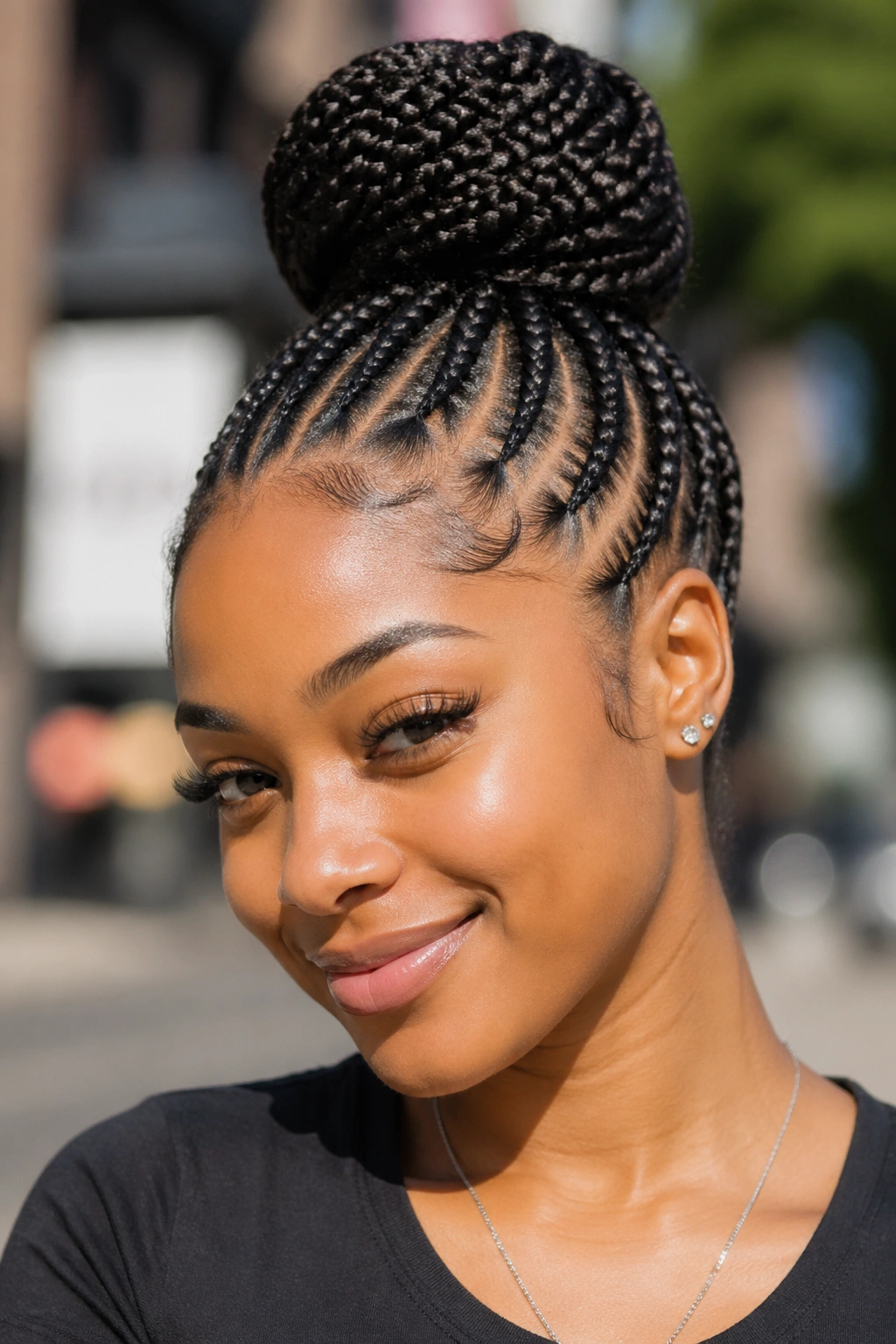
Cornrows feed into a high bun at the crown or top of the head. The high placement lifts the face.
High buns read playful and youthful. They’re great for casual days and celebrations.
Wear the high bun for short stretches. The high placement puts more tension on the scalp than a low bun.
8. Cornrow Ponytail (Low)
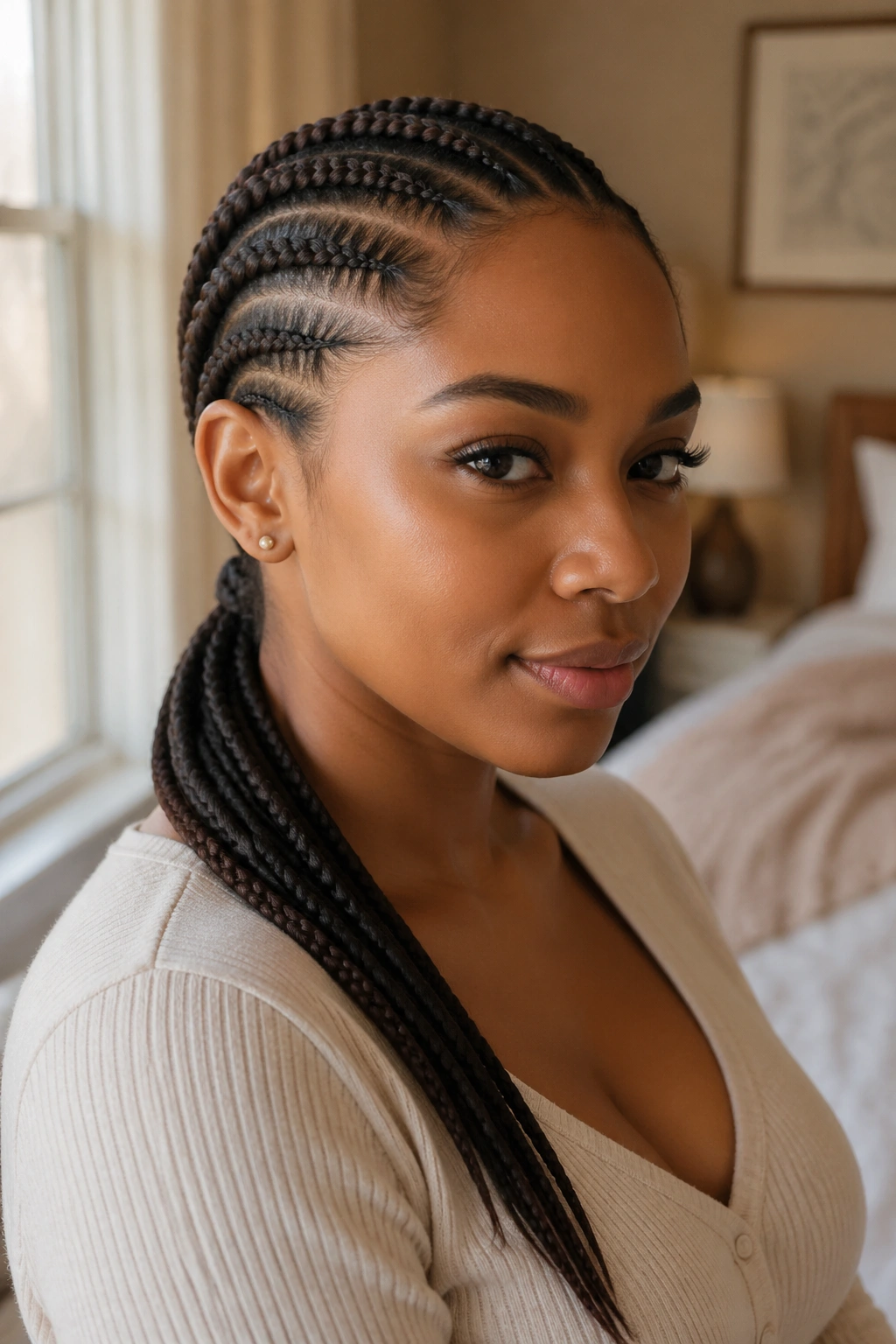
Cornrows gather into a low ponytail at the nape. The loose braid tips drape over the shoulder.
Low ponytails are one of the most universally flattering cornrow finishes. They work with every face shape, every outfit, and every occasion.
If you have extensions, the ponytail will drape longer and more dramatically.
9. Cornrow Ponytail (High)
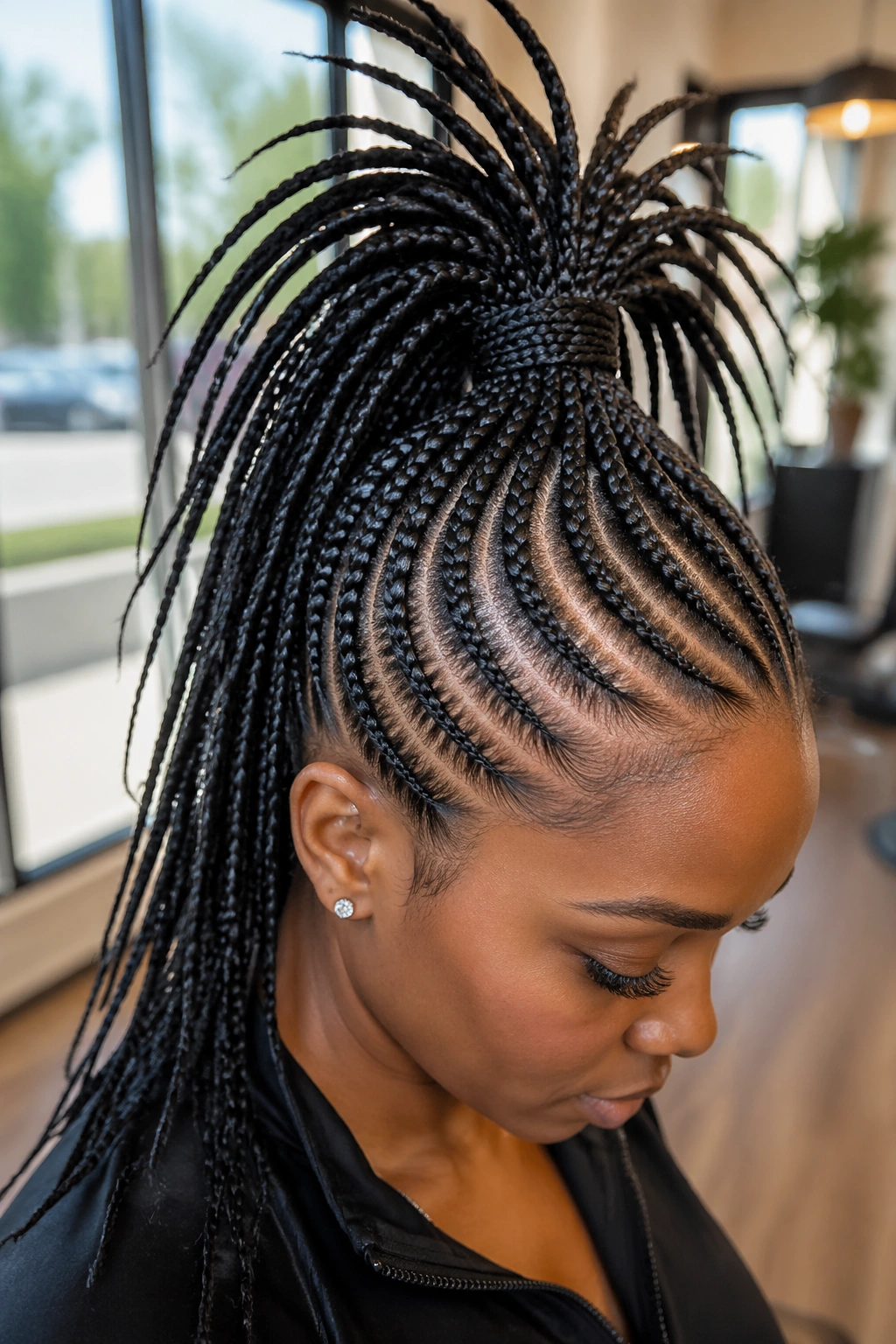
Cornrows gather into a high ponytail at the crown. The braid tips fan out and fall forward and back.
High ponytails are festive. They flatter most face shapes by adding vertical height.
How to Style It
- Secure the ponytail base with a silk scrunchie, not a rubber band
- Wrap the base with a thin braid or ribbon for a polished finish
- Keep the ponytail up only for short stretches to reduce scalp tension
- Switch to a low ponytail for sleep and rest periods
Tip: A small amount of edge gel along the ponytail base hides any stray ends.
10. Cornrow Braided Crown
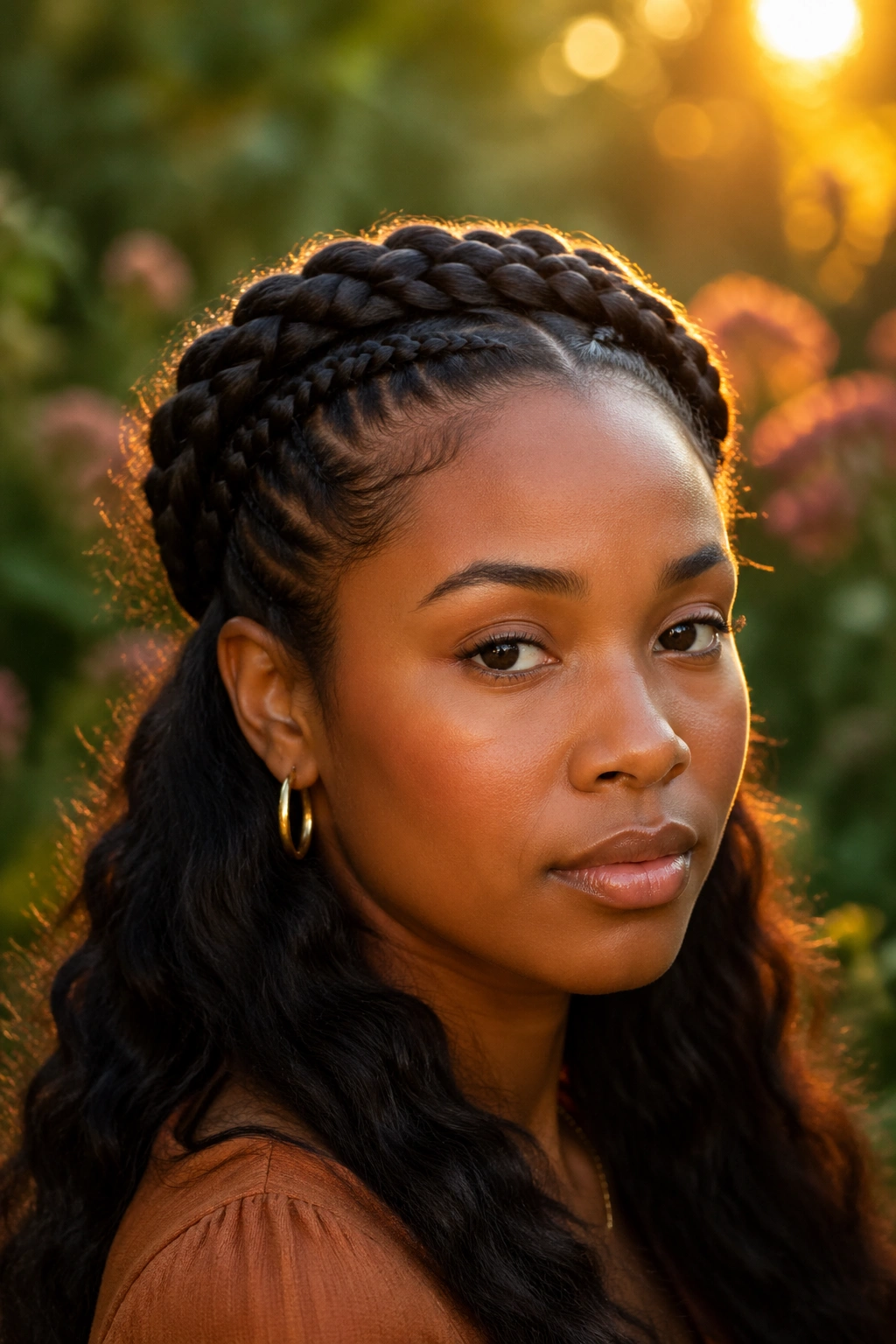
Cornrows wrap around the crown of the head, creating a halo effect. The hair below the crown can be cornrowed, styled loose, or gathered.
Crown braids work especially well on women with round faces because they add vertical height.
They also look dramatic from above — perfect for wedding photography and group shots.
11. Simple Zig-Zag Part Cornrows
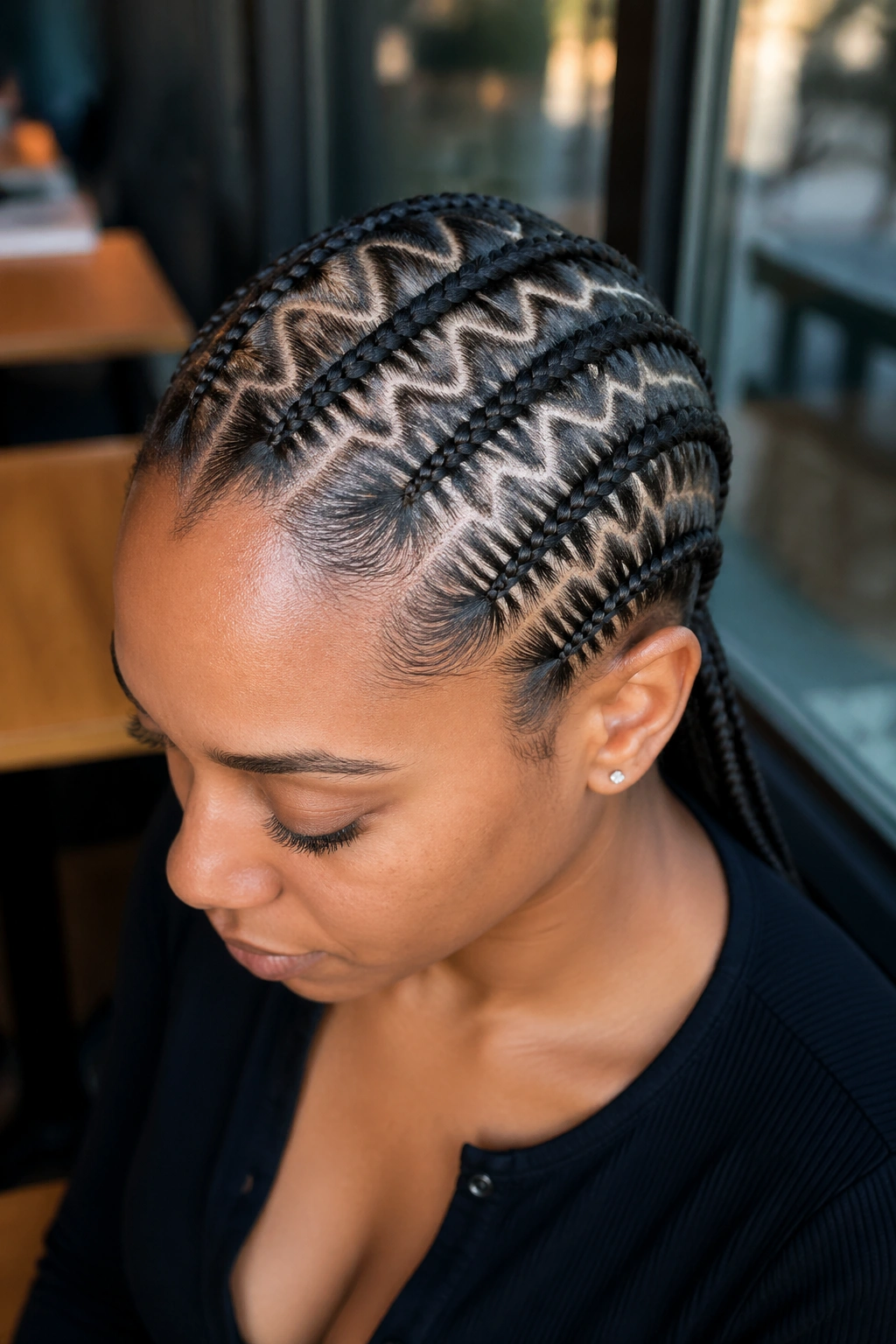
Straight-back cornrows with zig-zag parts between them instead of straight parts. This is the simplest way to add visual interest without committing to design work.
The zig-zag can be subtle (gentle waves) or graphic (sharp angles) depending on preference.
Zig-zag parts take an extra 15-20 minutes to create.
12. Simple Cornrow Headband
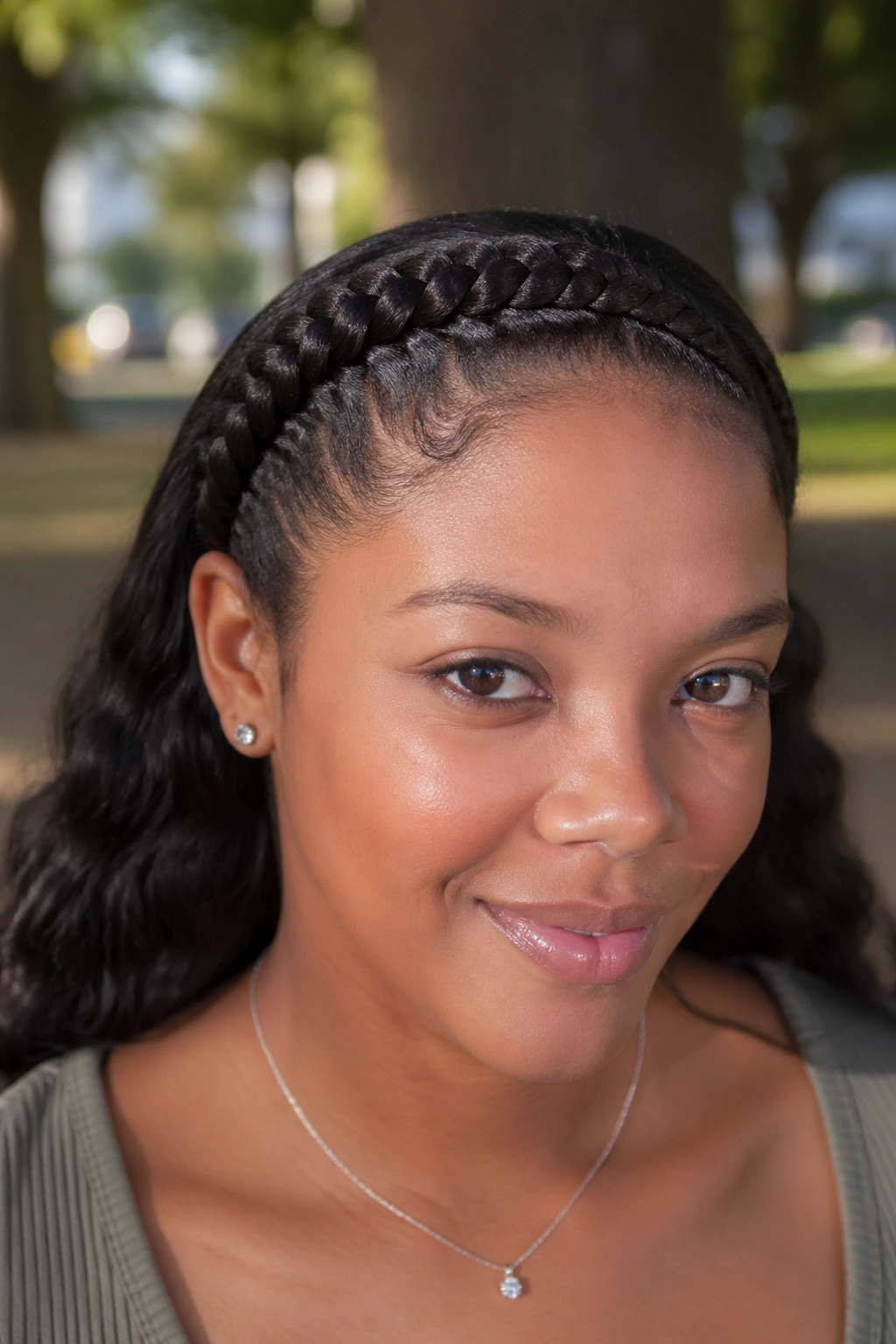
A thick cornrow runs from temple to temple across the crown — like a braided headband. The rest of the head can be cornrowed or styled loose.
The cornrow headband replaces a fabric one. It stays in place all day, doesn’t create a dent in the hair, and looks intentional.
Tip: Position the headband 2-3 inches behind your front hairline for best proportions.
13. Simple Cornrow Half-Up
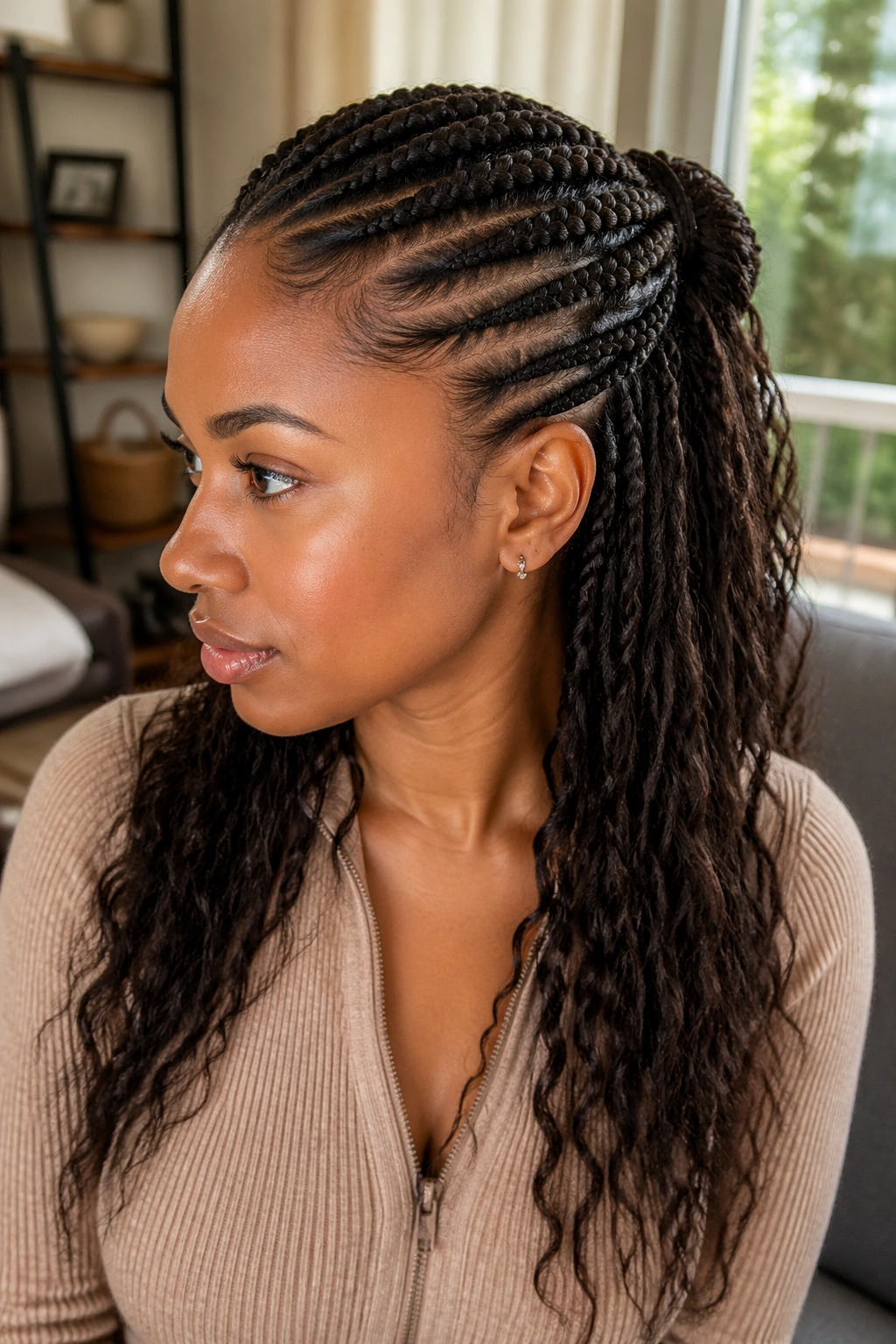
Cornrows pull the front and crown of the head into a gathered point at the back. The hair below the gather stays loose.
This is the casual version of the half-up style. It reads effortless but looks intentional.
Works for every occasion, every day.
14. Cornrow Goddess Braids
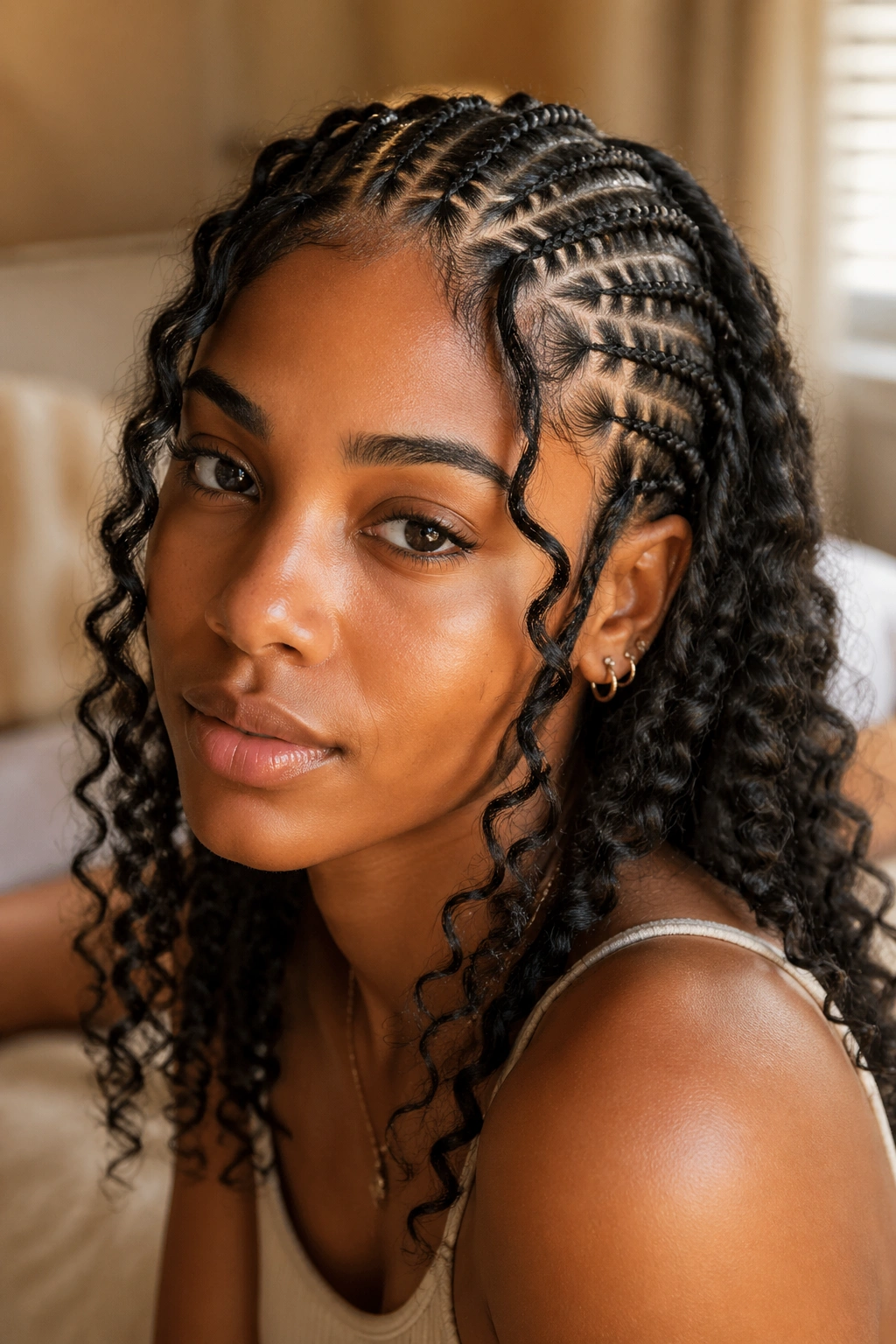
Cornrows with loose pieces of natural hair intentionally left out throughout the braids. The loose pieces soften the otherwise-graphic look.
The goddess style works only on natural hair. Synthetic loose pieces look fake.
This is one of the most forgiving cornrow styles — the intentional “undone” pieces mean small imperfections don’t matter as much.
15. Simple Cornrow Pigtails
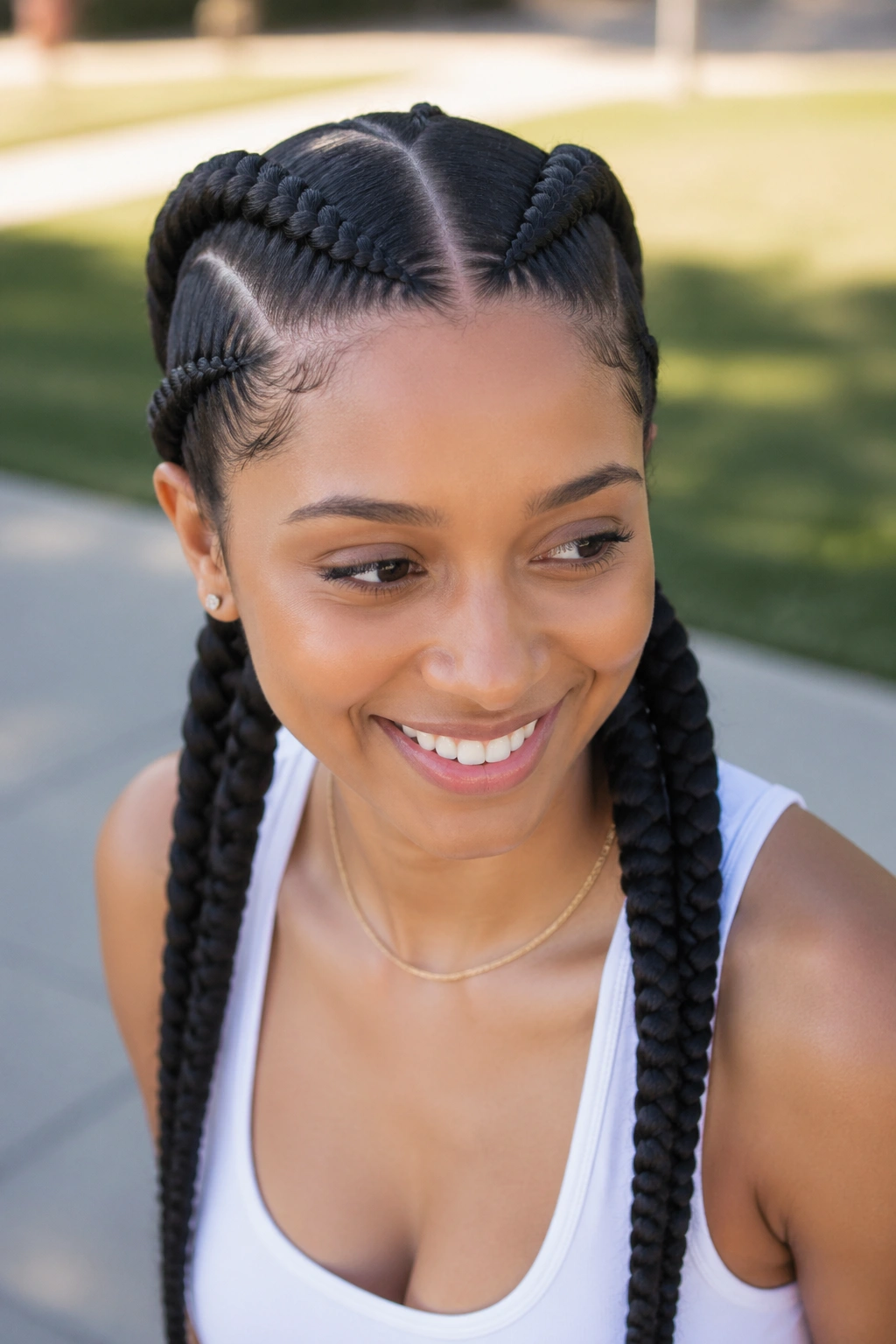
Two thick cornrows, one on each side of the head, starting at the front hairline and running to the back. Or alternatively, multiple cornrows that gather into two pigtail ponytails at the sides.
Pigtail cornrows read playful. They work well for casual settings and creative environments.
Adults can absolutely wear pigtail cornrows without looking childish — the key is clean execution and styling the rest of the look grown-up.
16. Cornrow Side Sweep
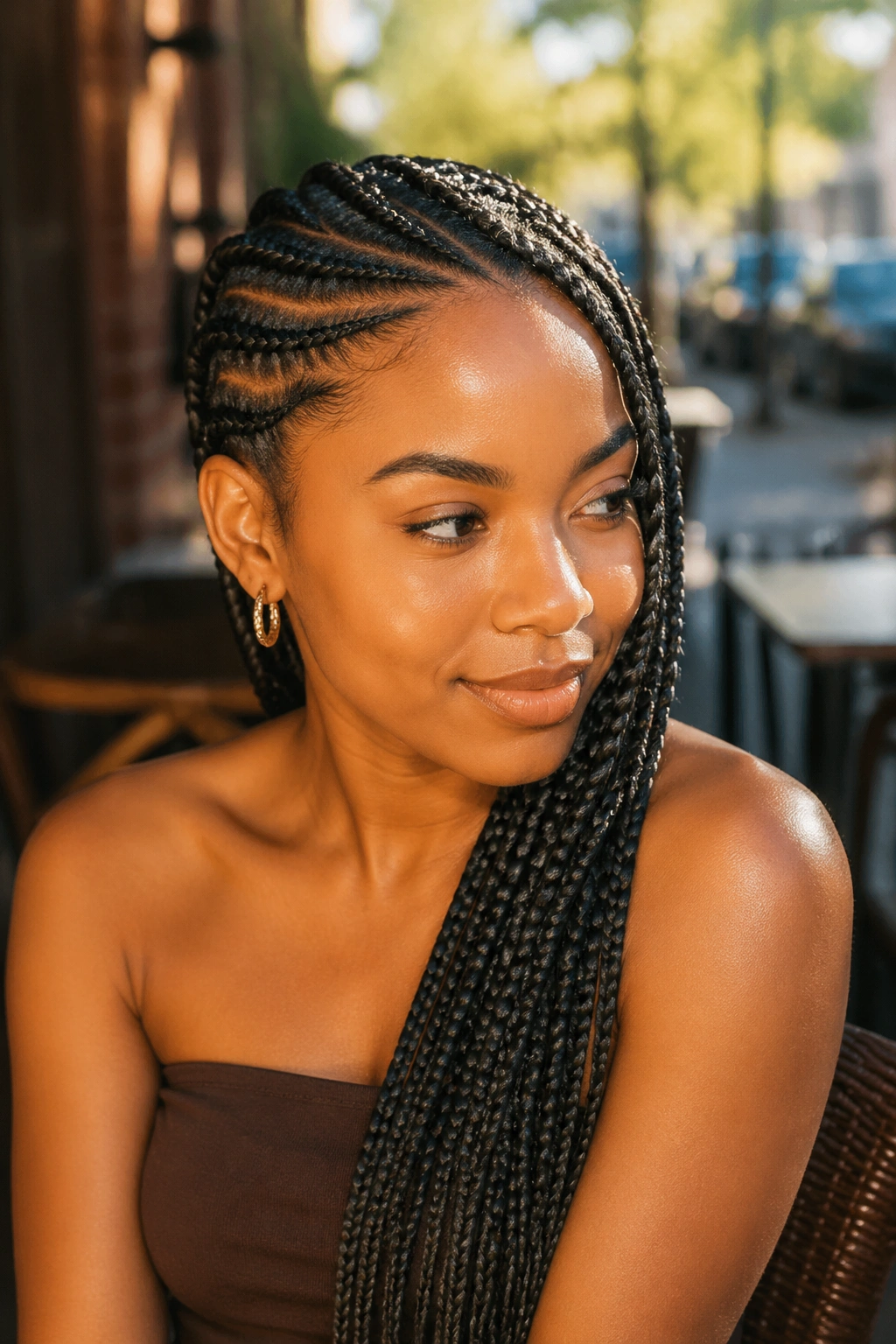
All cornrows sweep diagonally across the head toward one side, gathering at the shoulder. The diagonal direction creates implied movement.
Side sweeps flatter round and square faces by adding asymmetric length.
This works with or without extensions. With extensions, the sweep drapes more dramatically across the body.
17. Simple Cornrow Updo
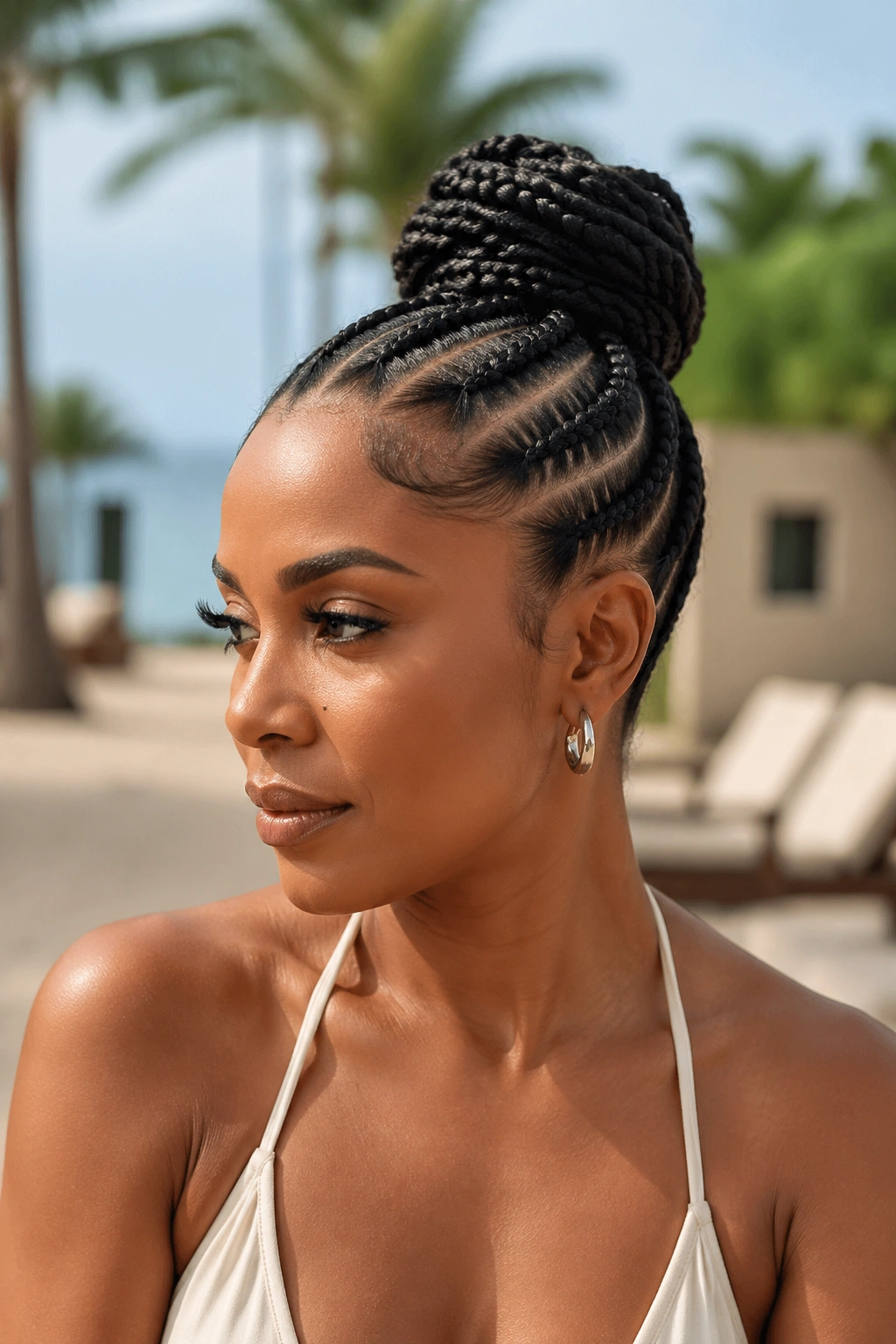
All cornrows are pulled up and gathered at the crown into a sculpted shape — twists, loops, or a structured bun. The ends are tucked away.
Updos keep hair off the neck, making them great for hot weather, formal events, and active days.
The updo shape can be tailored to the occasion. Tight and sleek for formal; loose and textured for casual.
18. Cornrow Pineapple
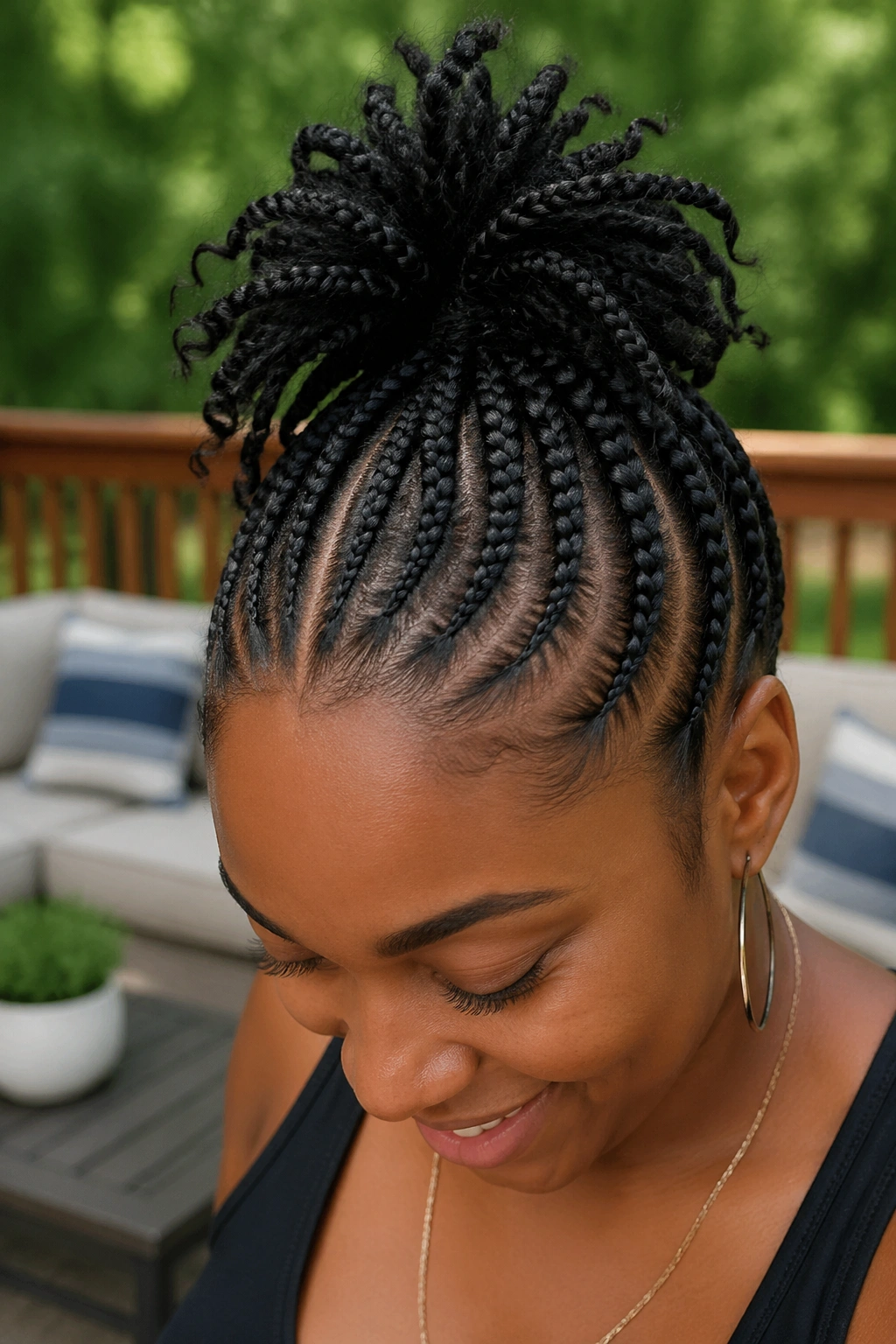
All cornrows gather loosely at the top of the head into a high, casual bundle — the “pineapple” shape. The braid ends flop forward and sideways like pineapple leaves.
This is the most casual cornrow finish. It’s for weekends, lazy days, and times between more formal styles.
Pineapples work best on cornrows that have had time to loosen slightly — usually after the first week of wear.
Tip: Use a silk scrunchie at the pineapple base. Elastic rubber bands break braids over time.
19. Simple Cornrows With Loose Tips
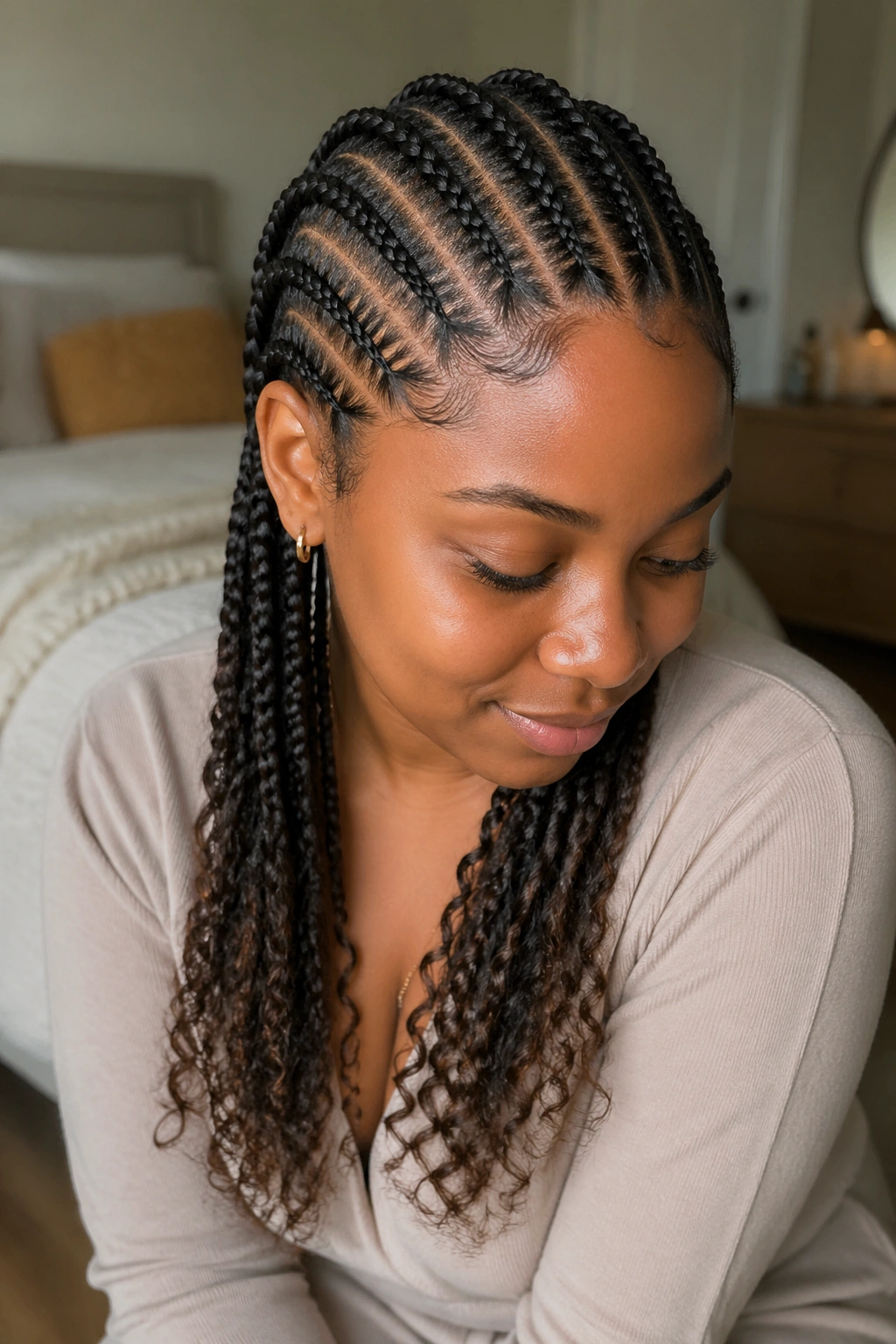
Cornrows braided to within 4-6 inches of your natural hair length, with the remaining hair left loose at the ends.
The loose tips show off your natural curl pattern. The cornrows provide protection above.
Works on natural hair with enough length to leave visible loose tips.
20. Cornrows With Natural Hair Puff
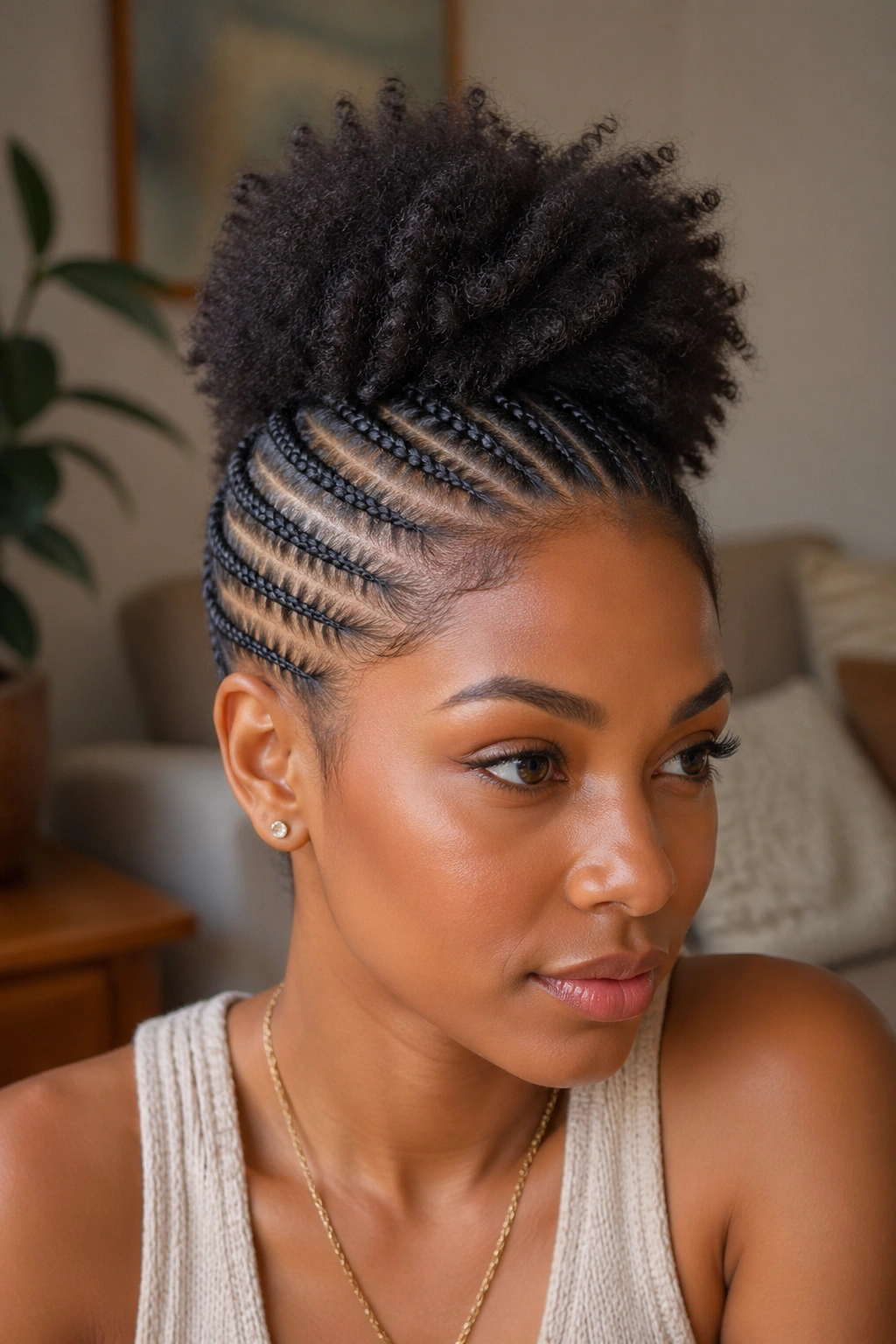
Cornrows at the front and sides of the head, with the back or top left in a natural hair puff. The contrast between braided structure and puff volume creates visual interest.
The puff shows off your natural texture. The cornrows keep the front looking tidy.
Refresh the puff every 2-3 days with a moisturizing spray.
21. Simple Back Cornrows With Loose Front
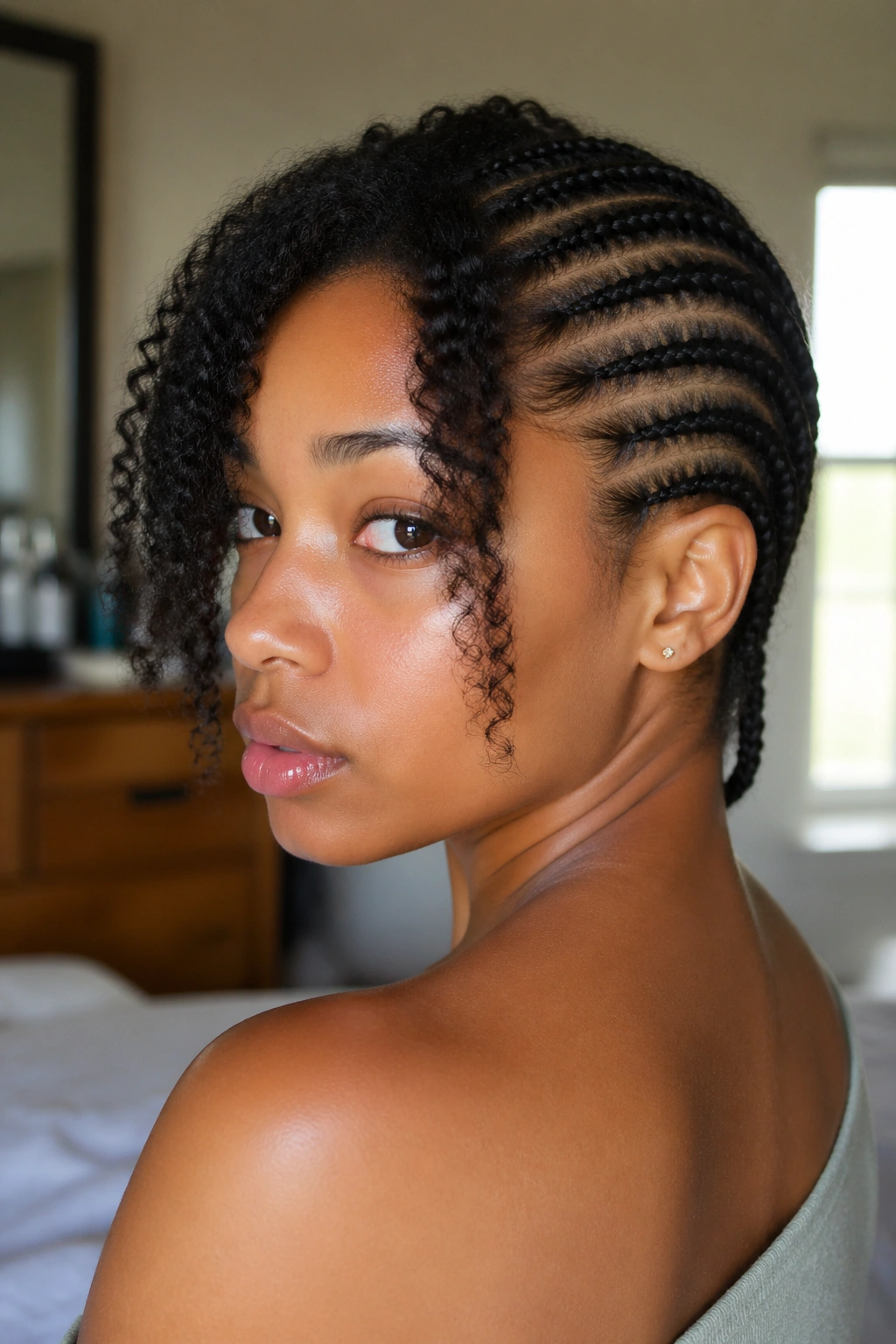
Cornrows start at the crown and run back to the nape. The front portion of the head — everything ahead of the crown — is left loose.
This is a reverse half-cornrow. The front is free; the back is structured.
Works well for women who want to keep their natural texture visible at the face but want protection at the back.
Maintenance Notes
- Front loose hair needs daily styling
- Back cornrows last 4-5 weeks without refresh
- Sleep with the loose front pineappled
Tip: This style flatters oval and heart-shaped faces particularly well.
22. Simple Cornrows With Baby Hair
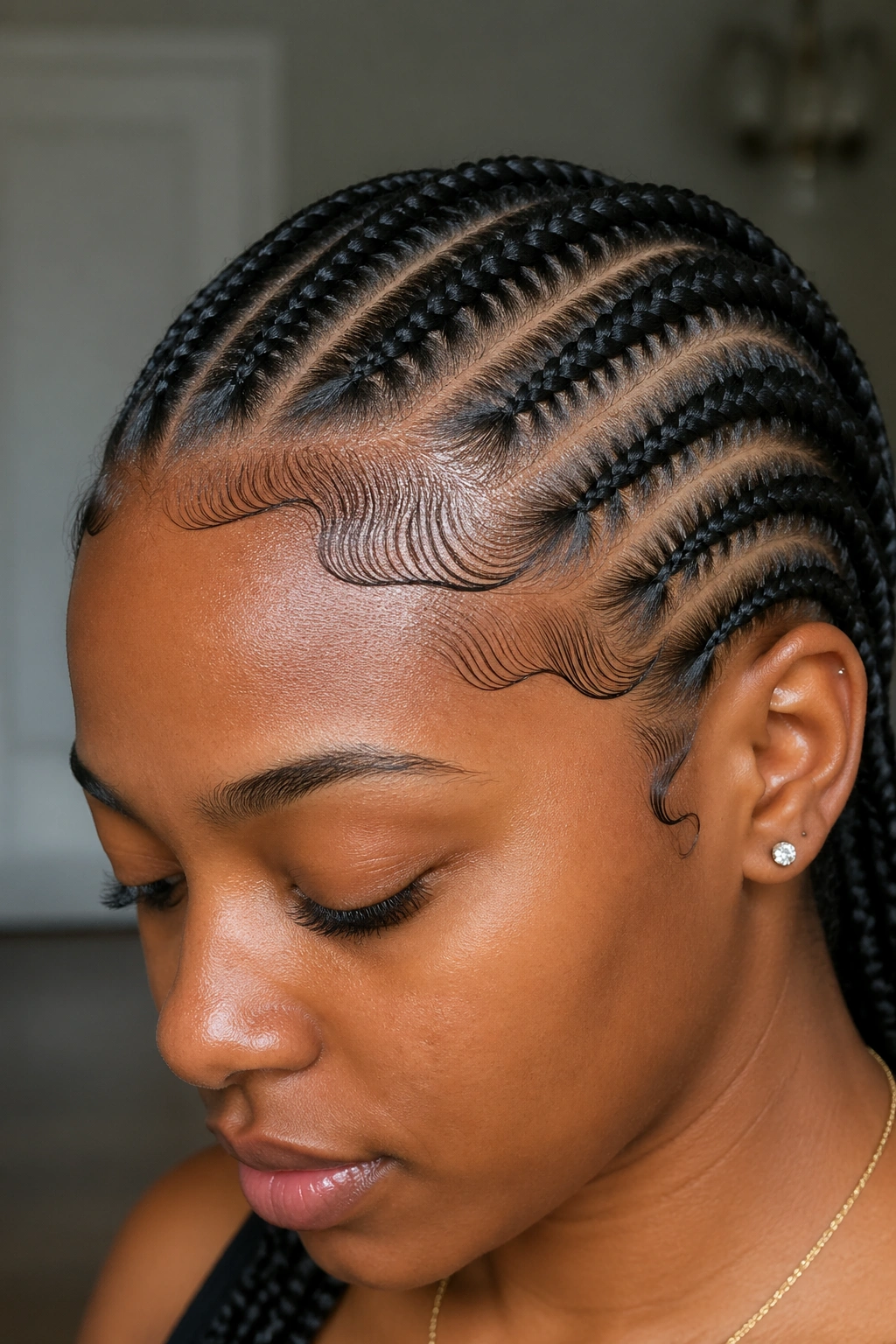
Standard cornrow set with carefully styled baby hair at the front hairline. The baby hair is slicked into small curves or swoops with edge gel.
Baby hair styling is a small detail that transforms a basic cornrow set into a polished look.
The baby hair needs daily attention. Keep a small jar of edge gel on your bathroom counter for morning touchups.
23. Cornrows Into Two-Strand Twist Ends
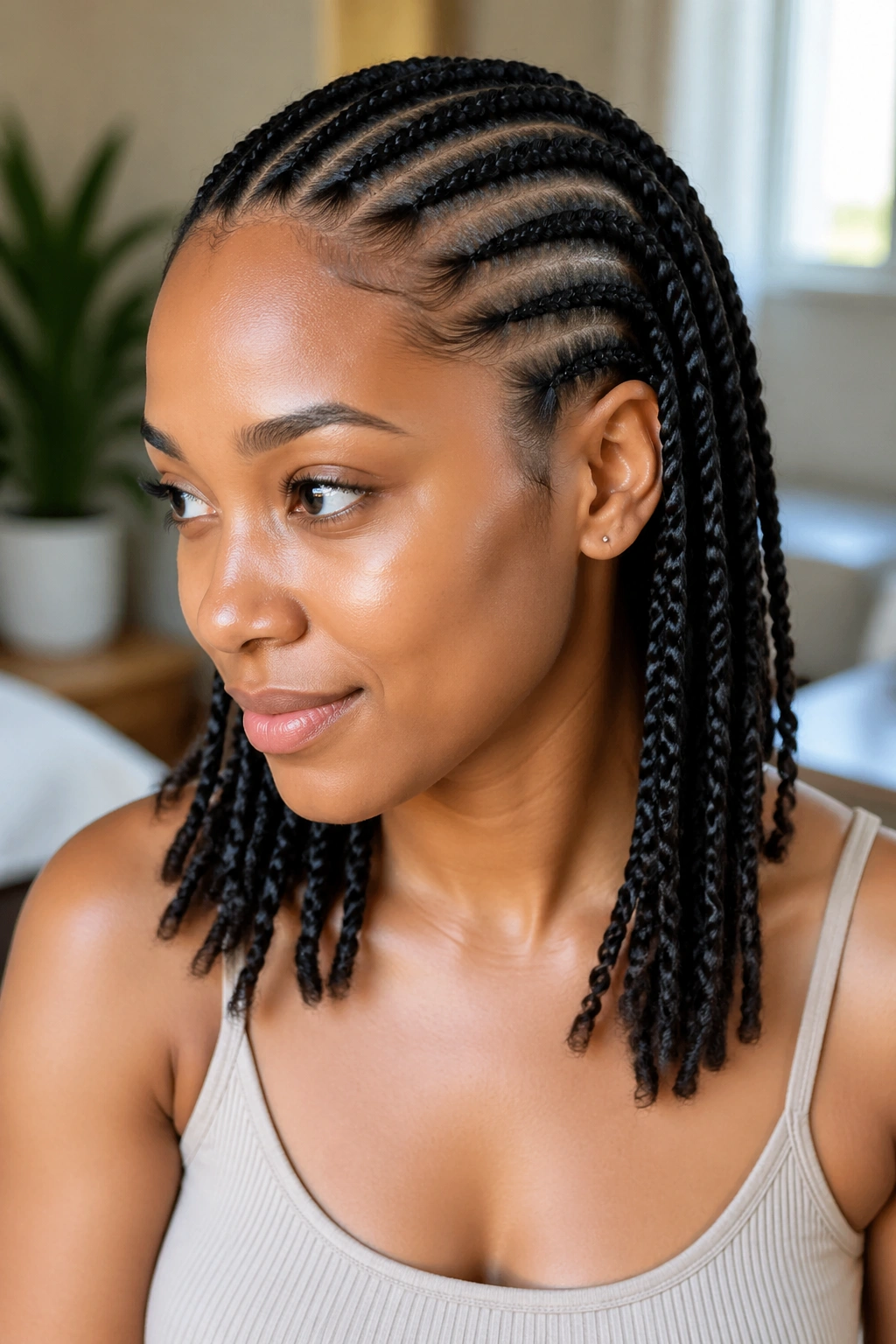
Cornrows transition into two-strand twists at the ends — each cornrow releases into a twist for the last 4-6 inches.
The twisted ends add texture to a simple style. They also protect the ends better than loose tips.
This is a subtle upgrade from basic cornrows that still qualifies as simple.
24. Simple Cornrows With Small Beaded Ends
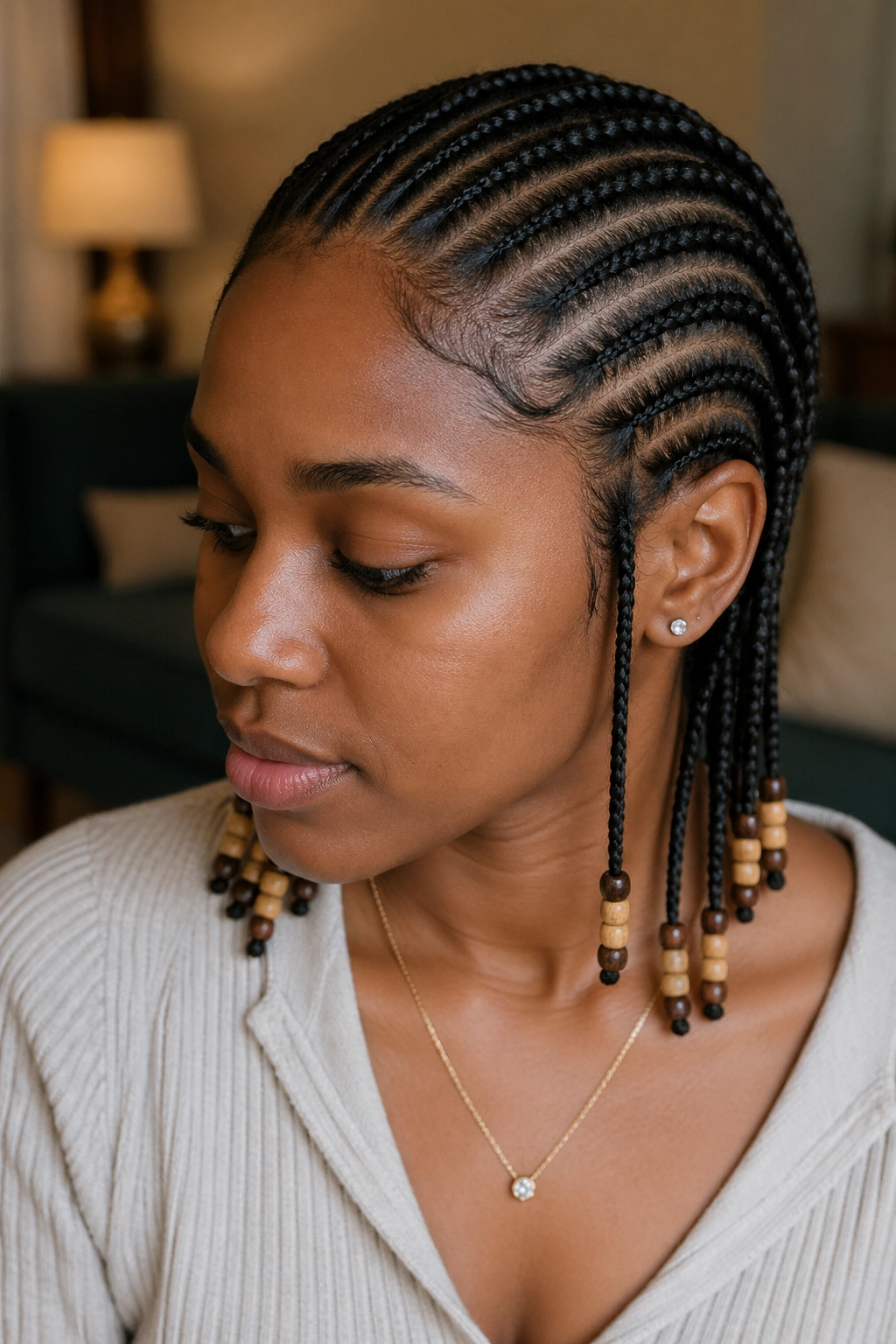
Cornrows with just 2-3 small wooden beads at each braid tip. Minimal ornament.
The beads add weight and sound without reaching for elaborate accessorizing.
Choose natural-tone wooden beads for the most versatile look. They pair with any outfit.
25. Simple Cornrows With One Accent Braid
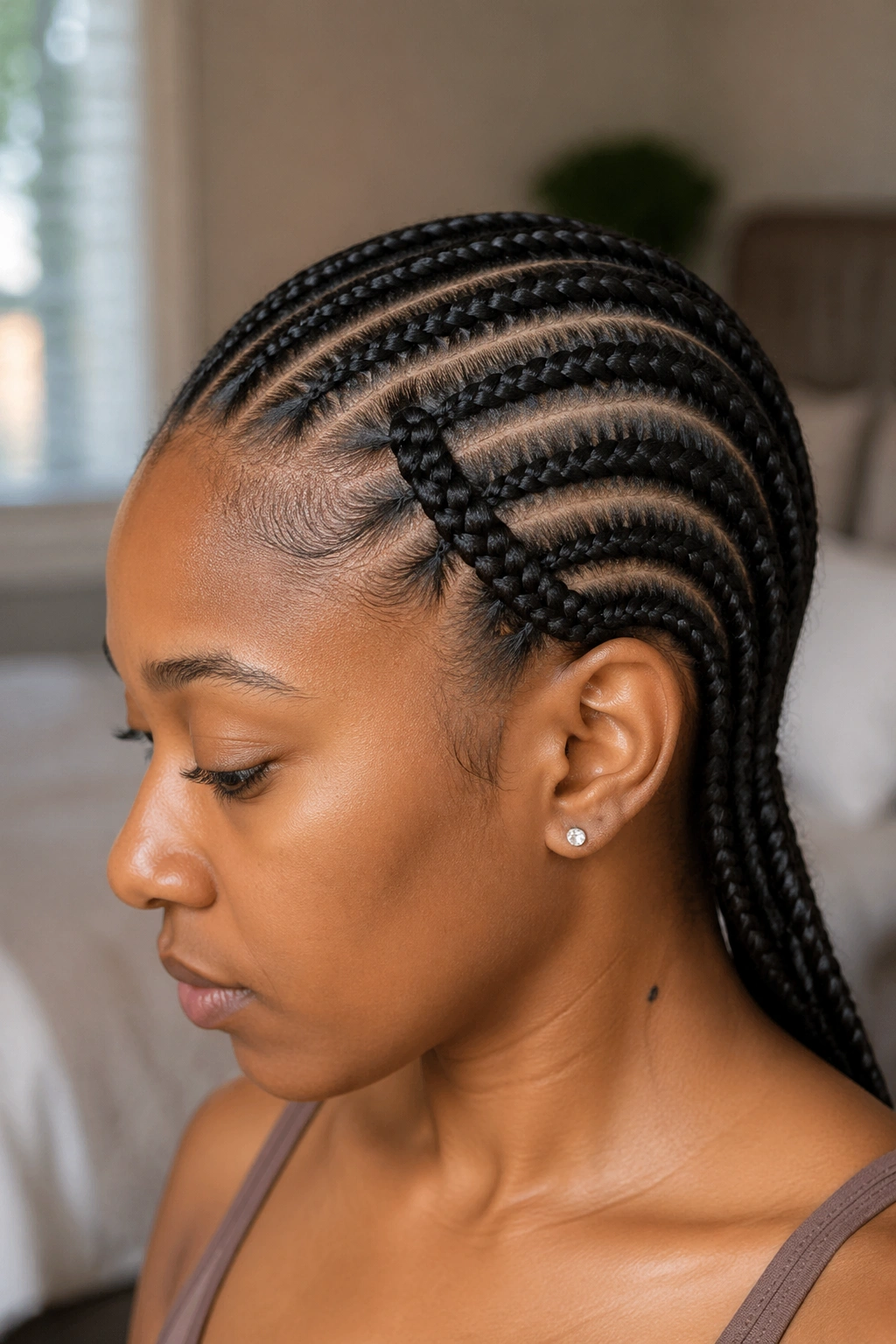
Standard cornrow set with one accent braid — maybe a slightly thicker braid at the side, or one braid with a small design. The rest of the style stays simple.
The single accent adds personality without complexity. It’s a small gesture that makes the style feel intentional.
Tip: Place the accent braid where it frames your face — usually along one temple or at the front.
Daily Routine for Simple Cornrow Styles
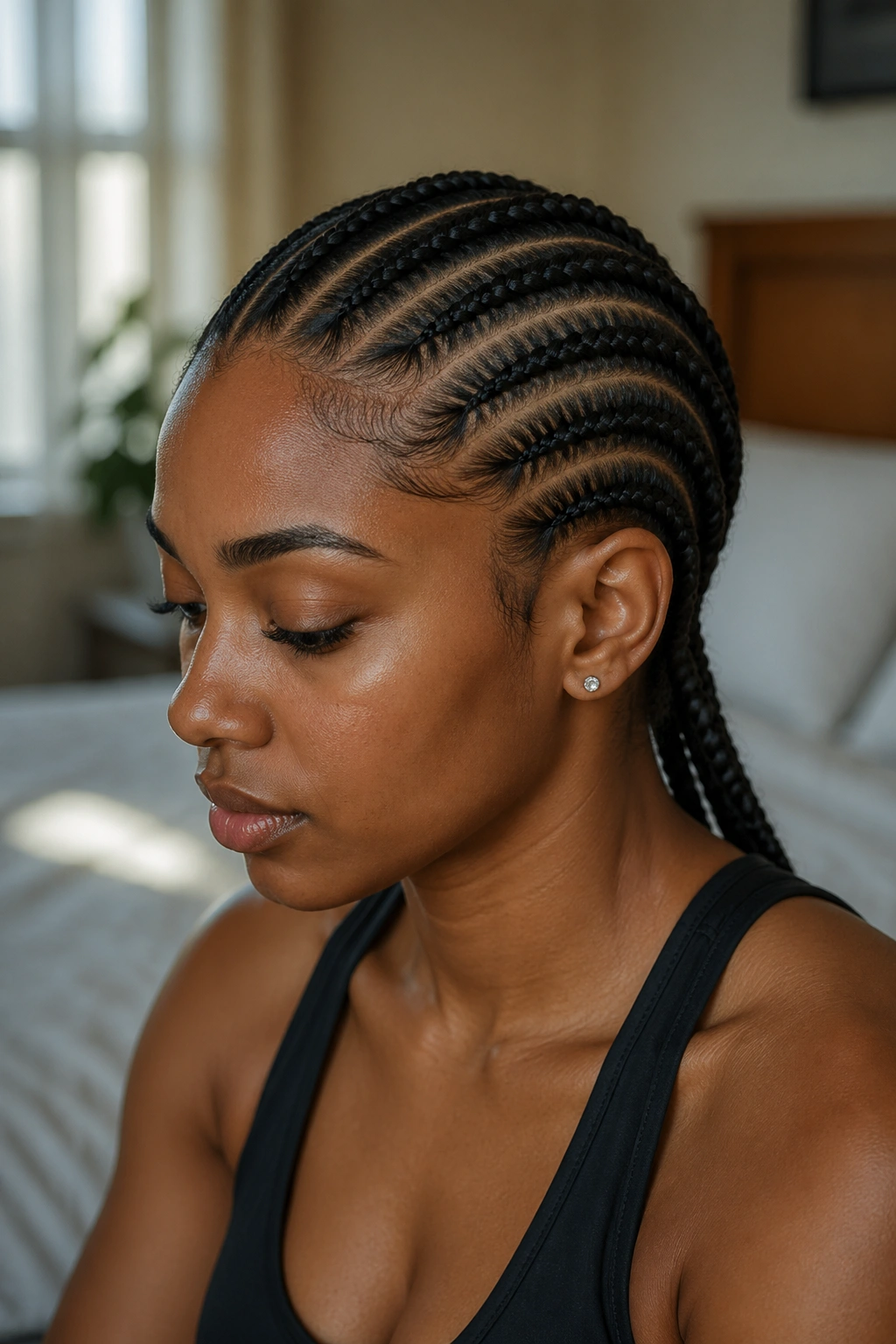
Simple cornrows are low-maintenance but not zero-maintenance.
Morning refresh (5 minutes):
- Spritz with diluted leave-in conditioner
- Smooth edges with an edge brush
- Check for any loose baby hairs
Nighttime routine (2 minutes):
- Satin scarf or bonnet before bed
- Apply a small amount of scalp oil if it’s oil day (every 3-4 days)
Washing Simple Cornrow Styles
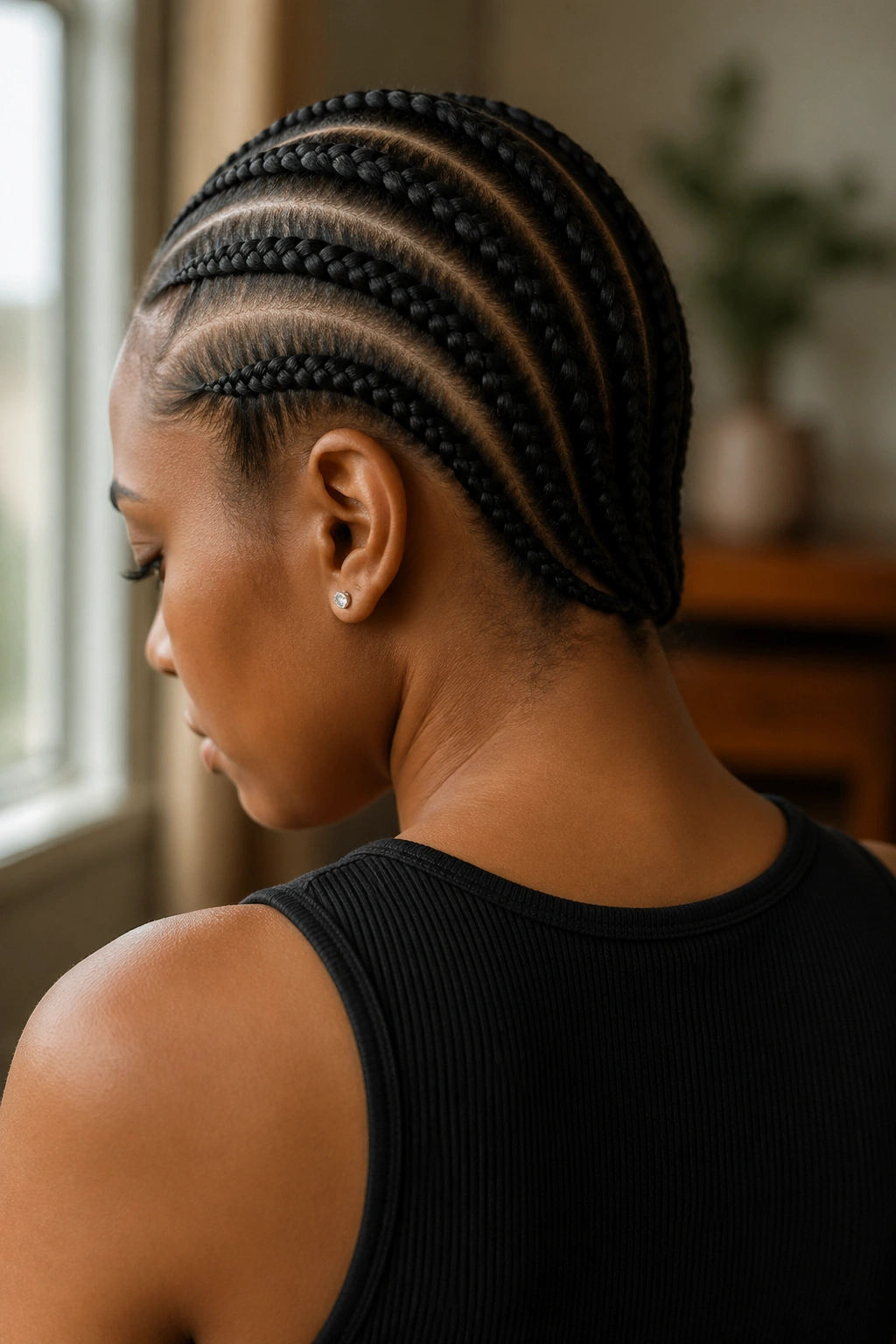
Wash every 10-14 days. Simple styles tolerate the washing process better than complex styles because there’s less design to disturb.
Dilute sulfate-free shampoo 50/50 with water. Apply to the scalp, massage, rinse. Skip conditioner on the braids.
Air dry for 2-3 hours before applying products.
Edge Care
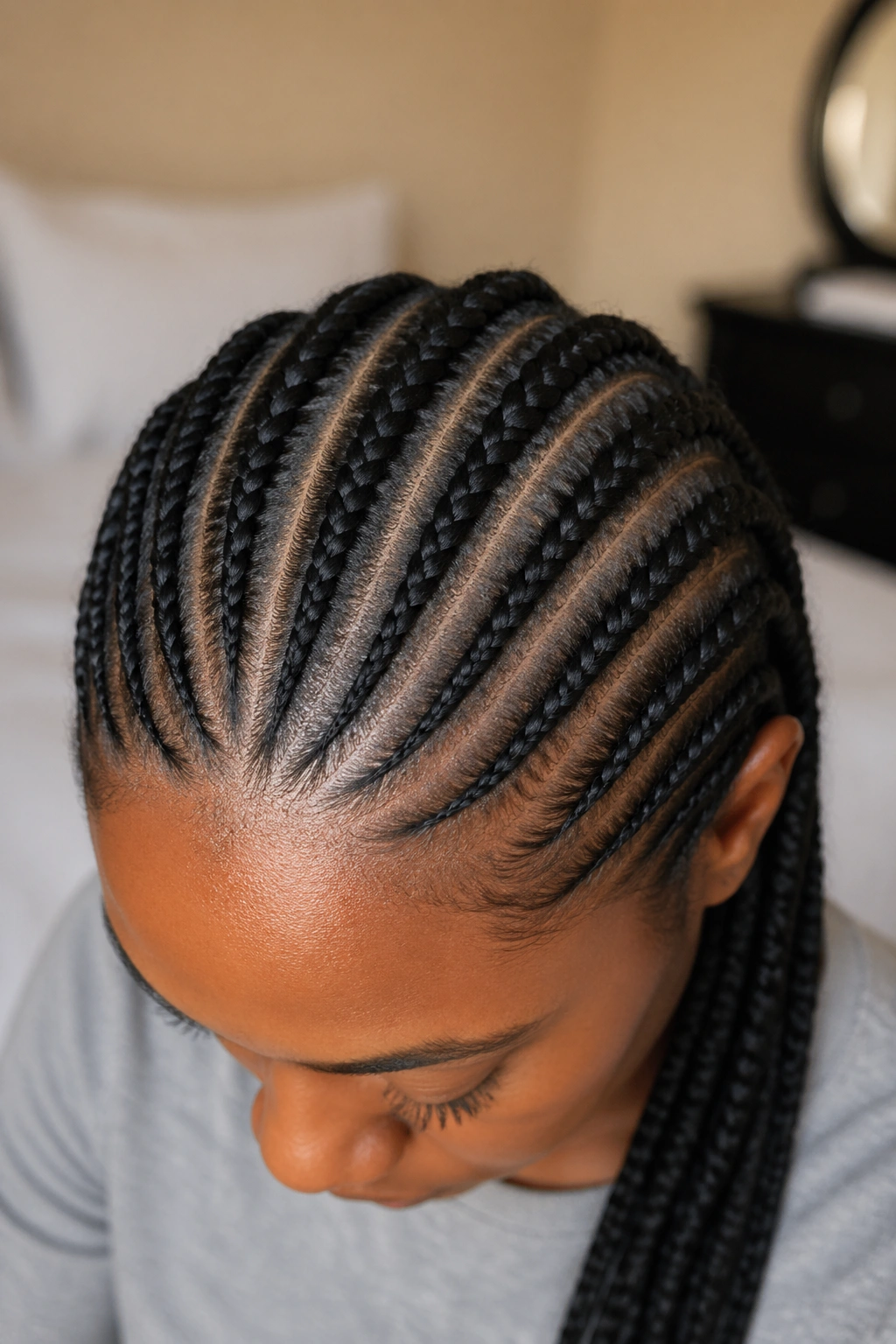
Edges need attention regardless of how simple the style is.
Twice-weekly edge styling with edge gel and a soft brush. This keeps baby hairs laid and the hairline crisp.
Avoid heavy daily edge styling. Over-styling can weaken baby hairs and cause them to shed.
Scalp Moisture Routine
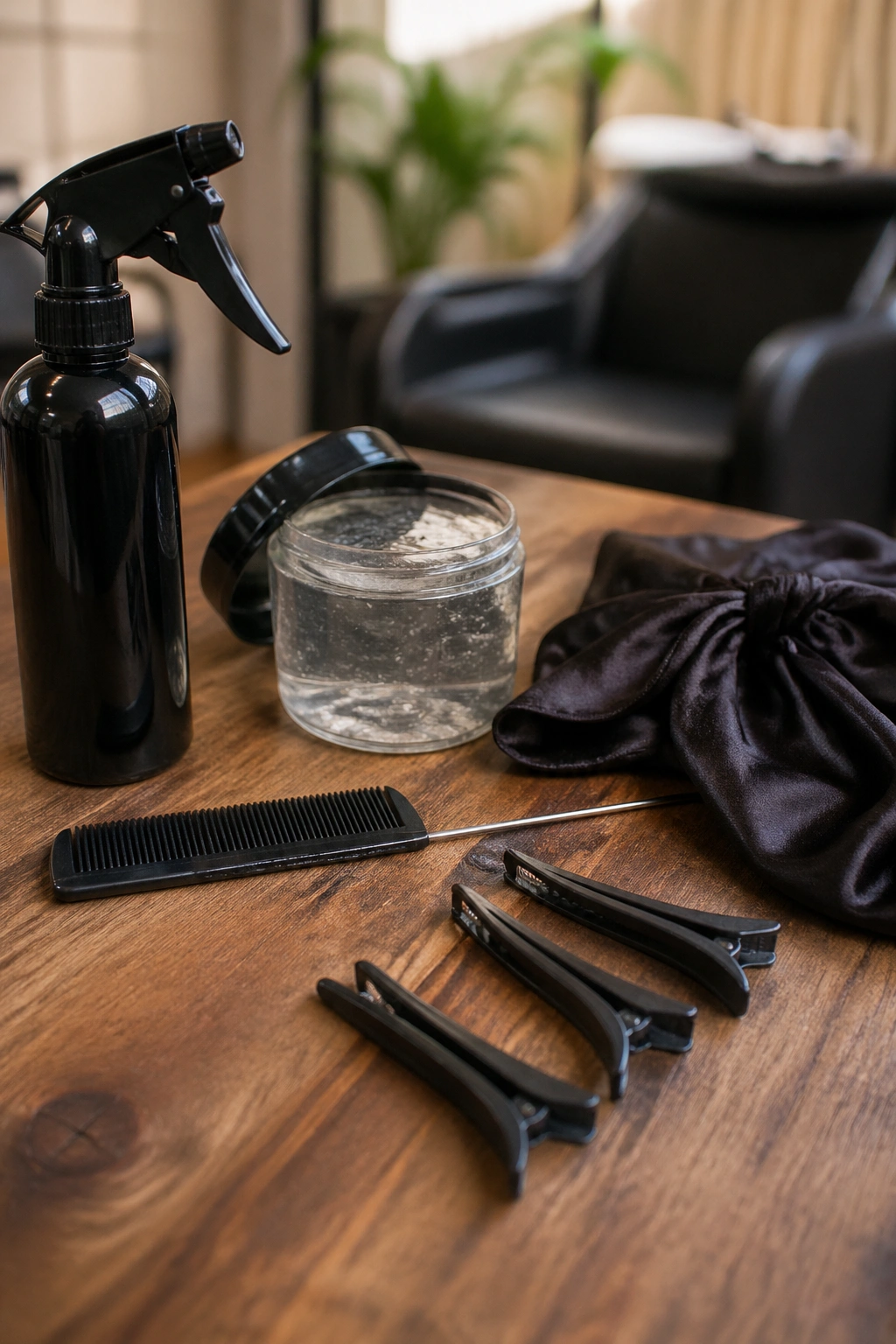
Every 3-4 days, apply a light oil to the scalp at the parts. Jojoba, argan, and grapeseed all work.
Avoid heavy butters and thick oils — they clog pores under braids.
Apply small amounts. A pea-sized drop for the whole scalp is often enough.
Sleep Care
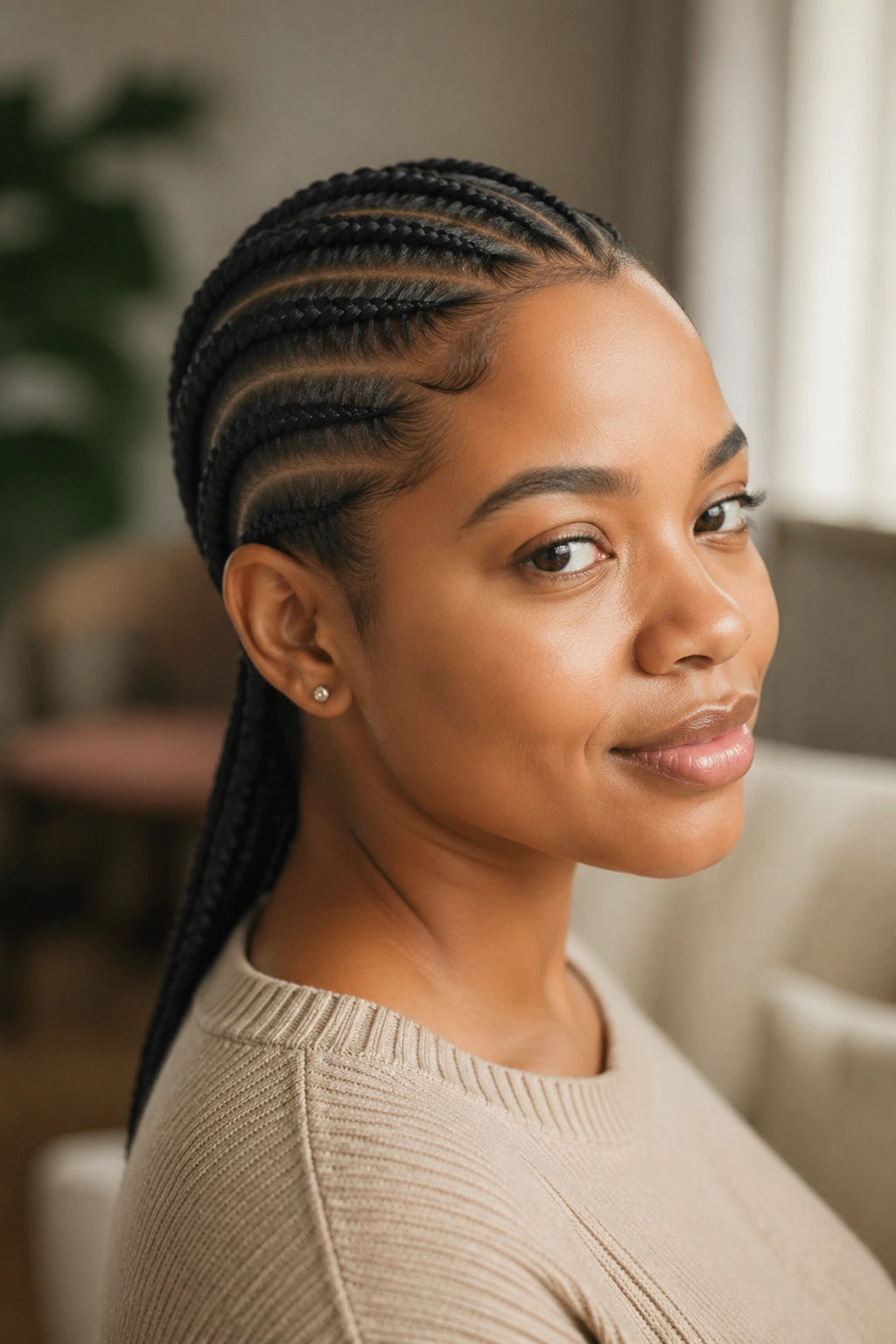
Satin or silk is non-negotiable.
Options:
- Satin-lined bonnet (easiest)
- Silk scarf wrapped around the head (most protective)
- Satin pillowcase only (least protective but easier)
For simple styles, a satin pillowcase alone is usually enough. For styles with specific shapes to preserve (bun, updo, pineapple), add a bonnet or scarf.
When to Take Down Simple Cornrows
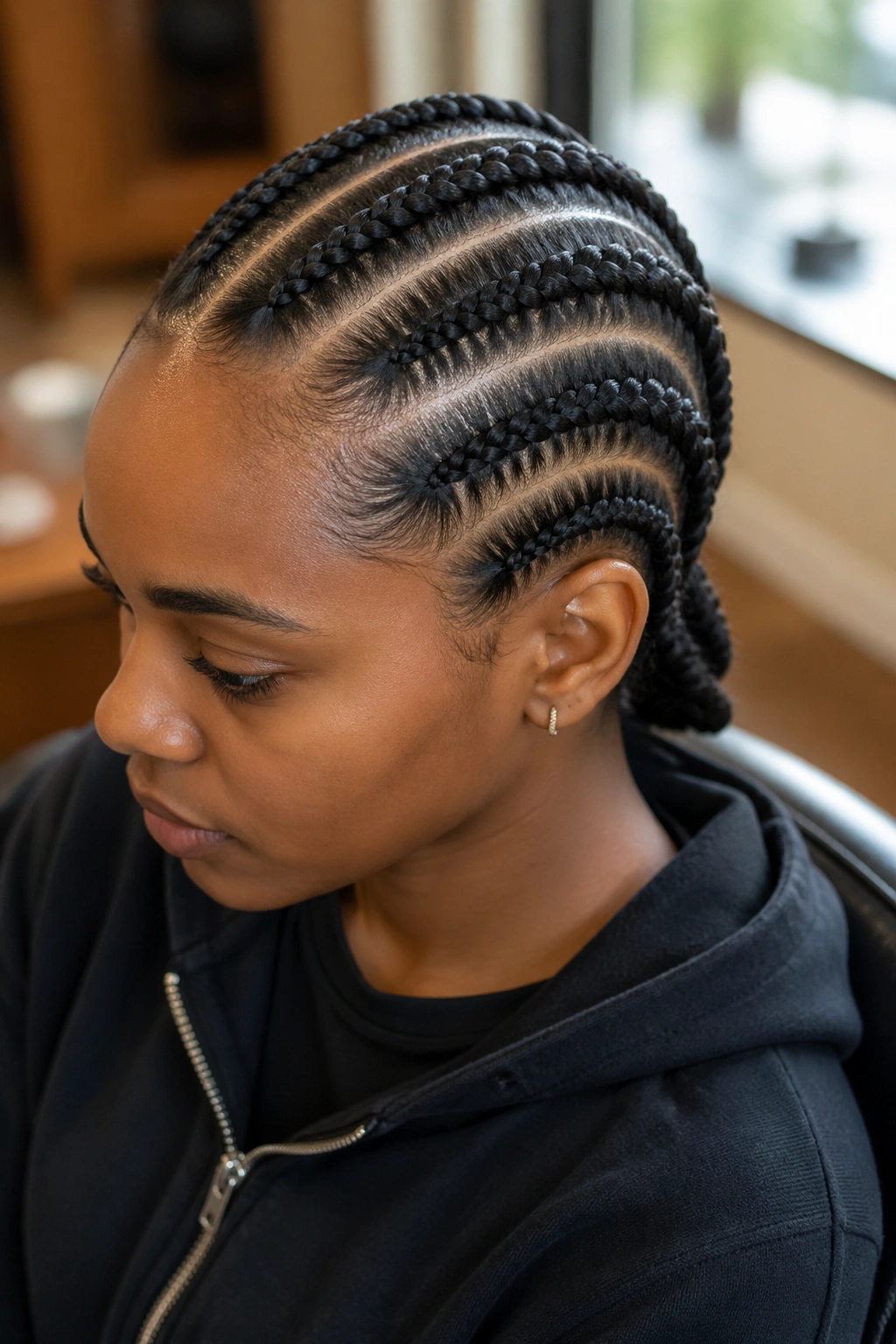
Simple cornrow styles can last 5-6 weeks. The longer lifespan is part of their appeal.
Signs it’s time to take down:
- New growth visible at the parts
- Cornrow edges starting to lift
- Scalp itchiness that moisturizer doesn’t resolve
- Braid ends looking frizzy or unraveled
Don’t push past 6 weeks. New growth stresses both your natural hair and the older braid structure.
Takedown Process
Spray the head with detangling spray diluted 50/50 with water. Wait 10 minutes.
Use the pointed end of a rat-tail comb to unravel each braid from the tip. Don’t rush.
Finger-detangle each section before washing.
Wash with a clarifying shampoo. Deep condition for 30+ minutes.
Give your scalp at least 3-5 days of rest before the next protective style.
Common Mistakes With Simple Cornrow Styles
Treating them as less important. Simple doesn’t mean low-effort. Execution matters more, not less, when there’s no design work to distract.
Choosing a braider based on price. A $40 simple cornrow set usually looks like a $40 simple cornrow set. Pay for skill.
Skipping the consultation. Even simple styles need a brief conversation about face shape, braid size, and part placement. Five minutes saves future regret.
Over-washing. Washing every 3-4 days stresses simple styles. Stick to the 10-14 day rhythm.
Cotton pillowcases. The single most common mistake across all cornrow styles. Cotton destroys braids within days.
And last — simple cornrow styles are often underrated. They don’t get the Instagram traction that elaborate freehand designs do. But they’re the styles that actually work for real life. A clean simple style on well-maintained hair outperforms a complex style on neglected hair every single time. Pick simple often. Execute it carefully. That’s the whole secret.
