
A wedding ponytail works best when it looks deliberate from the first kiss to the last dance. High updo ponytails for weddings sit in that sweet spot: lifted at the crown, clean at the sides, and full enough to feel dressed up without turning stiff.
I’ve always liked them because they solve a real problem. A lot of bridal hairstyles either go too soft and fall apart by the reception, or they go too tight and start looking severe under flash photos and overhead lights. A good high ponytail gives you height, movement, and a neckline that stays visible. That matters when the dress has an open back, a sharp shoulder, or a lot of detail around the collar.
Hair texture changes the recipe, but not the goal. Fine hair needs support at the crown. Thick hair needs weight managed so the tail doesn’t droop by hour three. Curly and coily hair need shape, not flattening. The best styles work with the hair instead of fighting it, which is why a bridal ponytail can feel more polished than a complicated updo that has to be rebuilt twice before the ceremony.
Some of the looks below are sleek and clean. Others lean romantic, textured, or a little louder in the accessory department. The point is to give you options that still feel wedding-ready, because a ponytail is only “simple” when it’s done badly. Start with the first one if you want the cleanest possible version.
1. Sleek Center-Part High Ponytail With a Wrapped Base
A sleek center-part high ponytail is the one I’d hand to someone who wants ceremony polish without a lot of fuss. The center part keeps the face balanced, and the wrapped base hides the elastic so the whole style reads finished, not improvised.
Why the clean line matters
The trick is keeping the crown flat without starving the ponytail of fullness. Use a smoothing cream or light gel at the hairline, then brush the roots upward with tension before securing the tail at the crown or just above it. A small section of hair wrapped around the base makes a huge difference. That tiny cover-up is what keeps the style from looking like an ordinary tie-back.
- Best for satin gowns, square necklines, and minimalist dresses
- Works well on straight, relaxed, or pressed hair
- Looks sharp with drop earrings or a simple comb
- Feels secure when pinned with two crossed bobby pins under the wrap
Tip: leave the ponytail ends softly curled, not poker-straight. That keeps the style from feeling severe.
2. Side-Swept Hollywood Wave High Ponytail
A side part changes the whole mood. It softens the forehead, gives the front a little drama, and pairs especially well with one-shoulder dresses or off-the-shoulder sleeves.
The ponytail itself can stay high and structured, but the front should bend gently across the brow and into a smooth wave before joining the base. A 1¼-inch iron works well for shaping the tail into large, glossy bends. Keep the wave pattern loose enough that it still moves when you turn your head. Too much curl and it starts looking like prom hair, which is not the same thing.
This style flatters brides who want a little old-Hollywood glamour without going full vintage. It also works when the earrings are doing half the work. You do not need a crowded accessory situation here. One pretty hairpin, if any, is enough.
3. Braided Crown Feeding Into a High Ponytail
Need a bridal style that feels ornate without becoming fussy? A braided crown that feeds into a high ponytail is one of the smartest answers. The braid gives the front and sides texture, then the tail keeps the silhouette lifted and modern.
How to wear it
Start the braid near the temple or just behind the hairline, then curve it back toward the crown so it disappears into the base. The braid can be a standard three-strand braid, Dutch braid, or even a soft lace braid depending on how detailed you want it. What matters is that it looks intentional from the side, especially if the ceremony space puts you under bright natural light.
- Best for lace gowns and garden weddings
- Works with medium to long hair
- Keeps the front area secure if you plan to dance a lot
- Looks strongest when the braid is pancake-loosened a little
One note: if you have a statement veil, pin it below the braid line so the structure still shows.
4. Bubble Ponytail With Satin Ties
Bubble ponytails can look playful in the wrong setting. With the right spacing and a softer texture, they feel chic enough for a wedding and a lot less predictable than a standard curled tail.
The best version uses clear elastics or satin ties spaced every 2 to 3 inches down the tail. Gently tug each section to form rounded bubbles, then smooth the outside so the shape stays clean. If the hair is very layered, mist the tail with a light setting spray before you start shaping; otherwise the shorter pieces pop out and make the bubbles look messy instead of round.
- Good for bridesmaids who want a little personality
- Needs enough length to show at least three bubbles
- Looks better with a sleek crown than a fluffy one
- Works well with ribbon in ivory, blush, or black for a sharper look
Tiny detail, big payoff.
5. Voluminous Blowout High Ponytail
This one is for people who love hair that looks expensive from across a room. A voluminous blowout ponytail uses lift at the crown and a lot of body through the tail, so it feels fuller than a slicked-back version without crossing into heavy glam.
The foundation matters here. Blow-dry the roots with a round brush, then set the tail in large sections with a 1½-inch iron or hot rollers. If the hair is fine, a little teasing beneath the crown gives the ponytail something to sit on. If the hair is thick, keep the smoothing light so you do not flatten the shape.
The best part is movement. The tail should swing, not hang. That means the finish has to be soft enough that the ends stay touchable, even if the root area is carefully controlled.
It’s one of my favorite looks for evening weddings with structured gowns.
6. Soft Curly High Ponytail With Face-Framing Pieces
Unlike a sleek ponytail, this one gives you movement around the face and at the ends, which makes it feel easier and more romantic. It’s a strong choice for brides who want the ponytail shape but don’t want the hair to look locked down.
The face-framing pieces are doing important work here. Keep them long enough to graze the cheekbones or jaw, then curl them away from the face with a small iron so they open the features instead of closing them in. The tail itself can be loosely curled in 2-inch sections, brushed out, and misted with flexible-hold spray. That brushed-out step matters. It gives the curls a softer, bigger shape.
This style suits boho dresses, floral details, and outdoor ceremonies where a little wind is part of the picture. It also looks kind to round and heart-shaped faces because it keeps the vertical lift while softening the edges.
7. Twisted High Ponytail With a Hidden Base
A twisted high ponytail feels more polished than a plain tie-back because the front sections are gathered with intention, not just pulled and pinned. The hidden base keeps the elastic out of sight, which is the difference between “nice hair” and bridal hair.
Why the twist matters
Twisting the side sections before they meet at the crown gives the style a little depth near the head. That helps a lot if the dress is simple and you want the hair to do more of the visual work. It also keeps shorter face layers tucked in without needing half a can of spray.
- Best for medium-density hair
- Looks good with pearl pins tucked into the twist
- Helps disguise clip-in extensions at the crown
- Stays neat with two pins crossing under the twist point
The effect is subtle, which I like. You notice the shape before you notice the mechanics.
8. Pearl-Studded High Ponytail
Pearls can go tacky fast if they’re scattered everywhere. Keep them tight and sparse, and they look elegant instead of costume-y. A pearl-studded high ponytail works best when the pearls act like punctuation, not confetti.
Use pearl pins along the base or pinned into the first few inches of the tail. Five to seven pins is usually enough. More than that, and the style starts shouting. The ponytail itself should stay sleek or softly waved, because pearls need a clean surface around them to stand out.
This style is especially good for brides who are wearing pearl earrings, a beaded bodice, or a simple satin veil. It also works when you want the hair to read formal without using flowers. There’s a nice restraint to it, which I think gets overlooked. Pearls don’t need much help.
9. Fishtail-Wrapped Bridal Ponytail
Want texture without a full braid taking over the whole style? A fishtail-wrapped ponytail gives you that detailed, woven look right where people notice it most: around the base and through the tail.
The fishtail section can start as a wrap around the elastic, then continue down the length of the ponytail. Keep the weave slightly loose so the pattern stays visible in profile. If the hair is very smooth, prep it with a dry texture spray first. Otherwise the sections can slip, and the braid loses its shape before the dancing starts.
How to keep it neat
Use small, even sections when you split the hair. Uneven pieces make the braid look chunky in the wrong places. Once the tail is secured, gently pull the outer edges of the fishtail to widen it. Not too much. Just enough to let the texture breathe.
This is a strong pick for rustic venues, barn weddings, and dresses with a little lace detail.
10. High Ponytail With a Bouffant Crown
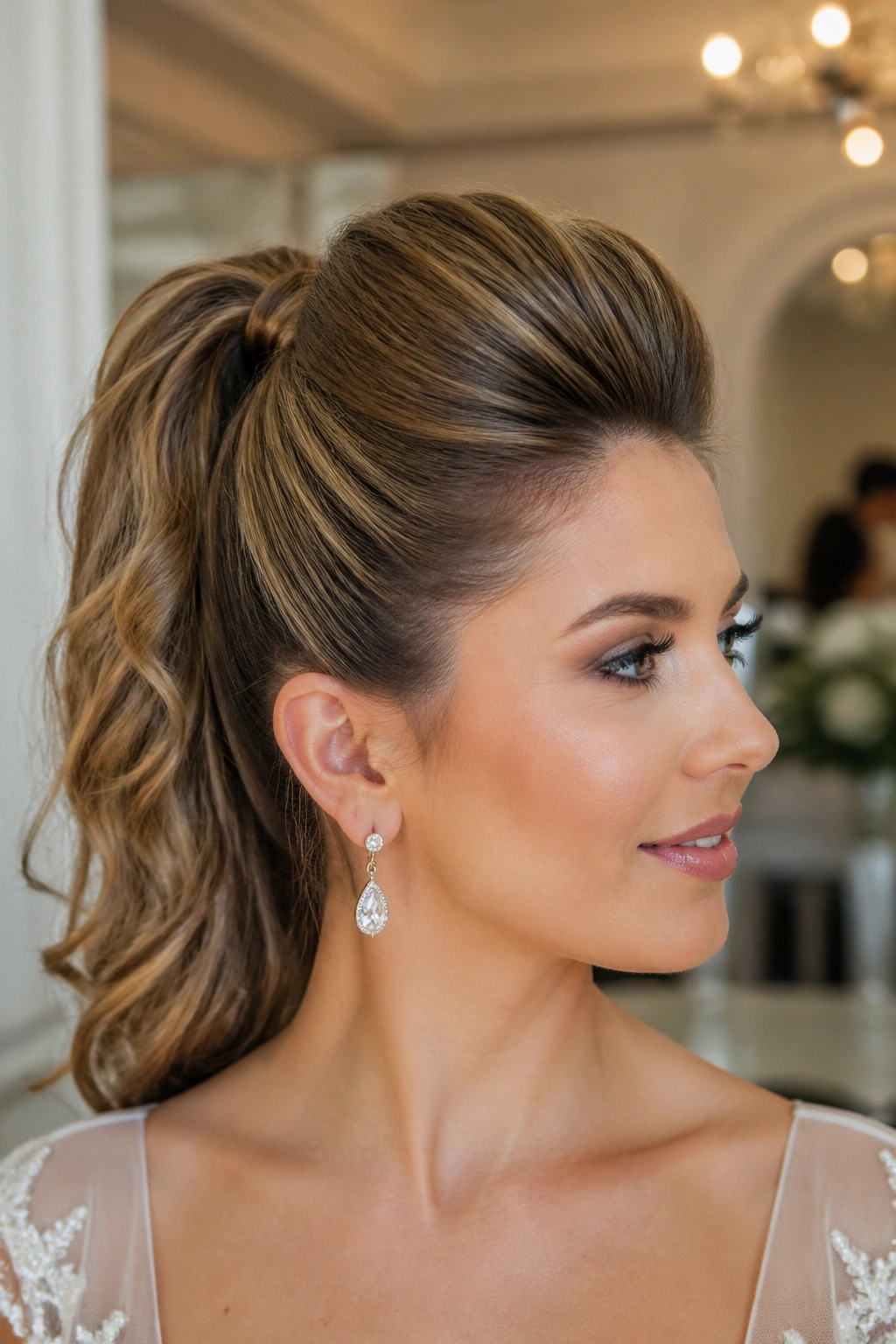
A bouffant crown gives the ponytail a raised, almost sculpted front that feels right at home in a formal setting. It’s a good answer when the dress has a strong neckline and you need the hair to keep up.
The lift comes from backcombing or light padding at the crown, then smoothing the top layer over it so the surface still looks clean. That balance is what keeps the style from turning retro in a costume-party way. The tail can stay straight, curled, or softly brushed out depending on how dressed up you want it to feel.
I’d use this on someone who wants height without stacking a lot of accessories around the face. It gives the profile more shape and can make a simple gown look more finished. That little bump at the crown does a lot of work.
11. Ultra-Sleek High Ponytail With Extra Length
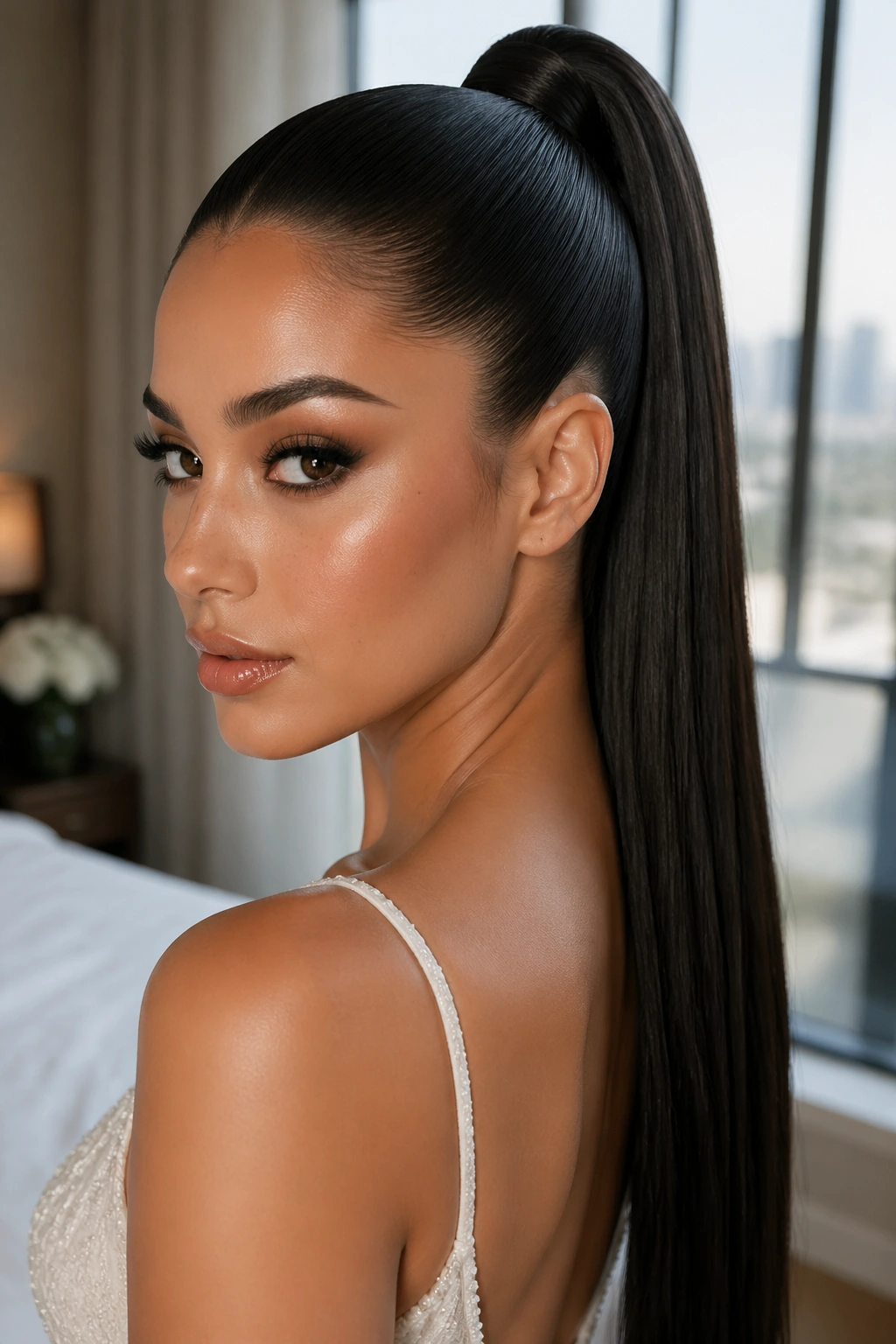
There’s a sharp confidence to a truly sleek wedding ponytail. No fluff, no stray volume, no apology. Just clean roots and a long tail that hangs like it was planned down to the last inch.
For this look, smooth the hair in small sections with a flat iron before gathering it up. If the natural length is short or medium, clip-in ponytail extensions can add the extra drop you want. The join has to be hidden carefully under the wrap, because the whole point is that the eye never finds the seam. A shine serum on the tail helps, but keep it light. Too much and the hair looks greasy under flash.
This style pairs well with modern dresses, tailored suits, and sharp veils. It’s not the warmest look in the lineup, but it is one of the cleanest. Very little can go wrong if the roots are secured properly.
12. High Ponytail With a Braided Side Panel
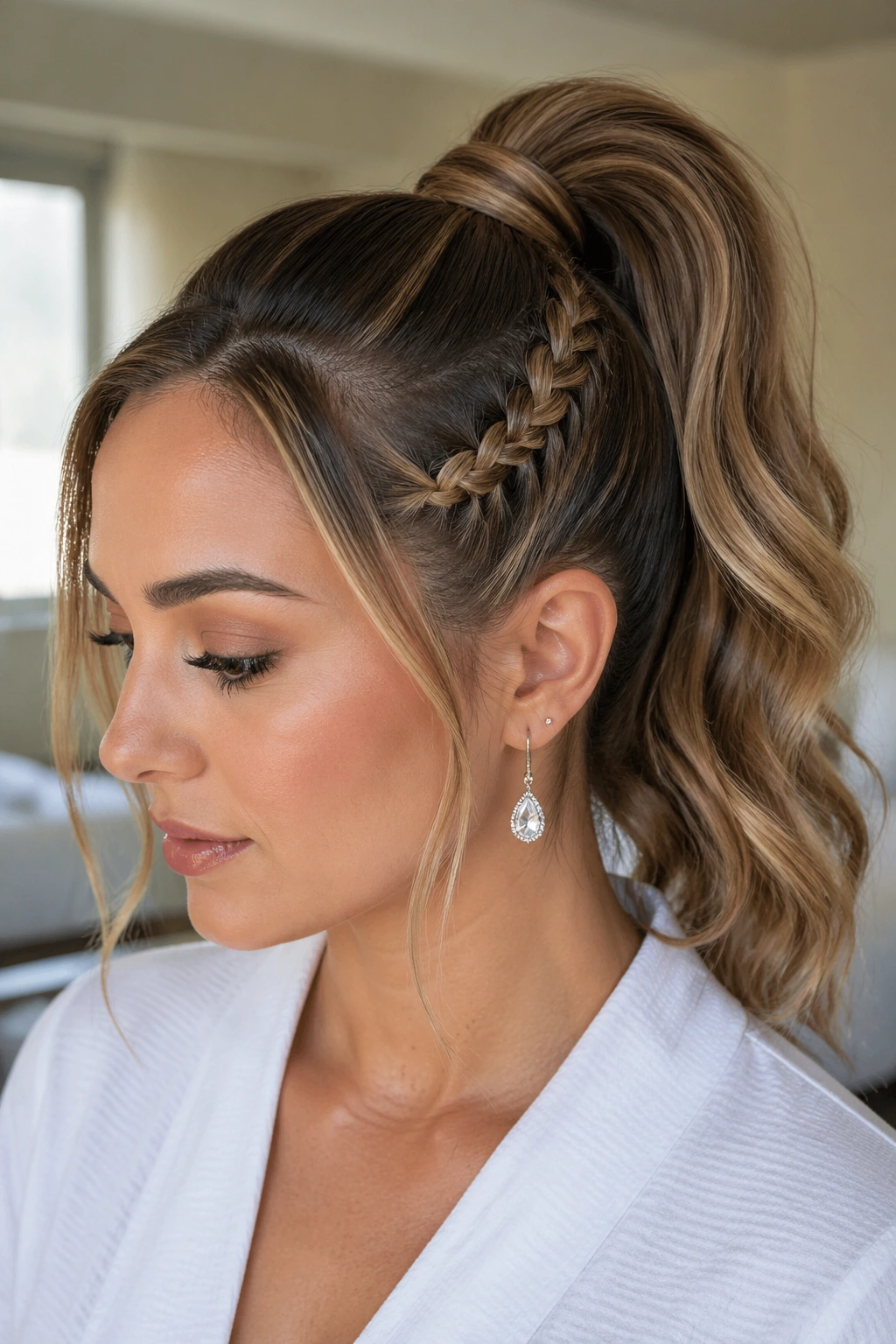
A braided side panel gives the high ponytail more shape from the front, which is useful if the dress is simple and the face needs a little frame. Unlike a full crown braid, this version keeps the braid mostly on one side, so the style feels lighter and less busy.
The braid can be thin and tight or loose and wide, depending on the mood. I like a slightly loosened braid because it keeps the side from looking hard. Once it meets the ponytail base, pin it flat and wrap a narrow piece of hair over the elastic so the join disappears. That’s the part people notice first in a photo.
Best case? A bride who wants texture without going full romantic. The braid adds enough detail to keep the style from reading plain, and the high tail keeps the neckline open.
13. Natural Curls Piled High and Sleek at the Sides
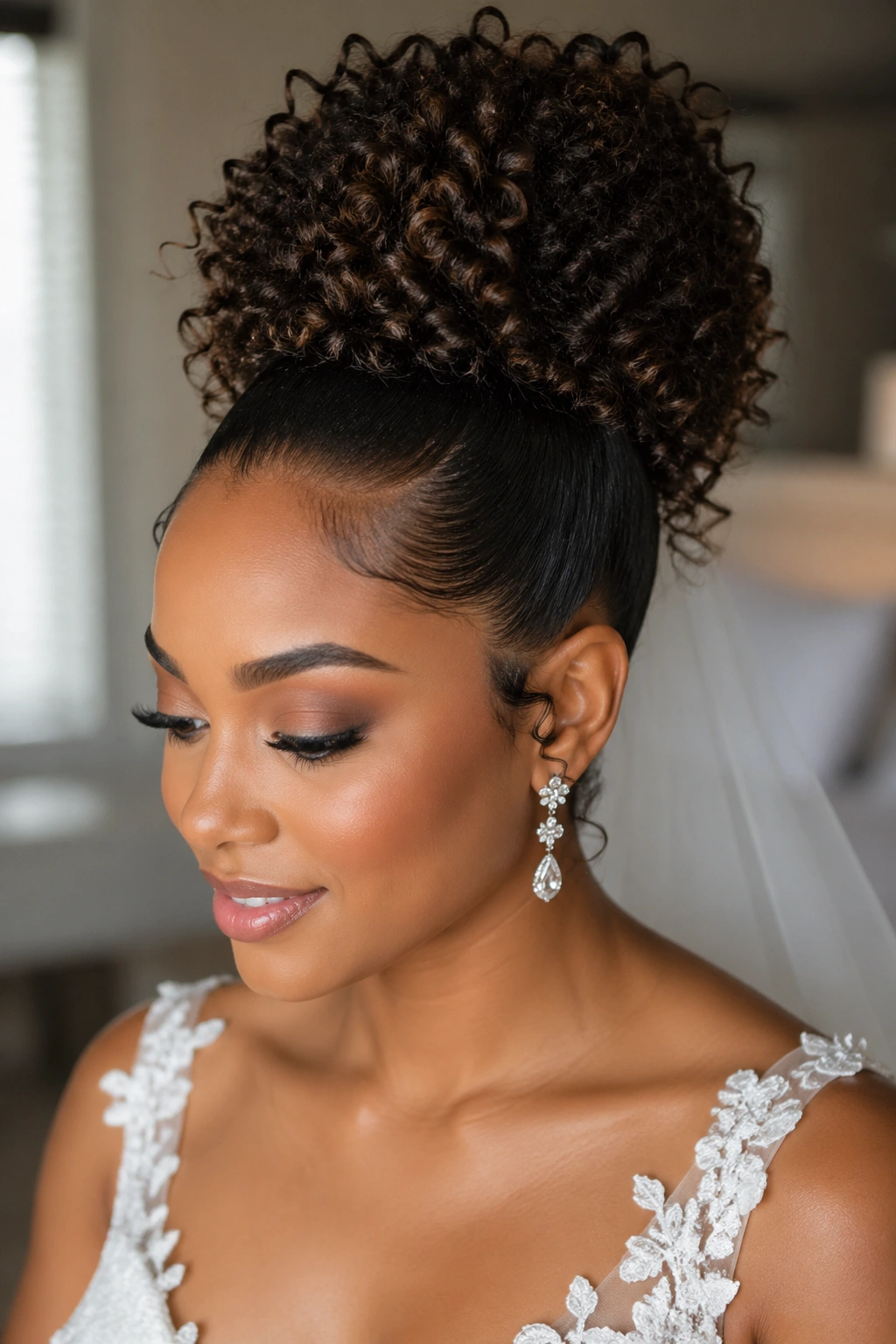
If you wear your natural curls, don’t flatten them out just because the event is formal. Pulling the sides smooth while letting the curls rise high creates a shape that feels clean and still honest to the texture.
What makes it work
The roots at the temples and nape should be controlled, not erased. Use gel or edge control in small amounts, then secure the ponytail high and let the curls stack above the base. If needed, refresh the curls with a curling wand only in a few spots near the outer layer. The goal is shape consistency, not uniformity.
- Best for 3A through 4C curls
- Works beautifully with a decorative cuff or small comb
- Stays balanced when the sides are slicked with a soft brush
- Needs moisture so the curls don’t frizz before the reception
Tip: keep a small oil or curl cream nearby for the ends.
14. Braided Ponytail With Ribbon Woven Through
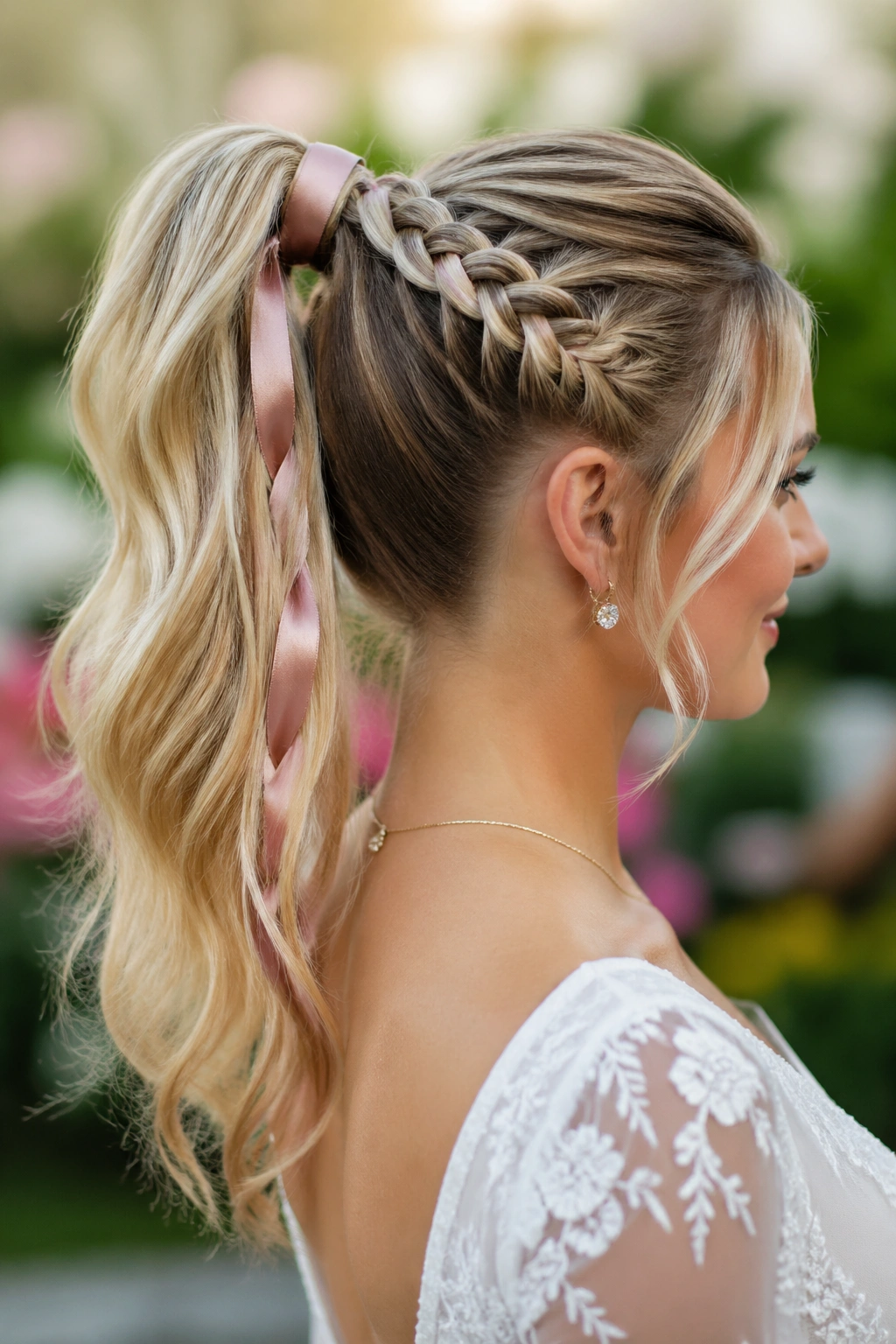
A ribbon woven through a braid can look delicate or a little too school-uniform, depending on the ribbon. Choose a satin or matte ribbon in a color that belongs in the rest of the outfit, and the style feels planned instead of cute.
The braid can run through the ponytail itself or wrap around the base before dropping into the tail. Keep the ribbon narrow enough to move with the braid, not sit on top of it like trim. If the ribbon is wide, use it sparingly near the ends or in a single accent loop. That keeps the braid from becoming heavy.
This version works well for bridesmaids and brides who want something soft and slightly sentimental. I especially like it with bouquets that already include one repeated color. The ribbon should echo, not compete.
15. High Ponytail With Curtain Bangs
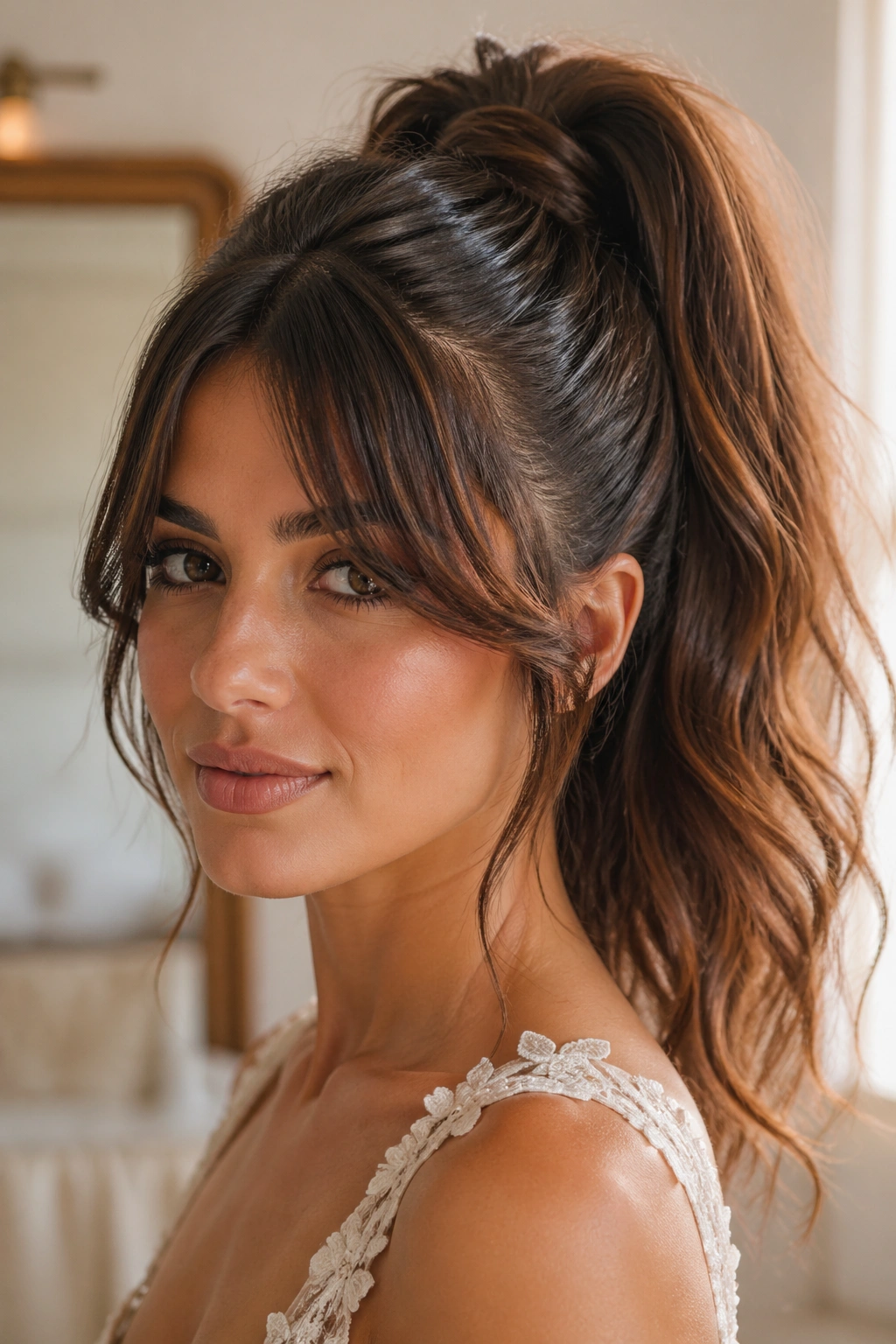
Wondering how to keep a high ponytail from looking too severe? Curtain bangs solve that more often than people expect. They soften the forehead, frame the eyes, and stop the ponytail from feeling like it was pulled back with military precision.
The bangs should be styled first, with a round brush or a medium iron so they bend away from the center of the face. Then the ponytail can sit high and secure without losing softness at the front. If the bangs are layered, let the shorter pieces fall slightly apart instead of forcing them into a single line. That separation looks more natural.
This style is useful when the dress has a high collar or when the face already has strong features. The bangs give the whole look a little air. Not much. Just enough.
16. Hollywood Wave High Ponytail
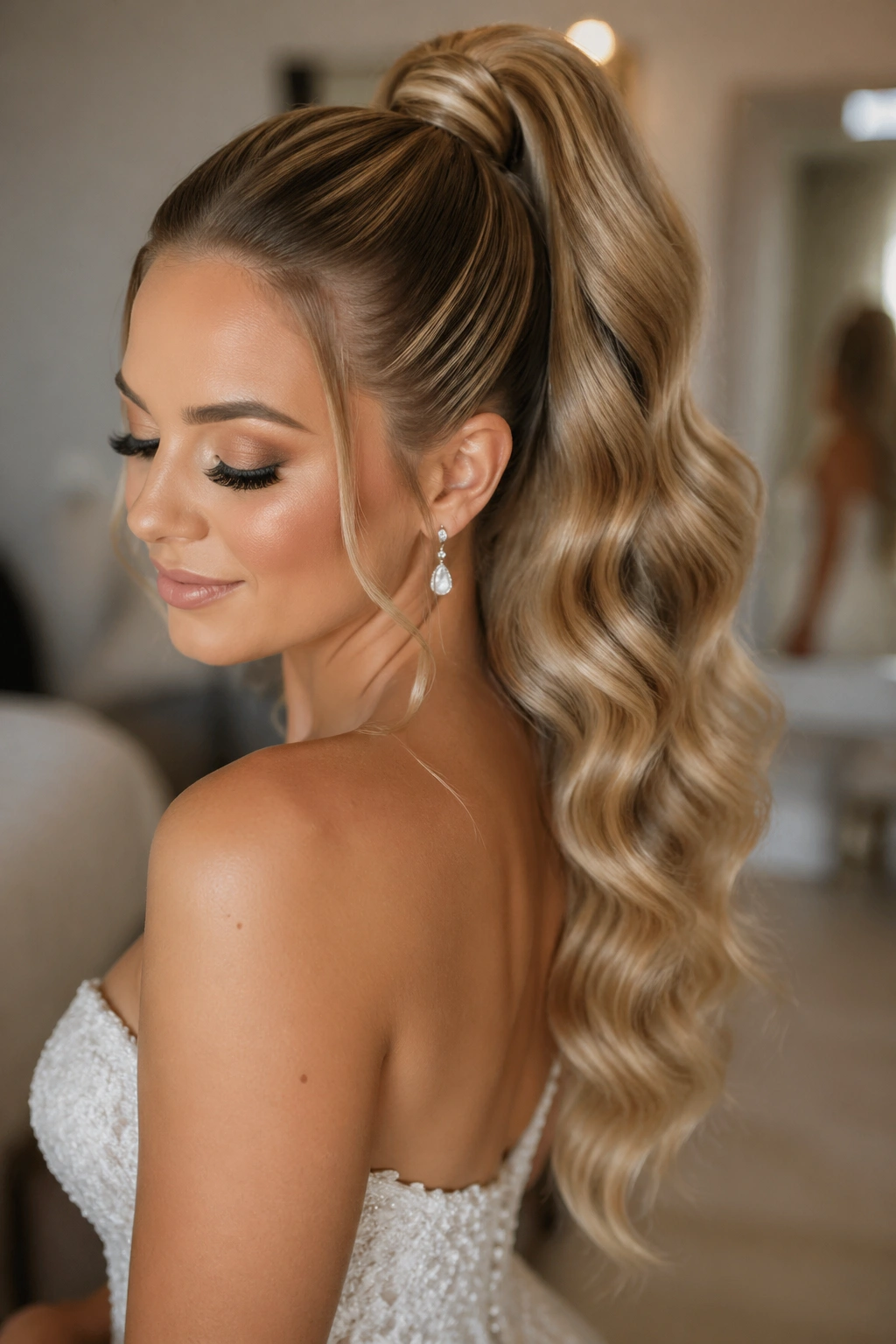
A Hollywood wave ponytail is what happens when polished curls meet a lifted bridal silhouette. The tail is set in broad, uniform waves, which gives it a smooth rhythm as it falls over the shoulder or down the back.
Use a large barrel iron and clip each wave while it cools. That part is not optional if you want the pattern to hold. Once the waves are set, brush them out lightly so they connect into one continuous flow. If the tail is very long, work in sections and keep the wave direction consistent. Otherwise the ends can start fighting the top half.
This style belongs with satin, silk, and gowns that already have some shine in the fabric. It’s glamorous in a controlled way. Not loud. Just refined enough to survive a close-up.
17. Low-Tension High Ponytail for Fine Hair
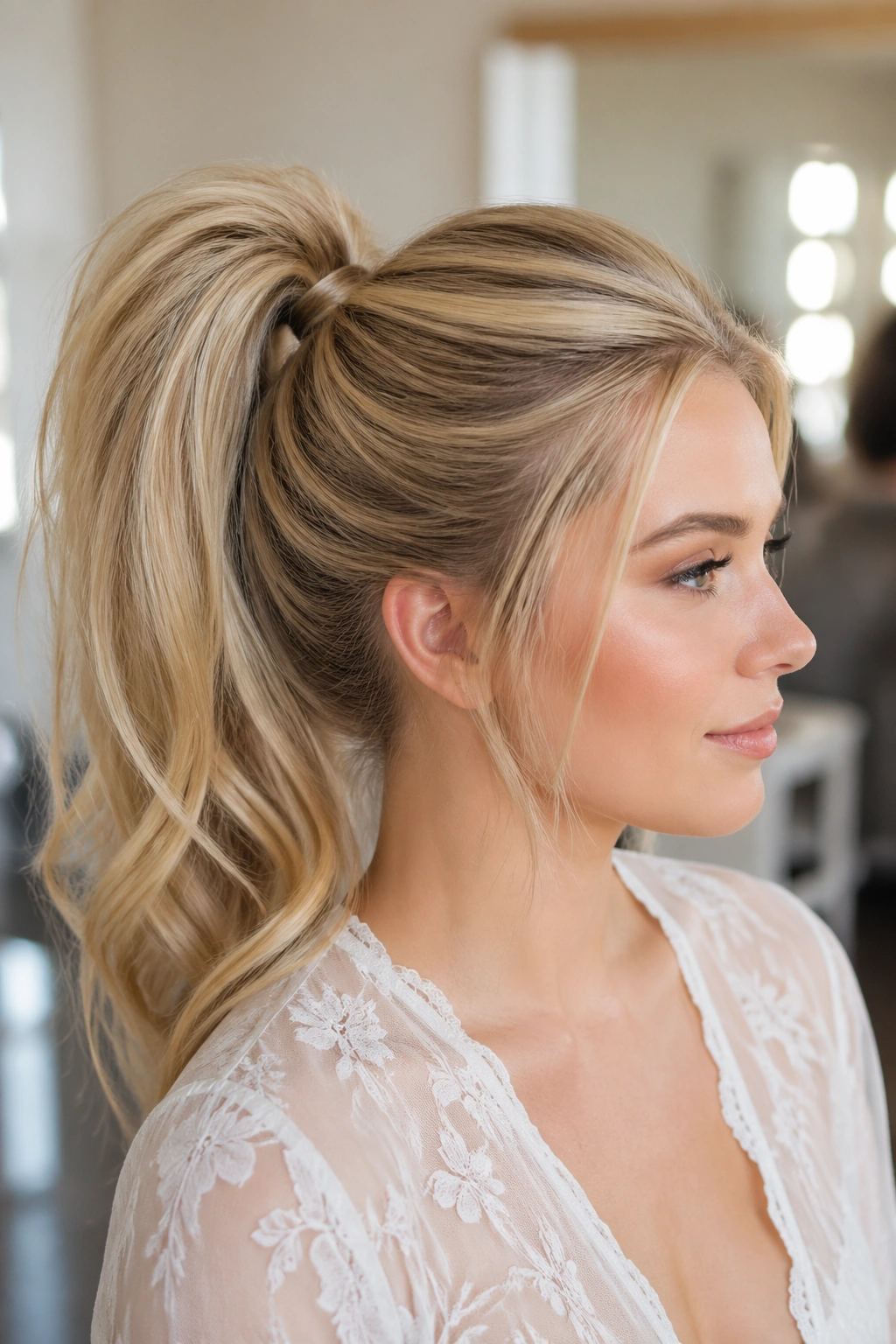
Fine hair can handle a high ponytail for a wedding, but it does not tolerate rough handling. Pulling hard at the roots tends to leave the style flat where you want lift and sore where you want comfort. That’s why a low-tension version matters.
The idea is to build support under the crown with a bit of teasing or a small padding insert, then secure the ponytail with enough hold to last without dragging the hairline down. Use a soft brush and avoid overloading the roots with product. A little mousse at the base, a little spray at the end. That’s enough most of the time.
For brides with fine hair, clip-in extensions can add body without making the style look fake if they’re placed low and blended properly. The result should feel light at the head and fuller in the tail. That’s the sweet spot.
18. High Ponytail With Floral Pins
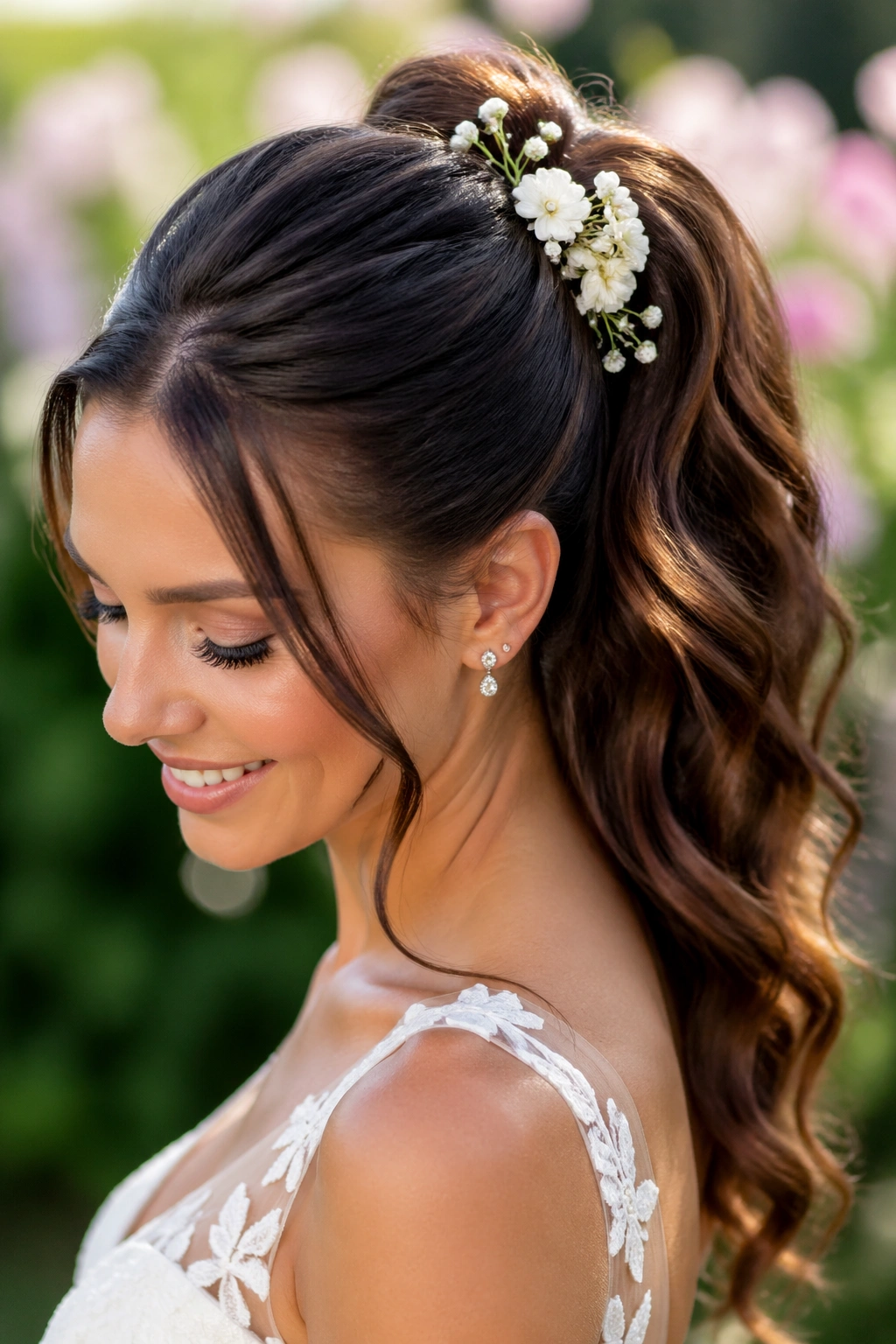
Fresh flowers can be lovely, but they’re not always practical. Floral pins give you the same romantic idea with more control and far less risk of drooping petals halfway through the reception.
Tuck small blooms or wired floral accents around the base of the ponytail, not randomly through the tail. A cluster of two to four is usually enough. If the flowers are real, they should be sturdy varieties that won’t bruise easily when pinned. If they’re silk, choose ones with visible texture so they don’t disappear against the hair.
This style works well for outdoor ceremonies, spring-and-floral-themed weddings, or dresses that already carry botanical embroidery. It also lets the bouquet and the hair speak the same language, which is one of those details guests notice even if they can’t name it.
19. Rope-Braid High Ponytail
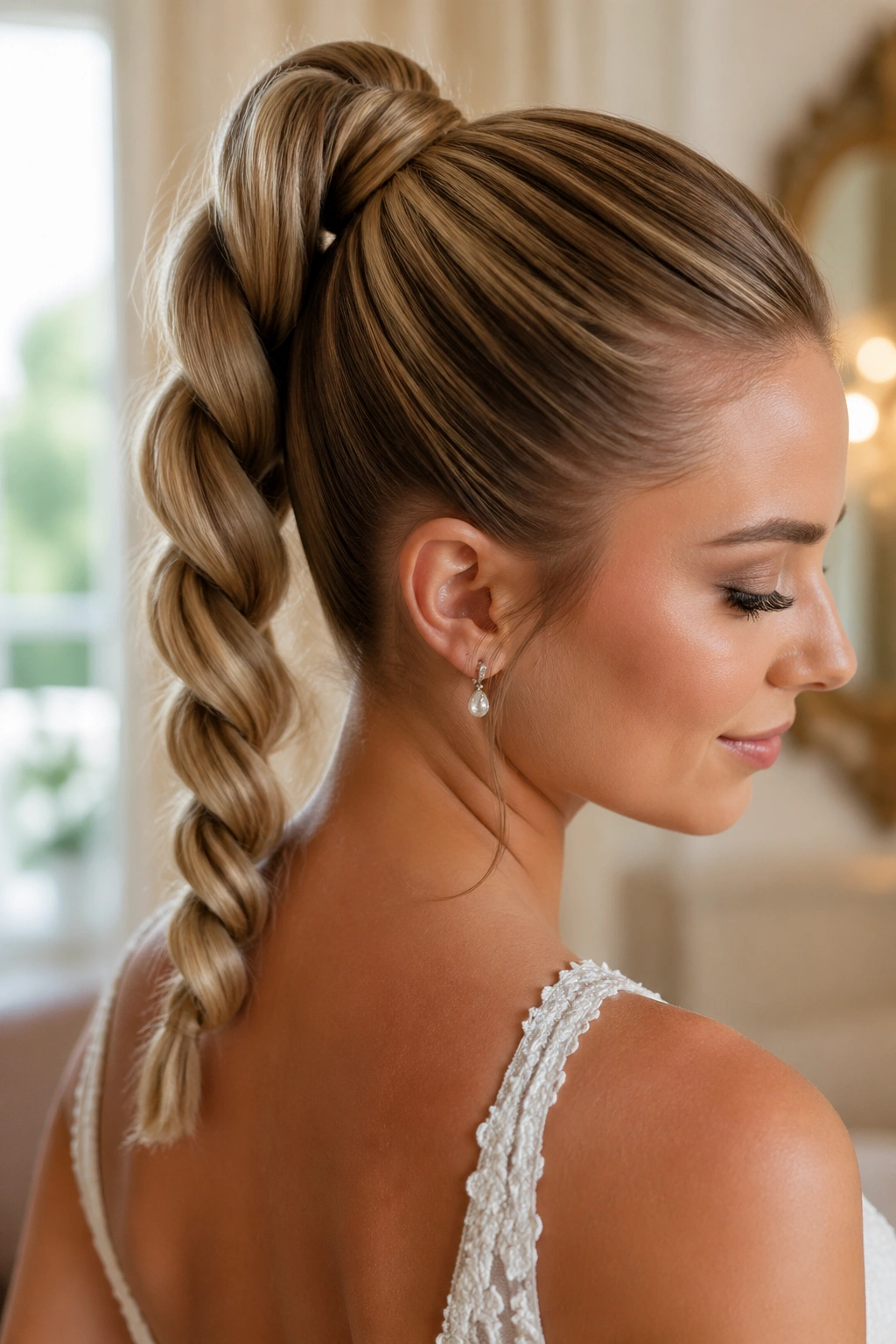
A rope-braid ponytail has a cleaner, tighter look than a standard braid, which makes it a good match for a formal setting. Two twisted sections spiral together and create a glossy rope effect that holds shape well on long hair.
Why the twist holds up
Because the structure is built from tension, the style stays neat without looking overworked. Start with a smooth ponytail, divide it into two sections, twist each section in the same direction, then wrap them around each other in the opposite direction. That’s the part people often miss. Twist one way, wrap the other way.
- Strong on long, straight, or stretched hair
- Great for brides who want a sleek but not flat finish
- Works with metallic cuffs near the base
- Looks especially good with a clean center part
Best use: minimalist dresses and sharp tailoring.
20. High Ponytail With a Veil-Friendly Base
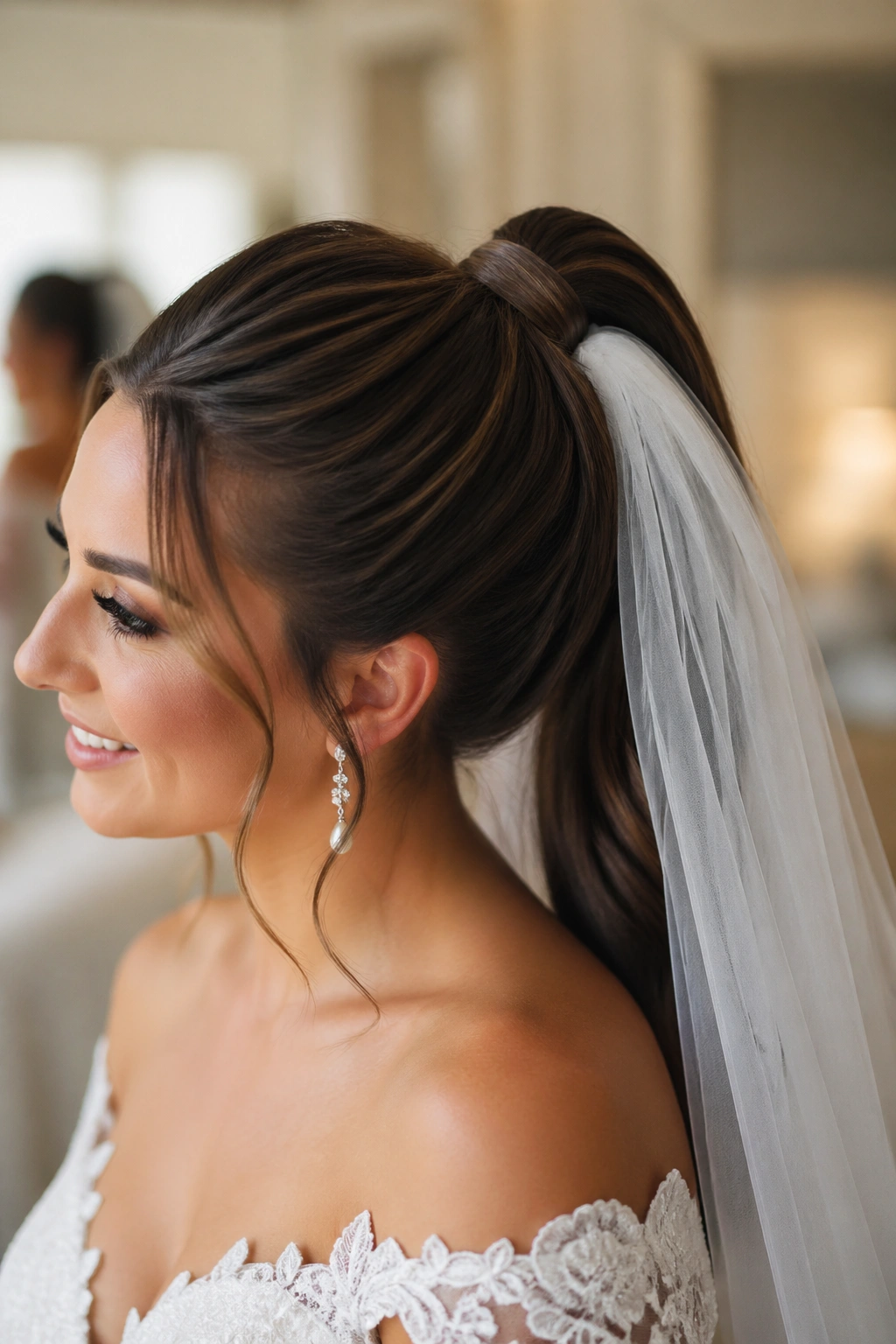
A veil can make a ponytail look either graceful or awkward, and the difference usually comes down to where the veil is pinned. If the base isn’t planned with the veil in mind, the whole style can shift and sag once the fabric is attached.
Keep the ponytail base smooth and secure, then leave enough room below the wrap for the veil comb or pins. A stylist will often anchor the veil under the wrapped section rather than through the tail itself. That keeps the ponytail visible and stops the veil from fighting the hair shape. It also makes the reveal from ceremony to reception easier, which brides tend to appreciate once the veil comes off.
This is one of those practical styles that looks simple from the outside but takes decent planning underneath. The payoff is worth it. The veil sits where it should, and the ponytail still has its own moment.
21. Coiled Ponytail for Locs
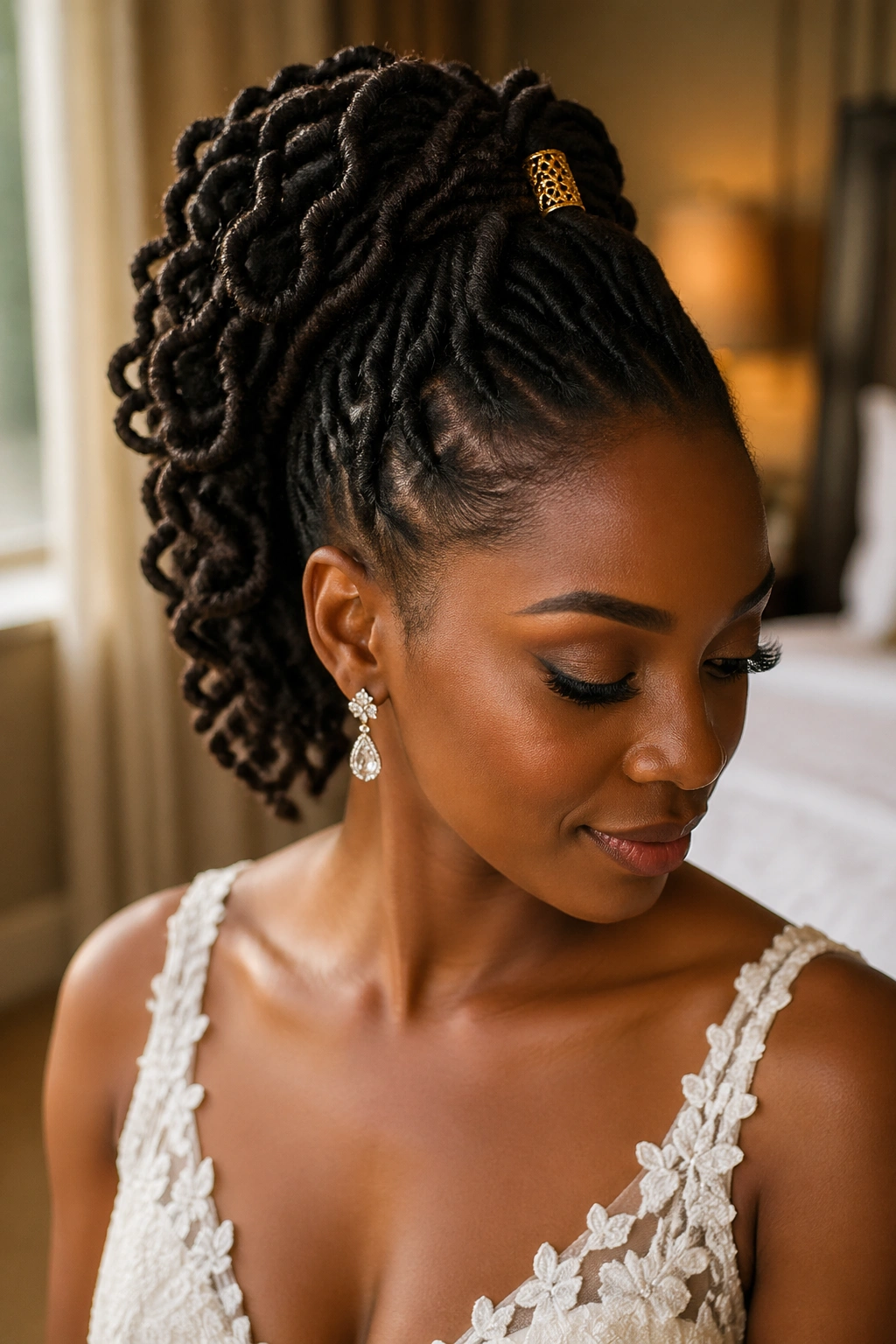
Can locs be worn high for a wedding without losing the shape? Absolutely. A coiled high ponytail can look elegant, sculpted, and full of presence, especially when the coils are arranged with care instead of packed too tightly.
The base should sit high and secure, with the locs gathered into a ponytail or coiled wrap that keeps the shape rounded. If the hair is long, the ends can be arranged into a spiral or folded into a fuller form. Accessory choice matters here. A gold cuff, a few pearl pins, or a simple floral accent can make the style read formal fast.
What to ask your stylist
- How much tension will the roots hold comfortably?
- Can the locs be shaped into a fuller crown before securing?
- Where should pins go so they don’t show?
- What finish will keep the hair neat without drying it out?
Tip: a little sheen goes a long way; too much shine product can flatten the texture.
22. High Puff Ponytail With Sculpted Edges
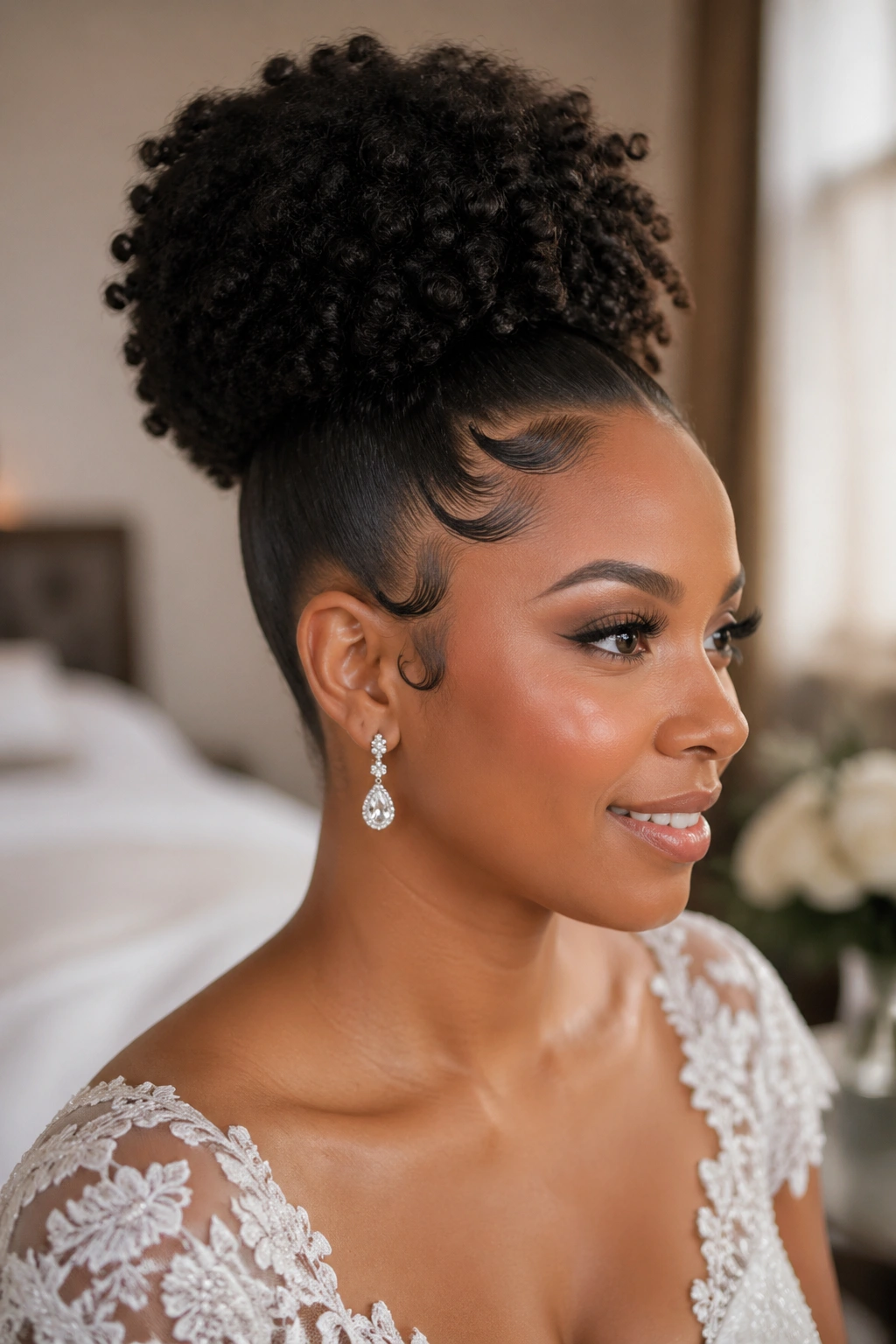
A high puff reads bold and elegant at the same time when the edges are shaped carefully and the puff has a rounded silhouette. It’s not a compromise style. It’s a statement in its own right.
The key is control at the hairline and lift through the puff itself. Use edge control lightly, not in a helmet of product, and brush the hair upward before gathering it into a band or puff cuff. If the hair is dense, a wide band holds better than a thin elastic. The puff should open outward, not collapse backward, and that takes a little fluffing from the sides once it’s secured.
This is a strong choice for brides who want to wear their natural texture with pride. It also photographs well from the side because the shape has real volume. Nothing hidden. Nothing apologetic.
23. Half-Braided High Ponytail
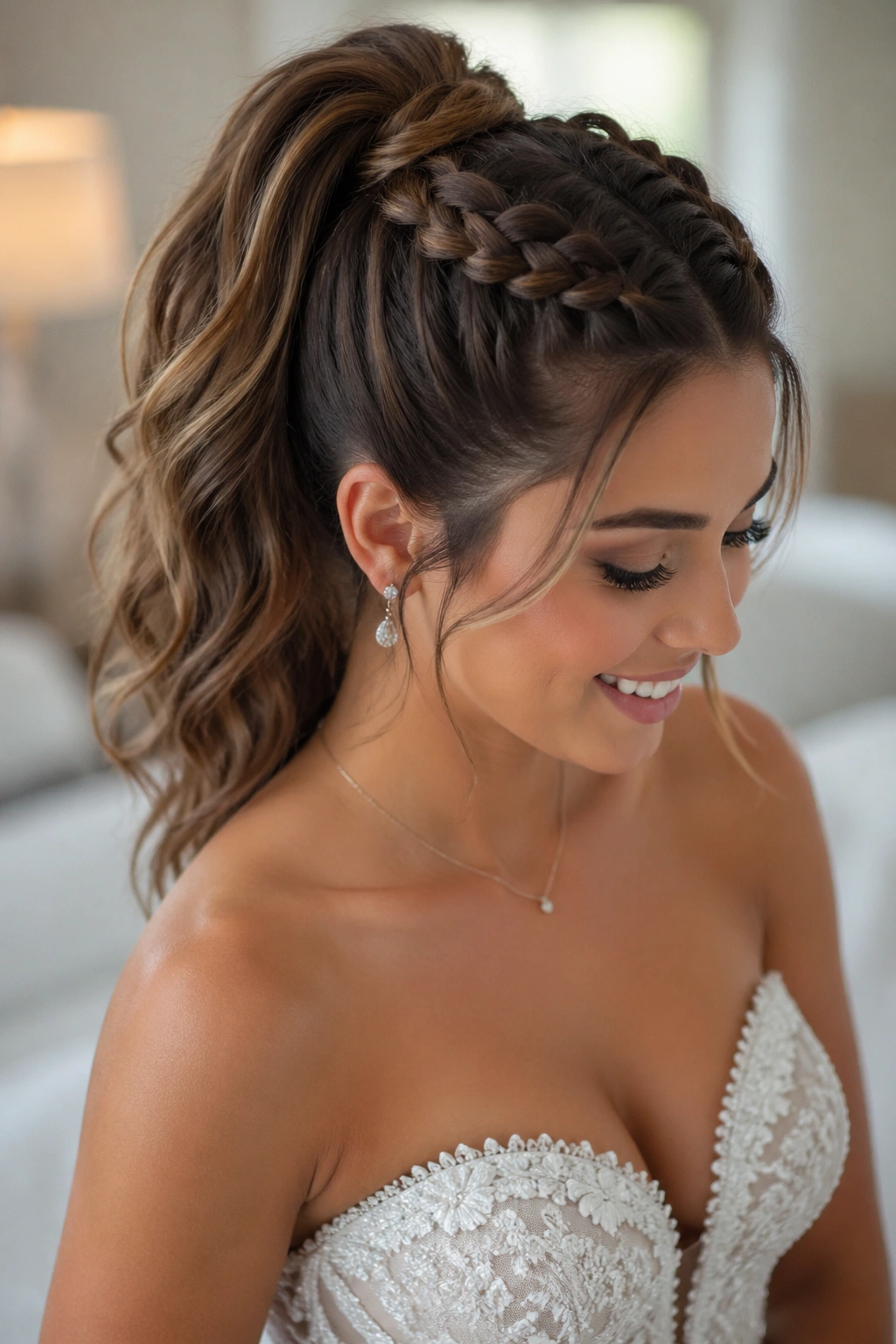
A half-braided high ponytail gives you the neatness of braiding at the top and the softness of loose length at the bottom. It’s one of the easier ways to make a ponytail feel dressy without loading it up with accessories.
The braid can cover the top section from hairline to crown, then stop where the ponytail begins. From there, the tail can stay curled, waved, or stretched smooth depending on the rest of the look. I like this style for medium-length hair because the braid creates visual interest even when the tail isn’t super long. That solves a common problem.
It also works across textures. Straight hair gets structure. Wavy hair gets control. Curly hair gets a clearer shape up top. The style is flexible enough to suit a bride, a bridesmaid, or a guest who wants to look polished without looking overbuilt.
24. Crimped High Ponytail
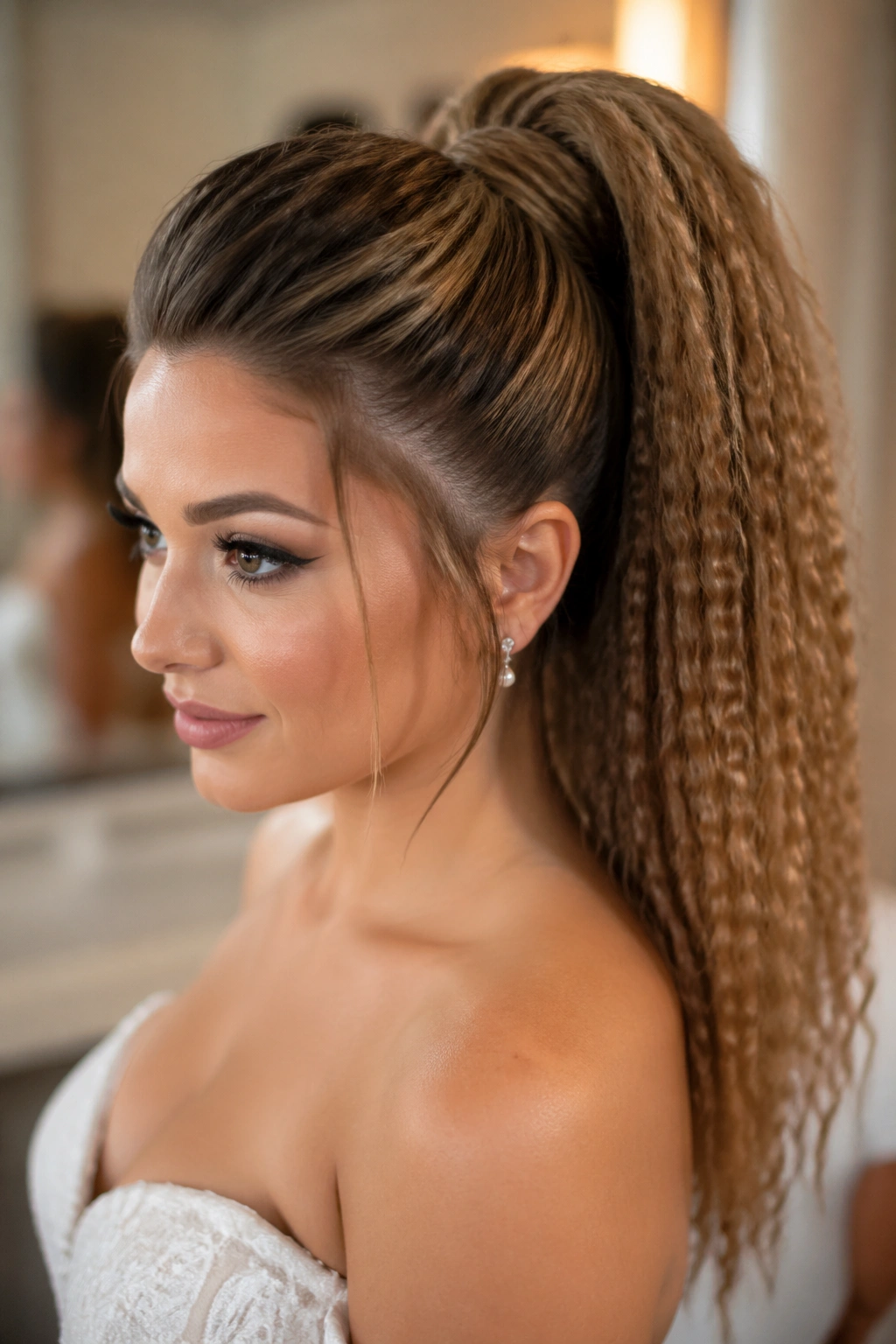
Crimping has a bad reputation because people remember the wrong version of it. On a wedding ponytail, though, crimped texture can add grip, light-catching detail, and a little retro bite that feels more deliberate than loose curls.
The best way to wear it is to keep the crown smooth and crimp only the ponytail lengths, or even just the lower half. That gives the texture room to stand out without taking over the whole head. A modern crimp is smaller and softer than the old-school zigzag look, so the result reads more editorial than costume. If you have very fine hair, crimping also adds body that stays put better than fresh curls.
It’s a good match for modern dresses, evening venues, or anyone who wants something different without making the hair feel busy. A little edge goes a long way here.
25. Double-Wrapped Ponytail Base
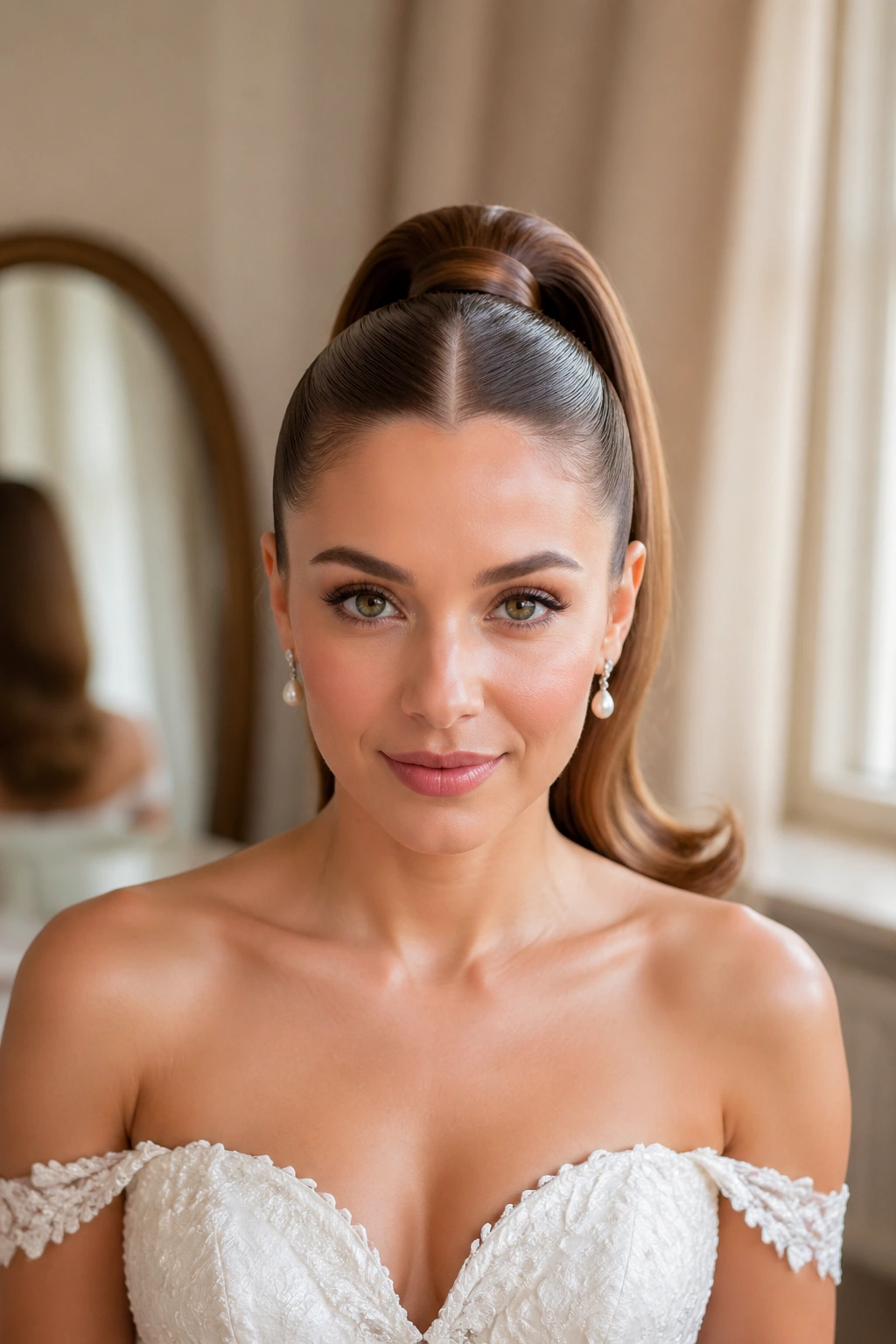
A double-wrapped base is one of those details nobody talks about until they see it in person. Two wrapped sections instead of one make the ponytail base look denser and more finished, especially if the hair is thick or the extensions need hiding.
The extra wrap trick
After securing the ponytail, use one section of hair to hide the elastic, then take a second thin section and wrap it just below the first. The result is cleaner and fuller at the same time. It also helps disguise any bump where extensions join the natural hair.
- Best for bridal styles that need a strong base
- Useful when the hair is layered and the first wrap looks thin
- Keeps the elastic from showing in side views
- Works well with sleek or waved tails
That second wrap sounds minor. It isn’t.
26. High Ponytail With a Statement Bow
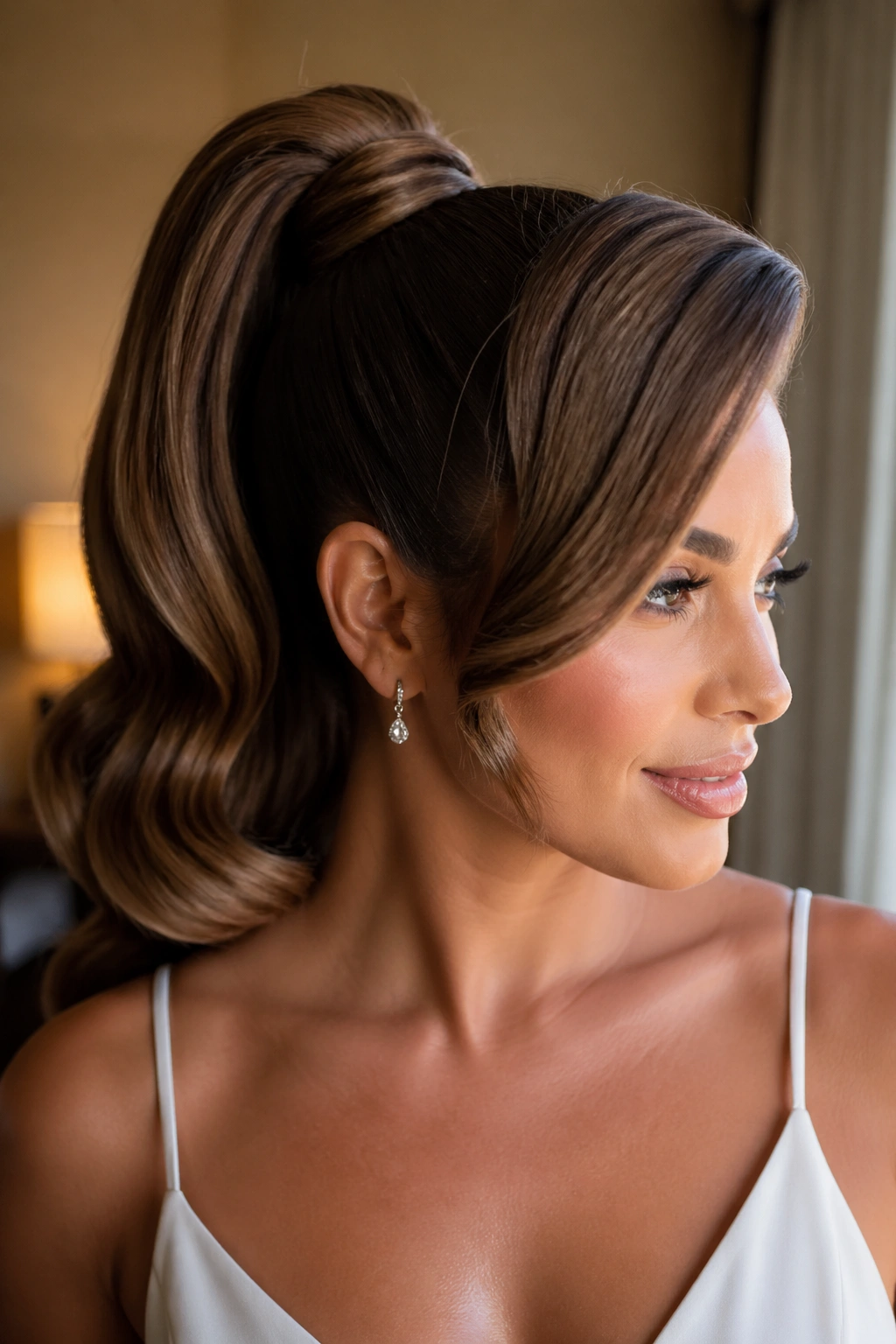
A statement bow can be charming or too sweet, and the difference usually comes down to size and fabric. Keep it structured, and the high ponytail feels intentional. Make it floppy and huge, and the look starts drifting away from wedding hair into something else.
A satin, velvet, or grosgrain bow tied at the base works best when the rest of the ponytail is fairly clean. Let the bow do the decorative work. The ponytail can stay sleek or lightly waved, but the roots should be polished so the accessory feels anchored instead of tacked on.
This style suits brides who want a softer, slightly playful finish. It also works when the dress is very simple and needs one focal point. I’d keep the bow width around 4 to 6 inches for most faces. Big enough to notice. Not so big that it dominates the head.
27. Side-Parted High Ponytail
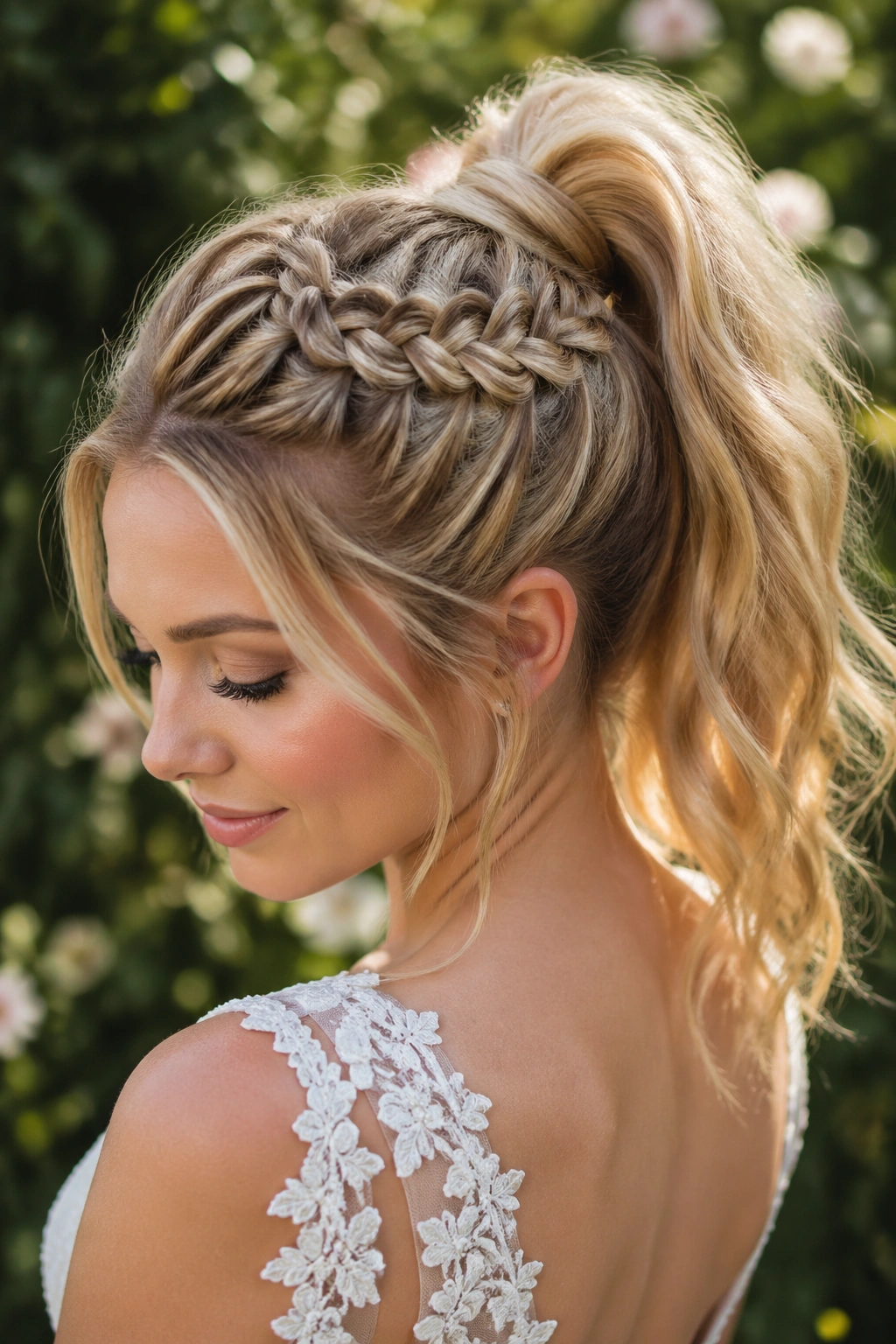
A side part shifts the face in a flattering way because it breaks up the symmetry of the style and gives one side a little more movement. If a center part feels too formal or too strict, this is the easier route.
How to place the part
Don’t make it too deep unless the dress and makeup are also dramatic. A gentle side part near the arch of the brow usually gives enough lift without turning into a full vintage wave setup. Brush the front across the forehead, then secure the ponytail high and slightly behind the crown so the part still shows.
This version suits broad foreheads, strong jawlines, and gowns with asymmetrical details. It also gives hair pins or a single comb a nice off-center place to live. A small change, but a useful one.
28. Jumbo Braid High Ponytail
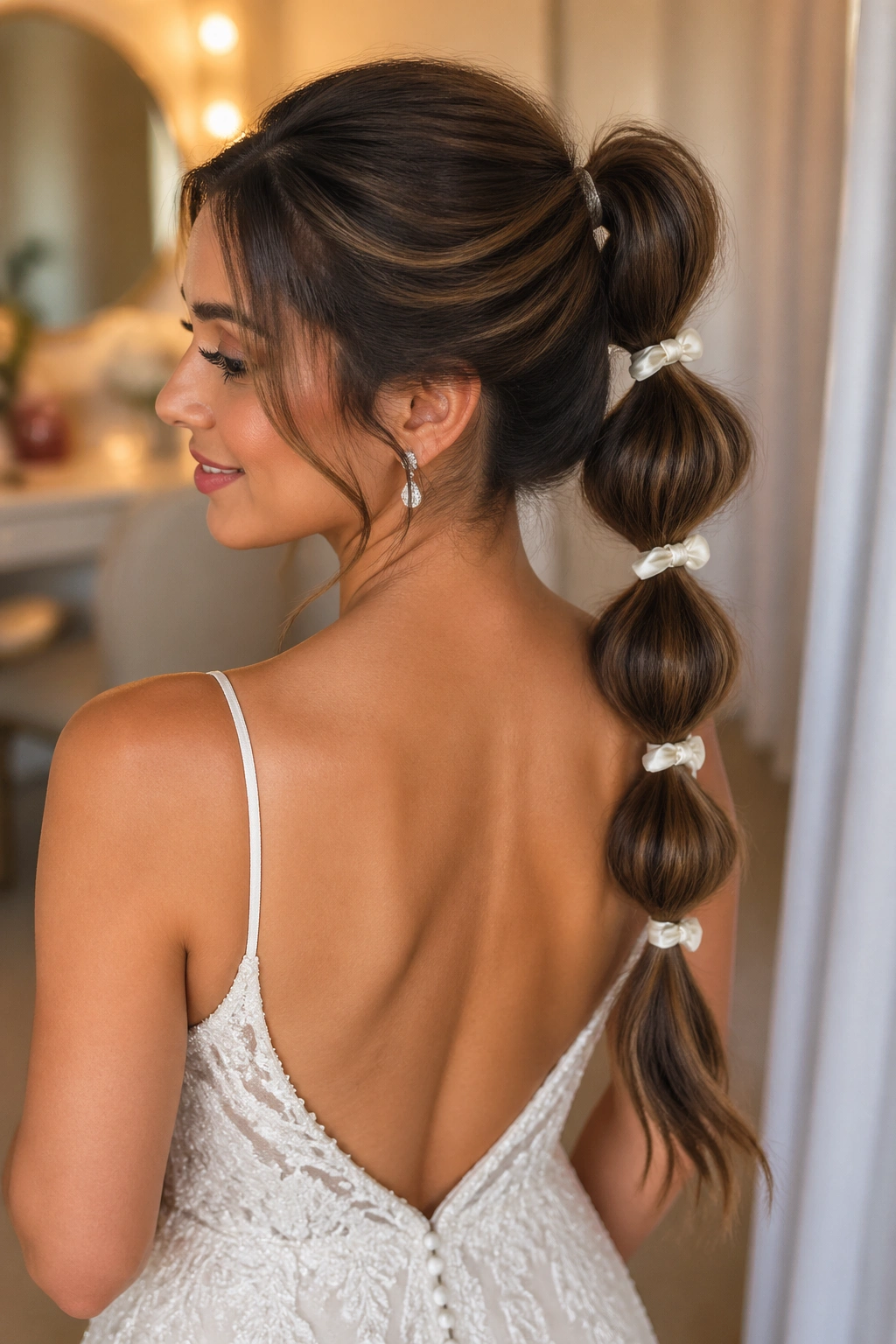
A jumbo braid has the kind of presence that can carry a full bridal look on its own. It feels ceremonial because the shape is bold and visible from a distance, which makes it perfect when the rest of the outfit is quieter.
The braid can be built from natural hair, added length, or extensions blended in at the base. Keep the braid thick by using large sections and pulling the outer edges open after securing it. That widening step is what gives the braid its sculpted look. Without it, the braid can seem too tight and small for a wedding setting.
It works especially well with thick hair, long hair, and dresses that need a stronger hair shape to balance the fabric. The style says “finished” without needing sparkle everywhere. That’s not a small thing.
29. Short Hair Faux High Ponytail
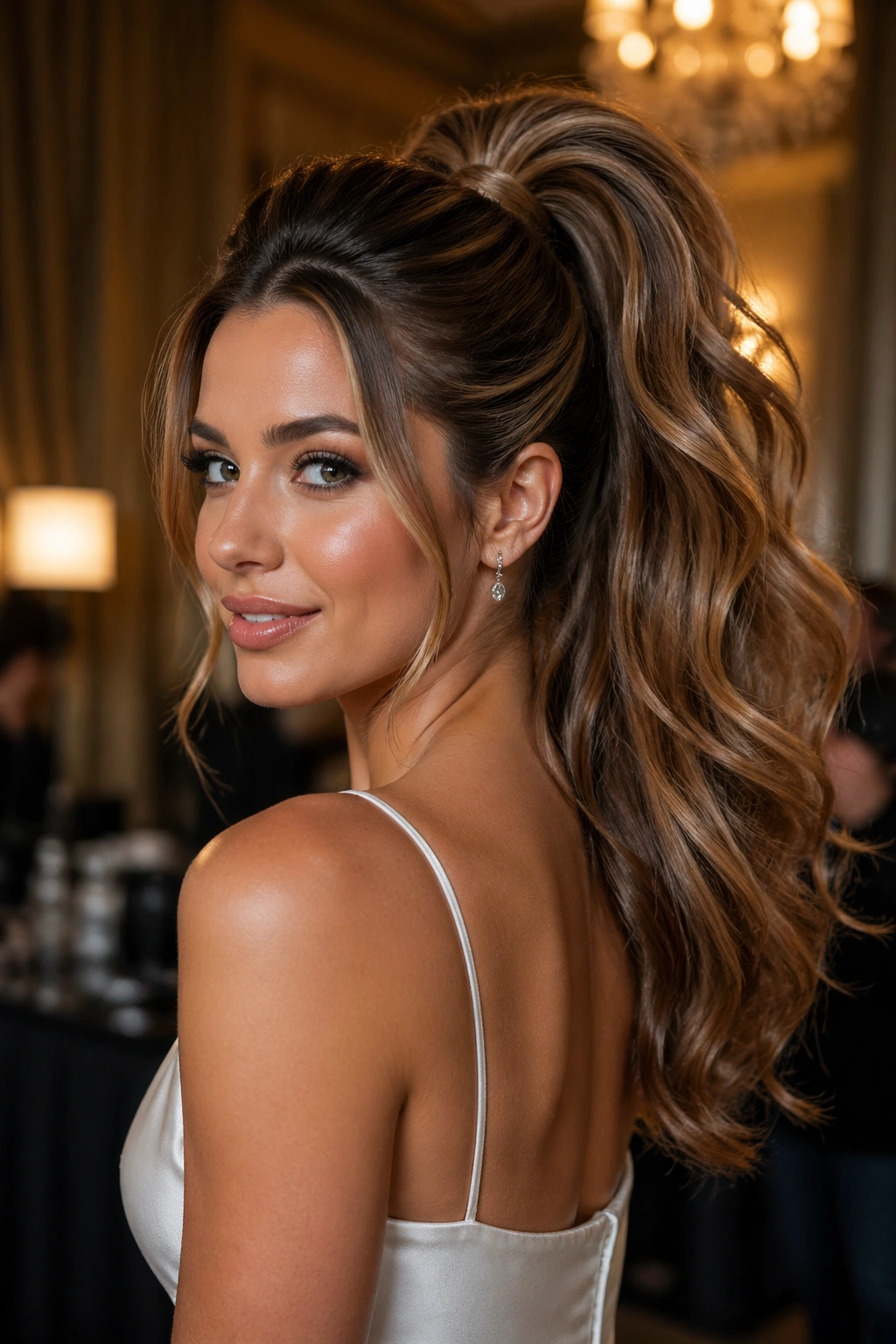
Short hair does not rule out a high ponytail. It just asks for more planning. A faux ponytail built with extensions or a wrap can give the illusion of length while keeping the front clean and wedding-ready.
The base often starts with a small hidden ponytail or pinned section at the crown, then the added ponytail is attached over it and blended. The top hair should be smoothed carefully so no anchor points show. If the cut is layered, a little extra pinning may be needed near the temples. That part can take longer than people expect, and it’s worth the time because loose layers ruin the illusion fast.
This style is useful for bobs that need a formal finish or for anyone growing out a cut. It can look surprisingly natural when the color match is right and the attachment is tucked well.
30. Teased Crown Ponytail With Soft Ends
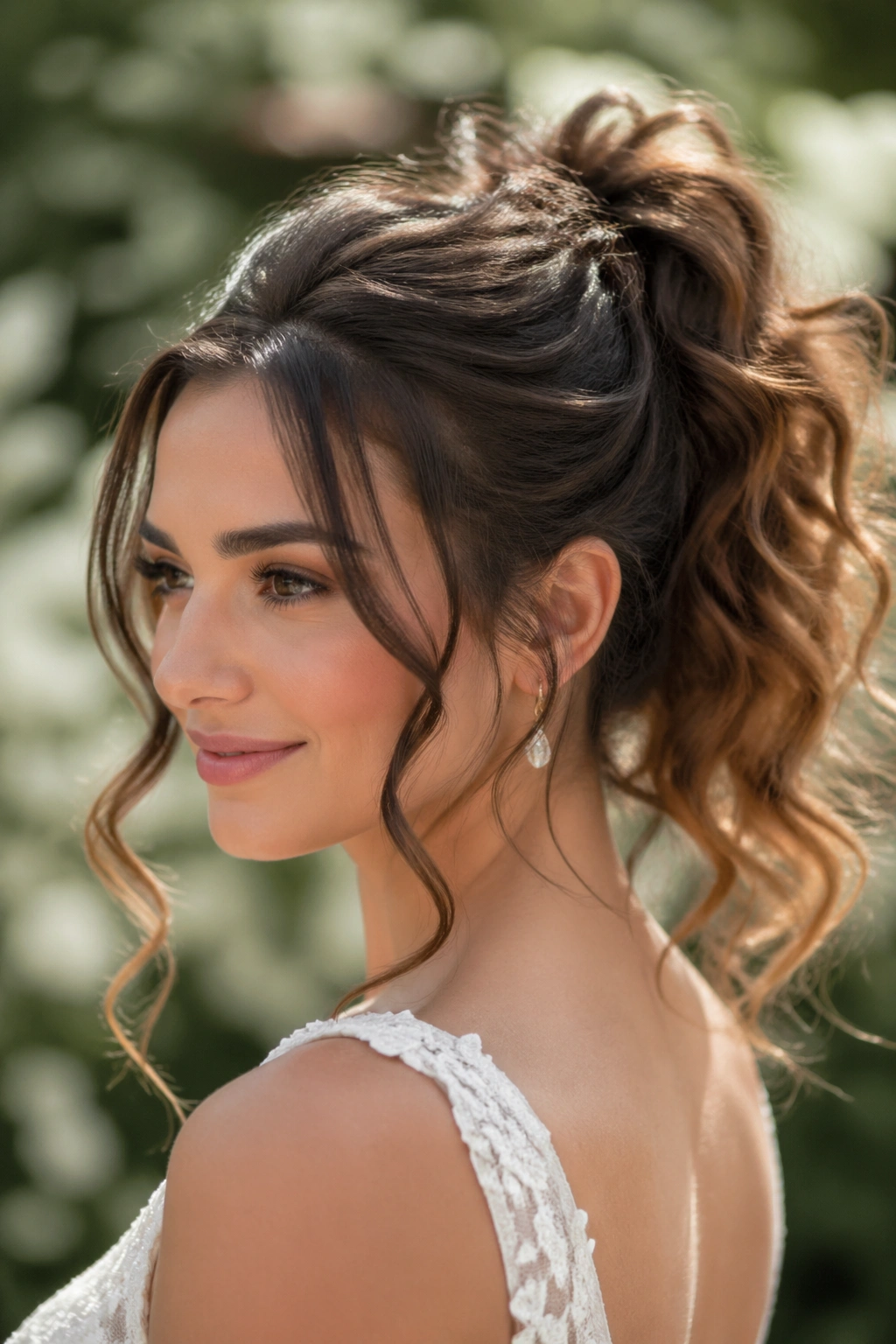
A teased crown gives the ponytail lift without requiring a full bouffant. That makes it a good choice when the dress is clean and the hair needs a little height to stop everything from falling visually flat.
The teasing should live under the top layer, not on the surface. Smooth the top section over it with a brush, then secure the ponytail high and finish the ends with a soft bend or loose curl. The contrast is what makes the style work: lifted crown, airy tail. Too much teasing, and it turns stiff. Too little, and the crown disappears in profile.
This look is handy for brides who want volume but hate the feeling of a fully set style. It’s also a nice middle ground between modern and romantic. A little lift. A little softness. Nothing overly precious.
31. High Ponytail With a Jewel Comb
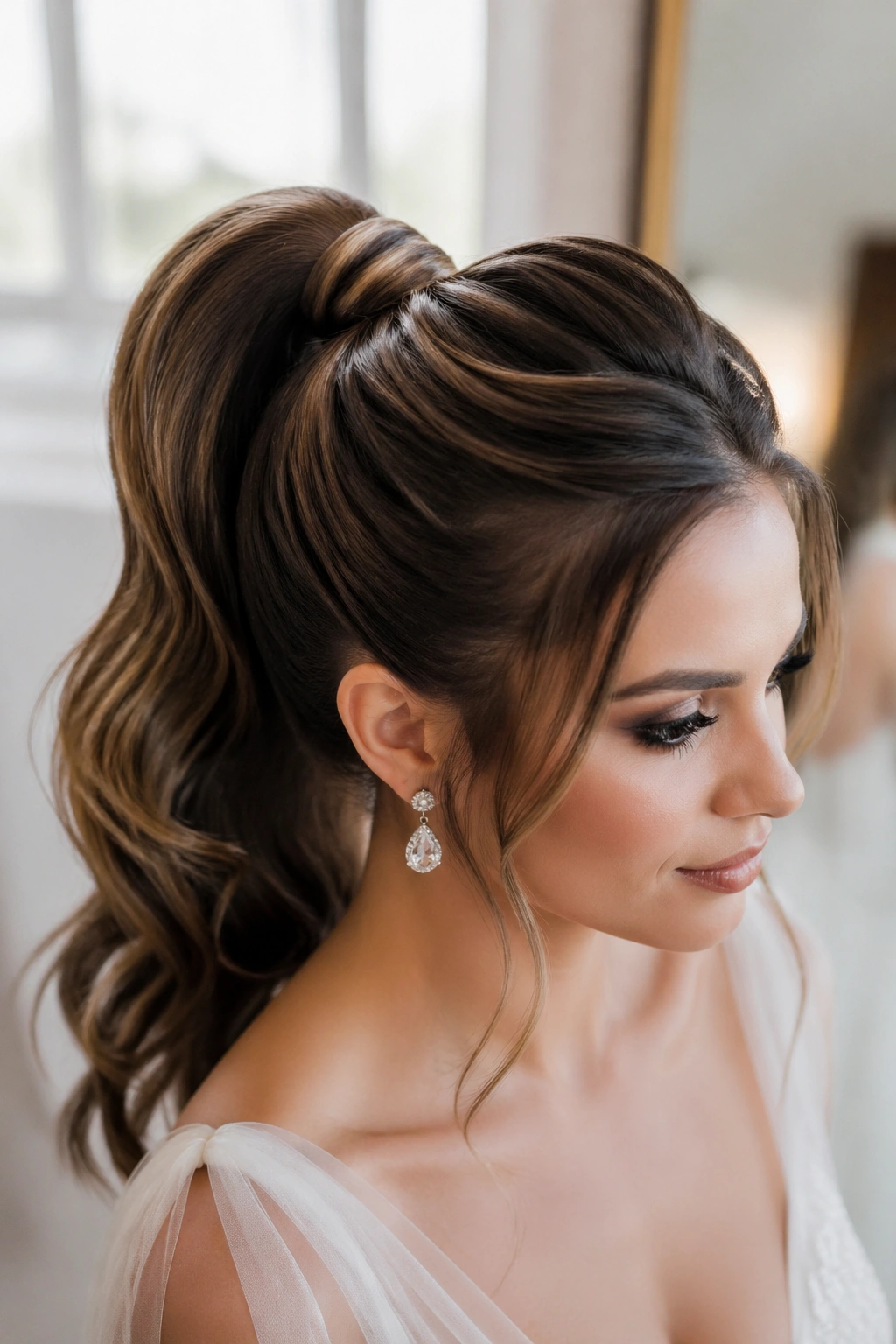
A jewel comb can turn a high ponytail into something that feels evening-ready in seconds. The trick is keeping the rest of the style restrained so the comb gets a clean backdrop.
How to keep the comb from slipping
Place the comb just above or beside the ponytail base where the hair has enough grip to hold it. If the hair is slippery, add a few hidden pins before setting the comb. The comb should feel fixed, not decorative in theory and unstable in practice.
- Best with sleek ponytails and low-gloss fabrics
- Works well when earrings are minimal
- Pairs nicely with crystal, pearl, or mixed-stone pieces
- Needs secure root prep, especially on fine hair
My view: one strong comb beats three scattered pins nearly every time.
32. Minimalist High Ponytail for Modern Weddings
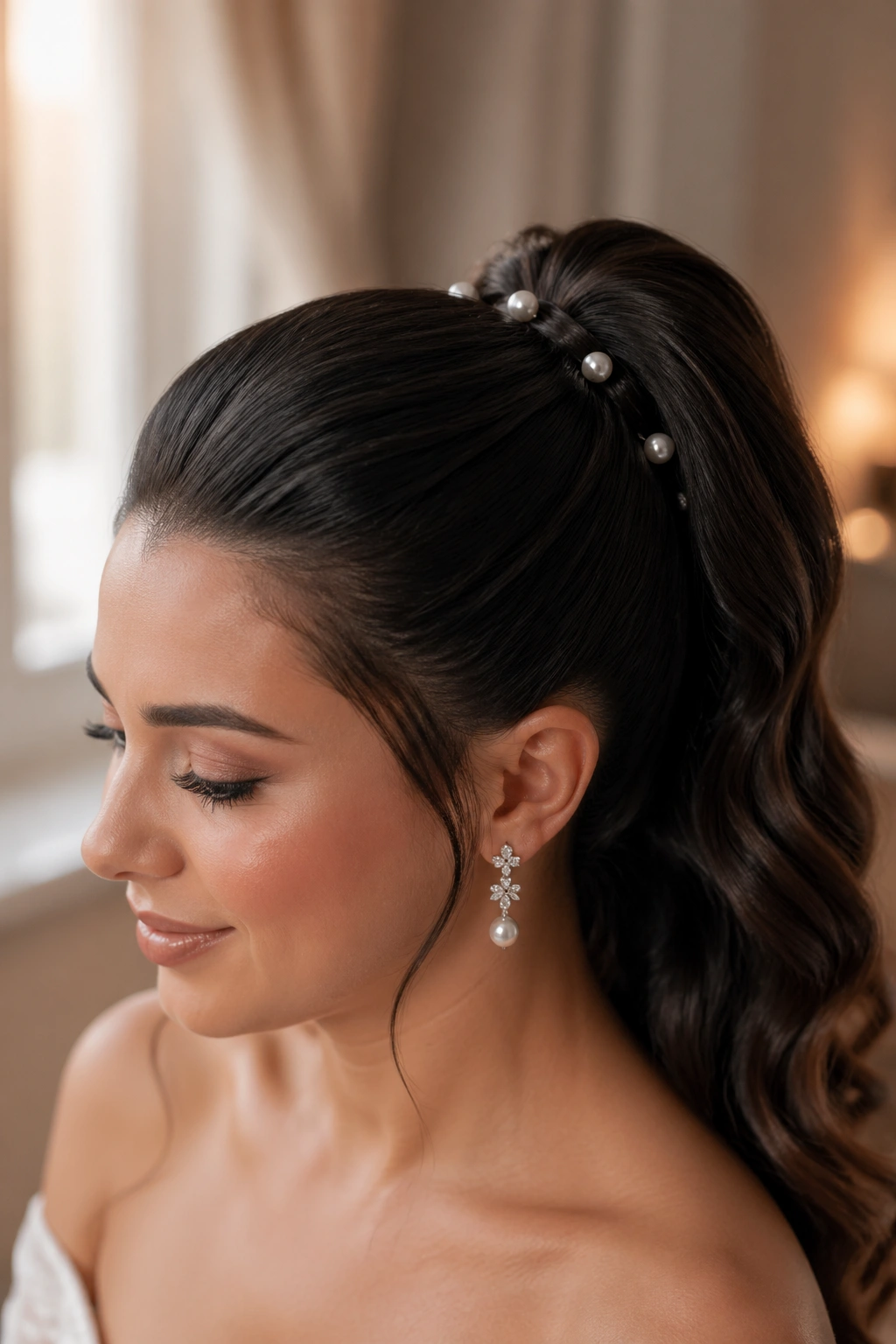
A minimalist ponytail is not a lazy ponytail. It’s the style you choose when the dress has clean lines, the makeup is restrained, and you want the hair to match that calm confidence instead of fighting it.
Keep the base sharp, the surface smooth, and the tail long enough to feel intentional. You can leave it straight, bend the ends once with an iron, or add a very soft wave near the bottom third. What you do not want is a lot of decorative clutter. No crowded pins. No oversized flowers. No satin bow trying to save the look. The beauty is in the restraint.
This style suits modern venues, sculptural gowns, and brides who like their details crisp. It also holds up well when the dress itself is doing the talking. Hair does not need to shout to look expensive.
33. Romantic Cascading Curl Ponytail
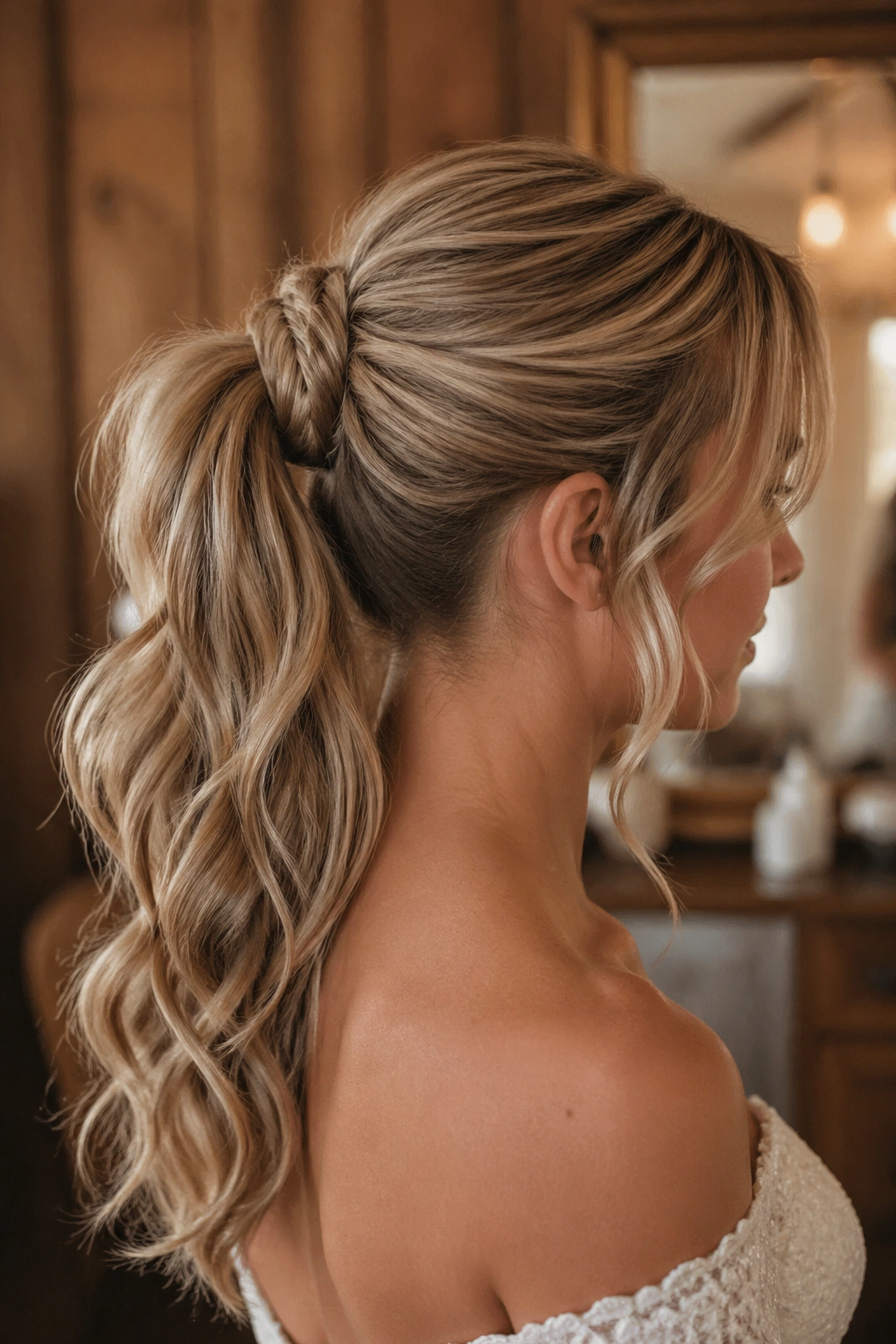
A cascading curl ponytail is the softer end of the wedding spectrum, and it earns its place because it moves well. The curls fall in broad sections down the tail, which gives the hair a romantic shape without making it feel heavy.
Start with a high base, then curl the ponytail in large sections and brush each one lightly so the curls connect instead of separating into tight spirals. The front can stay slightly looser around the temples if you want a gentler frame. That bit of softness keeps the style from looking overbuilt. I like this version for brides who want movement more than sharp structure.
It pairs well with chiffon, lace, soft sleeves, and outdoor ceremonies where the hair gets a little air. If there’s one high ponytail that always feels kind to the face, it’s this one.